TemulentTeatotaler's recent activity
-
Comment on US Democrats win enough seats nationwide to (potentially) end Electoral College via the National Popular Vote Interstate Compact in ~society
-
Comment on US Democrats win enough seats nationwide to (potentially) end Electoral College via the National Popular Vote Interstate Compact in ~society
TemulentTeatotaler Link Parent*Sorry in advance if I don't get back to you, haven't been great about that this year Still unsure what your position is? Do you think individual states--short of the threshold all(?) of...*Sorry in advance if I don't get back to you, haven't been great about that this year
I think we should be extremely skeptical of any claim that goes “we need to do X change for moral reasons, and I have it in my power to take the first step in that direction, but if I do that the other guy will win, so I can’t.”
Still unsure what your position is? Do you think individual states--short of the threshold all(?) of them--opting into proportional representation will "make America more democratic," instead of binding them to an unequal electoral system that likely penalizes their representation on the national level, where it counts? Is the view just institutionalism, where it's fine if a previous generation already decided it for Maine-ites, regardless of morality then or impediments to future self-determination?
I'm not saying it shouldn't be done on the state level "because the other guy will win"-- I'm saying it shouldn't be done on a state level because it is less democratic in outcome.
Also saying that because there is no imagineable path to it because of the game theory, bust out the 'ought implies can' of Kant? It's not a meaningful critique of the NPVIC if the state-by-state scenario isn't possible.
That’s the whole reason we have elected representatives, after all - to represent the will of the people as a whole instead of the will of every individual person.
Representatives exist for a number of reasons, some of which are systemic and pragmatic. You're narrowed down to just two rough platforms from a handful of candidates, filtered by the most politically active before being chosen by the eligible voters that turn out.
The fact that you vote for the limited options of one of party because they align on you on your perception of the economy or single-issues like guns or abortions does not mean they represent your views on how democracy is best done. Why, if you had access to reasonable polling about this issue, would you ever defer to the party's very self-interested preferences?
I think the constitution is more or less spot on.
Probably not going to agree there, for general constitutional changes.
I think reductios are often helpful in finding if there's an actual principle you agree with, so consider an alternate world where due to plague, horrible governance, corporate acquisition of all land, <insert more plausible scenario>, 26 of the states only have a hundred people living there. The Neo-Medici heartland extorts as they please in exchange for investigations, confirmations, treaty ratifications, etc. They let laws pass in exchange for even more favorable conditions. In their fief-states they make laws stripping the right to vote while letting people migrate to increase their house reps and labor force.
Would you say because it's possible(?) in the system that we have that it is fine for them to have this power? Even if 400 million people hate it, it would be wrong or undemocratic to change it?
Neither parties nor land are the meaningful source of legitimacy and representation. It isn't political dynasties or those wealthy enough to run. It's the people, with guardrails to ensure they give informed consent. If we can't agree on that we just aren't going to agree.
There is value in partitioning based on location (and many other lines, perhaps ethnic/religious minority if it isn't cracking/packing), so it makes sense for there to be local and state leaders. Just can't agree when it comes to national representation or discussing ethical considerations that could be based on actual people, instead.
I don't think anyone is okay with the above scenario, and through that I think the only reason they're okay with the milder unfairness of our current system is because either they benefit from it or that it's tolerable, not fair.
I really don’t think the bar needs to be “benefits democrats every single time” for me to reasonably say that it advantages them.
Unless I'm missing something, you originally said you don't support NPVIC because it would harm the DNC politically. You then said you feel it is wrong, regardless, as long as it was a unilateral change [on party lines] that may benefit whichever party goes ahead with it.
Those seem to pull in different directions. I won't get into projections or examples of examples of snap elections and other decisions that ended up backfiring on a party, as you suggested this might.
I don't agree with "expected electoral success" as the metric. That is sports teams talk, not a healthy way to run a country or evaluate the morality of actions. The person or party who is helped is the one who can appeal to the broadest group of people. Democracy wins. The country wins. The GOP, hopefully, wins by adopting a popular platform, and by being in a flourishing country there is more influence to wield.
When I bring up 2024 or future cycles it's because it seemed like you were providing a good example that the NPVIC doesn't actually inherently favor one party unless that party is defined by a rejection of proportional democracy. In which case you're just enshrining that unfairness as unassailable, because such a party would never support it changing.
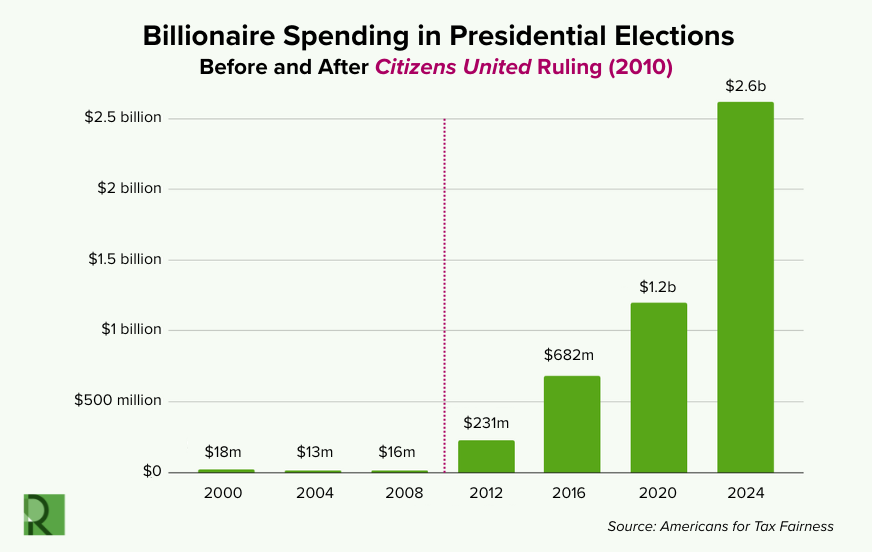
There are policies that benefit parties as long as they're the host. The gutting of the Voting Rights Act made a prize for any party who wants to discriminate against outgroups. Citizens United rewarded courting billionaires and it shows. At any time either of those will benefit one party more than the other, and you may find (post vote whippin') unanimous rejection to change by one party. I don't think it makes any sense to say that just because rolling back the clock on either of those is unilateral or beneficial [for a cycle] that that would be wrong.
While the Voting Rights Act is arguably an electoral change, Citizens United isn't, and it might translate to much more "electoral success" in a more tenacious package than a popular vote would for a party that rejected it, so I only partially agree that electoral changes have some special weight to them.
A bit hyperbolic, but it feels like the extension of this line of thinking would be to say it's unethical to administer Narcan, which is consistent as long as all you care about is the preference of the two parties in their current states.
There’s little else as important as that; that’s what wars are fought over.
Yeah, unfair representation was the purported basis for the revolution and foundation of the country and it's the easiest fault line to hit for other countries. That's the problem. Some states are punished electorally for their size or success.
If you think there is an actual path to constitutional reform I'd be happy to hear it. I think, just like self-interest of parties precludes state-by-state adoption of proportional representation, that it is functionally impossible for 3/4s of the states to come together and give up their outsized power.
I don't see any good path forward besides transparent, fair, and principled policies. NaraVara has said a few times(iirc) that many political problems wouldn't exist without the underlying social problems, and I agree with a lot of that.
We should unapologetically defend democracy and its tributaries as virtues even when it doesn't help us. If we behave morally, even if both parties act purely out of self interest, as long as that aligns with what people consider fair then it's trends towards moral-by-proxy. I'm more than fine paying taxes to have the USPS serve rural areas, even if they can't or their votes go against my interests. I would not support gerrymandering more than to balance representation and would be much less comfortable if CA didn't add a sunset clause. If the GOP and DNC swapped in how well they aligned with my values I'd change my vote.
Feel free to ignore any/all of this post, but to check in, hypothetically, if the dominant|universal reason GOP voters don't want the NPVIC was because they want to have their vote matter more than other people, is that ethical? Fair for them to have veto power? Would it have been if the Civil Rights Act or 15th Amendment was along party lines?
Do you expect the disenfranchised not to resent it or for this friction to be exploited/escalate in what they consider to be equivalent transgressions (e.g., aggressive gerrymandering)? What's the off-ramp?
Do you disapprove of all revolutions? Those in very flawed democracies (e.g., Russia/Bangladesh?), but which arrived there by the rules in place? Mild "quasilegal" revolutions within the system that aren't bipartisan?
I grew up and currently live in a red state, and I've lived in some of the most progressive areas as well. I've spent most of my life trying to take a charitable view of people with different opinions than me. While I sometimes disagree with you (e.g., Biden laptop) I appreciate that you make that effort as well, especially since that isn't always easy on Tildes. But I gotta say the good faith, at least with anyone in MAGA that isn't completely checked out of news, has pretty much eroded, post Trump.
I don't want anything more than fairness. We can't keep having a president threaten disaster relief based on who supported him. We can't have punitive taxes on blue states that almost always pay more into the system, and subsidies given to compensate people harmed by the insane blanket tariffs they voted for. A lot of that is compounded by other factors, but when votes don't matter there's no correction.
-
Comment on US Democrats win enough seats nationwide to (potentially) end Electoral College via the National Popular Vote Interstate Compact in ~society
TemulentTeatotaler (edited )Link ParentIn that case I don't understand this: Unless I misunderstand (very likely atm), you're stating why it is at least in the game theory sense an impossibility to do this on a per-state level, while...Yes, as I noted above.
In that case I don't understand this:
...this is not a polyannaish move by idealistic Democrats seizing a chance to make America more democratic.
Unless I misunderstand (very likely atm), you're stating why it is at least in the game theory sense an impossibility to do this on a per-state level, while using the plausibility of that same action to critique wanting it done at a national level. Doing this on a state level doesn't "make America more democratic"-- it actively punishes the side wanting it, making it less democratic until the impossible threshold is met.
Sorry, I really don’t understand what you mean here at all.
The decision isn't unilateral if any Republican supports it, unless you only consider it at the party level. If you don't you have to get into what percent of Republican support do you consider sufficient.
As in, I told NaraVara that I wasn’t trying to establish a rule that must be followed at all costs.
Gotcha, my bad!
No?
Why? It's unilateral and gives a political benefit to them. What is the difference between electoral changes and something like unilateral tax cuts set to explode on the next party and gain significant donor support? *sorry, think this was covered by the clarification about the categorical vs political point.
Also not sure why you aren't considering where, like 2024, the unilateral change that is prosocial doesn't end up benefiting the Democrats, or at least not in perpetuity? Possibly due to the same sort of blowback you anticipate.
-
Comment on US Democrats win enough seats nationwide to (potentially) end Electoral College via the National Popular Vote Interstate Compact in ~society
TemulentTeatotaler Link ParentSorry, not thinking the best so I might be missing things. I agree with Nara(?) that there used to be a much stronger argument for dense population zones being catered to that no longer apply, or...Sorry, not thinking the best so I might be missing things. I agree with Nara(?) that there used to be a much stronger argument for dense population zones being catered to that no longer apply, or apply less.
I also believe--even if it is just an misinformed/emotional/vibes-based feeling--that many people don't want to see CA/NY/etc. having influence on an election, even if it isn't outsized whatsoever, and that they believe that is the outcome of the NPVIC. So I think that discussion kinda has to happen, either way, because of decades of messaging and perception.
-
Comment on US Democrats win enough seats nationwide to (potentially) end Electoral College via the National Popular Vote Interstate Compact in ~society
TemulentTeatotaler Link ParentNot really. The primary problem is the president isn't democratically elected because of vestigial compromises from the US Constitution. Back when we had low-trust, geographically isolated...The main reason I feel this way is that there’s not currently an actual rule saying that states have to follow the winner-take-all system. That’s the primary problem with the electoral college, right?
Not really. The primary problem is the president isn't democratically elected because of vestigial compromises from the
Articles of ConfederationUS Constitution. Back when we had low-trust, geographically isolated colonies trying to find common ground. They made others, fearing political parties by giving us FPTP that (precocious) 14 year olds like Kuromantis better understand the outcomes of. Or like black people being negative 3/5ths votes, setting of an obvious deadlock and constitutional crisis with the six ill-defined SCOTUS members, and sometimes only permitting landholding white men the vote. Many policies have to be done at a federal level or you create a prisoner's dilemma.*I wouldn't make that segue if it wasn't still at play in the challenges that face reforming out political system, but we are, unfortunately, severly limited in our options and it's because of the mess we inherited.
How your suggestion plays out is that you end up penalizing "good" actors by essentially watering down their votes on the national level. Sure, they would better represent their constituents--which would happen in that case of the NPVIC-- but if all the supporting blue states switched to being proportional it would always lead to a GOP president, with no real incentive for states already willingly rigging things in their favor to also switch.
And why would you partition around parties instead of their constituents? Some on the left wouldn't want it, and some on the right would. Why is what the party wants the relevant bit?
Why choose the categorical imperative instead of a Rawlsian veil of ignorance or other frameworks? The categorical imperative, like the "golden rule" must be open to abstraction. Treat others the way you want to be treated doesn't mean sexually assault people you're attracted to-- it means respect bodily autonomy, self-determination, etc. In the same sense, do you believe if only one party wanted to do something rejected on a party level by the others, but which had supporters on their side and which was some clear good is also immoral? If M4A was passed with a supermajority would that be unethical, as long as it incidentally led to a strong left party?
-
Comment on US Democrats win enough seats nationwide to (potentially) end Electoral College via the National Popular Vote Interstate Compact in ~society
TemulentTeatotaler Link ParentI don't think the argument makes sense, but it is one I see whenever this conversation comes up when people want a reason to oppose a popular vote. So it's just I don't think can be avoided, even...I don't think the argument makes sense, but it is one I see whenever this conversation comes up when people want a reason to oppose a popular vote. So it's just I don't think can be avoided, even if the original rationalization doesn't apply [much].
Always appreciate your insights on politics, though!
-
Comment on US Democrats win enough seats nationwide to (potentially) end Electoral College via the National Popular Vote Interstate Compact in ~society
TemulentTeatotaler Link ParentTrump winning is the sort of evidence that you can use to say that this is actually a more fair system, though. As NaraVara mentioned, elections look very differently when they aren't being gamed,...Trump winning is the sort of evidence that you can use to say that this is actually a more fair system, though.
As NaraVara mentioned, elections look very differently when they aren't being gamed, but instead have to make broad appeals to the entire country where all votes are equivalent. If that resulted in Republicans winning the next several elections I'd accept it because I believe that system leads to the best outcomes.
The argument I most believe in is the national security one. The door to foreign dealing has been blown off, and we can't continue to have elections like 2016 where it came down to 60k people deciding the fate of hundreds of millions and the world by proxy.
-
Comment on US Democrats win enough seats nationwide to (potentially) end Electoral College via the National Popular Vote Interstate Compact in ~society
TemulentTeatotaler Link ParentGood point, but I'm not really sure it's an avoidable conversation, since the argument that that just means NY/CA/cities/etc. decide the election has been made for decades? That was the reason for...Good point, but I'm not really sure it's an avoidable conversation, since the argument that that just means NY/CA/cities/etc. decide the election has been made for decades?
That was the reason for the inclusion of the "silent majority" part-- the
biggerpolar states would matter because there are people there, but it would mean every vote is counted, and both sides typically says they're the real majority [if voting in non-swing states mattered].Will think more about when I can think, though, thanks!
-
Comment on US Democrats win enough seats nationwide to (potentially) end Electoral College via the National Popular Vote Interstate Compact in ~society
TemulentTeatotaler Link ParentOptics is hard to get a read on, or on how much it matters. Did Trump selling bibles or pope-posting matter? Videos of shitting on the country or Obama being locked up or as an ape? Despite 60+...Optics is hard to get a read on, or on how much it matters. Did Trump selling bibles or pope-posting matter? Videos of shitting on the country or Obama being locked up or as an ape?
Despite 60+ failed court cases people didn't care about the Fake Electors plot and a majority of Republicans believe 2020 was a stolen election. A lot of Republicans don't just already believe Democrats always cheat, they believe they spirit cook children in satanic rituals. Ones like our FBI director (the group, if not the specifics).
I don't have a lot of confidence that Democrats or the media can influence optics, and I'm not endorsing the compact because I really don't know that it has any chance of passing. But I do fear it is necessary(?) and will only get harder in the future, with things like the often deserved alienation of big tech w/advancing LLMs and microtargeting capabilities, and with the media mergers/TikTok acquisitions.
Sometimes you get people caring about weird shit like Benghazi for years, and shrugging off huge stories once the next one comes. So I'm also not sure that, even with bad messaging, that politicians doing debatably slimey things to benefit their party would matter, because that's broadly the default belief?
-
Comment on California Gov. Gavin Newsom commutes all 548 death sentences in ~society
TemulentTeatotaler Link ParentPlus Death Row Records might be included by clerical error.Plus Death Row Records might be included by clerical error.
-
Comment on US Democrats win enough seats nationwide to (potentially) end Electoral College via the National Popular Vote Interstate Compact in ~society
TemulentTeatotaler Link ParentIt might be terrible if it doesn't work--and that may be likely, IANACLE-- but the upside is massive? The pitch is pretty easy: we don't want the same ~6-8 battleground states controlling who...It might be terrible if it doesn't work--and that may be likely, IANACLE-- but the upside is massive?
The pitch is pretty easy: we don't want the same ~6-8 battleground states controlling who becomes the president. In 2024 over 80% of spending and campaign events were in the same handful of states.
We don't want votes in other states to be "wasted" because they're too blue or red for it to matter. Other states don't want special favors and political capitol going to Pennsylvania just because it's in play. Talking heads may be able to deflect, but if you ask the base of either party if they're the silent majority they'd probably say they were.
We are a less safe democracy when foreign adversaries can target just the right 60-80k voters to win an election for political favors, whether that's Russia in the Trump tower or Iran/China/etc.
It's also questionable how terrible the optics would be. A similar situation was retaliatory gerrymandering to Texas this year. Does anyone still even remember that or case?
A different framing is that there may never be a better time for this. Trump is a lightning rod, with the most open corruption and incompetence in history. He may be splitting the party as some begin to see him as politically toxic and weak, and as he is incapable of releasing power or resigning for the good of the GOP. In the face of a public mandate Trump is entertaining nukes and vetoing everything... and if that doesn't make the case for how important it is for the increasingly expansive powers of the POTUS to be democraticly chosen and beholden, nothing will.
-
Comment on 2026 United States midterm elections megathread in ~society
TemulentTeatotaler Link ParentI'll always hope for more rejection of Trumpism, but worth mentioning that the 2010 swing mentioned was due to 2008 being a blue wave. 2008 was 257-178, 2024 was 215-220. From what I see the...I am surprised the elections didn't swing more against Trump.
I'll always hope for more rejection of Trumpism, but worth mentioning that the 2010 swing mentioned was due to 2008 being a blue wave. 2008 was 257-178, 2024 was 215-220. From what I see the Democrats are estimated to have 258 seats, and you'd have to go back to 1992 to tie that.
It was also the year of REDMAP and increasingly precise and blatant gerrymandering.
-
Comment on Where do we go from here? (Regarding AI) in ~tech
TemulentTeatotaler Link ParentSorry, I'd like to respond but I'll probably be slow with it.Sorry, I'd like to respond but I'll probably be slow with it.
-
Comment on Where do we go from here? (Regarding AI) in ~tech
TemulentTeatotaler (edited )Link ParentSure! The same can be expanded to smartphones that may have lithium sourced from child slavery, the ethics of automating away jobs that may benefit consumers, harm workers, and consolidate power...Sure! The same can be expanded to smartphones that may have lithium sourced from child slavery, the ethics of automating away jobs that may benefit consumers, harm workers, and consolidate power in the most wealthy, etc. Or the neoliberal dillemma of whether exploitative (Apple gets the big cut) but arguably mutually beneficial situations (e.g., factory jobs like Foxconn being sought after/offering opportunities, but extremely hard) are ethical.
A lot of it is beyond my knowledge or ability to address outside of the obvious, which is that we should be honest about what happens and always try to do better for people.
But when I say hazardous I am trying to set that apart from "has caused harm." A hazard is something that has an inherent risk which may be manageable or not. Nuclear power and industrial chemicals are hazards, which, with responsible handling, don't cause harm. Whether there is a meaningful chance of rogue AI, or whether the human-direct and LLM-assisted astroturfing/scams can be managed is hard to know.
-
Comment on Where do we go from here? (Regarding AI) in ~tech
TemulentTeatotaler Link ParentThanks, I don't doubt that, though I'm not familiar enough to have much of an opinion! Just saying history is messy and that the witch hunts or inquisitions are at least human sacrifice adjacent....Thanks, I don't doubt that, though I'm not familiar enough to have much of an opinion!
Just saying history is messy and that the witch hunts or inquisitions are at least human sacrifice adjacent. The focus shifted to Christianity, but if anything the partially(?) religious nature of human sacrifice in the Aztecs clashes with the original statement that "...every religion has taught the importance of hope, faith, charity, submission, kindness, forgiveness, forbearance, fairness..."
Overall I agree with OP about the most clear threats of AI being moral ones, of misuse.
-
Comment on Where do we go from here? (Regarding AI) in ~tech
TemulentTeatotaler Link ParentWhat do you think brains are doing? Regardless, since the 1950s "AI" has been the umbrella term that things from perceptrons to logic/symbol manipulation to LLMs fall under, and it's a necessarily...But they aren’t doing “intelligence”, they’re doing advanced statistics.
What do you think brains are doing?
Regardless, since the 1950s "AI" has been the umbrella term that things from perceptrons to logic/symbol manipulation to LLMs fall under, and it's a necessarily broad one because "intelligence" is broad.
Is a 5 year old intelligent? Yes and no. A dog is more intelligent than a toad but maybe not when they don't understand glass doors. A highschooler be smart if they could solve novel math problems better than contestants in the Math Olympiad, but now that LLMs can do that you'd be misleading if you conferred them with the same expected intelligence that the highschooler would have. That feat may or may not generalize to less standard/more creative math skills or other skills we'd associate with a talented human highschooler.
Strong and weak AI--coming more from philosophy--used to be the way to distinguish between what is now more descriptively called general and narrow (or super) intelligence, but it's all AI in the way a Seattlite is a Washingtonian is an American. Kindasorta.
Before the LLM craze, the most common use of AI was in gaming. Billions of times a year "cheating" or "overtuned" was used to describe nothing more complicated than finite-state machines, like the bots of "co-op vs. AI" in League of Legends, and no one was confused. Sometimes things like spreadsheets or A* searches stop being considered AI.
All the controversy about scooping/pseudo-plagiarism aside: what do you call a system that can solve [part of] the Navier-Stokes equation if not intelligent? What is a better description?
We also frequently anthropomorphize things. It can be hazardous but it's also often incredibly useful and expressive. When we create metaphors to understand concepts we're doing something like that-- a useful approximation that sometimes is dangerous because it gives a compelling but specious understanding.
In the past there was some research contrasting very clinical descriptions of animals in the study to more human ones. "C2 struck C6 at 11:55" vs "Nom Chompsky bit Nim Chimpsky out of grape envy." It's been far too long, but the gist was the anthropomorphizing ones led to better outcomes.
Dan Dennett's intentional stance is a more extensive look at treating things as having intentional/rational agents. "Stockfish is setting a trap for black's queen..."
Stockfish is not human. It doesn't have anything vaguely similar to an animal's motivations or emotions. But it's often a very helpful framing.
The tools are not “going rogue” ... If you prompt an LLM with an objective of retrieving a file from a server and give it unlimited resources and a shitty sandbox, of course one of the methods it might generate could be, essentially, hacking. And if you blindly trust the output of LLMs without supervision, you’ll end up doing hacking.
The concern isn't that a responsible individual would do X, it's that, given what we can assume about the progression and accessibility of the technology and who may be using it, there may be some risk. There are multiple mutations that all have to happen to get cancer (growth, spread, mutation rate, resources, evasion, etc.), and the risk of some similar sort of things going wrong in some harness is what leads to a "rogue" AI. None of them are likely, there may be a risk.
What chance of something Very Bad happening is enough for it to be worth considering? People do that every time they take a shower or drive, whether they register it or not, the odds are just good and they feel safe until they aren't.
I remember seeing when we hit five-sigma confidence for anthropogenic climate change some years back and thinking... if it was unreasonable to want particle physics levels of confidence for something as complicated as "the climate", were we just supposed to throw are hands up?
Forget OpenAI. Pretend they clean up their act tomorrow and are perfect angels. A year from now a North Korea that already has nationally backed hacker groups has access to comparable LLMs that they want to be stealthy cybercriminals. Are they going to be responsible? If the flawed attempt at a controlled environment that led to the Huggingface hack wasn't detected for three weeks and not without an LLM-assisted investigation, or even on the first couple passes, how likely is it they'll realize if something will go wrong? Given a corpus including all our spy novels, sci-fi apocalypses, and LessWrong posts about how an AI really ought to go about making the most
paperclips₩, how likely is it that one of the agents will propose a hack or social engineering as a good starting point to get the assets to really scale up?I don't know how hazardous the development of LLMs are. I will say that I've been surprised at how much has happened in the last few years (with folks like Yann LeCunn not being optimistic), and that I'd feel a lot better with a good international effort at regulation.
-
Comment on Where do we go from here? (Regarding AI) in ~tech
TemulentTeatotaler Link ParentThe actions you'd most associate that with would be in Central and South America. The Tlaxcala, who also practiced human sacrifice, were the main force that enabled Cortés to defeat the Aztecs....Christianity not only abolished animal sacrifice, but also ended the human sacrifice...
The actions you'd most associate that with would be in Central and South America. The Tlaxcala, who also practiced human sacrifice, were the main force that enabled Cortés to defeat the Aztecs.
Yet the Spanish and Portugese practiced auto-da-fé where they ritualistically tortured and burned people alive for being heretics. This is somehow not human sacrifice?
The Great Leap forward was terrible, and so was the Taiping rebellion led by Hong Xiuquan the "brother of Jesus Christ" that killed 20-100 million / 5-25% of the population. The Holodomir was terrible and so is Putin's weaponization of blasphemy laws and the Russian Orthodox Church / Patriarch Kirill's "Holy War" in Ukraine in which children's oncology wards have been targetted.
The Holocaust took place in a Christian majority country. The party had a mix of policies and opinions from, like Himmler's weird paganism/mysticism and ban of atheism in the SS, but there was significant Christian symbolism and membership.
There are plenty of religious people who are wonderful and whose lives are improved by their faith. There are plenty of atheists who lead good lives and find their morality in things like humanism or Enlightenment principles. Any individual should be treated as an individual.
If you want to look at a population level and ask what policies are religiosity linked to, at least in the U.S. it is the opposite of people who care about the starvation from defunding USAID, deaths from unscientific policies like RFK Jrs, climate policy, etc. Maybe it's different in other places?
-
Comment on <deleted topic> in ~tech
TemulentTeatotaler Link ParentThere are a few other studies on the topic. Most I've seen suggest being polite typically works better, but it isn't true across languages, consistent across models, and it can be compensated for....There are a few other studies on the topic. Most I've seen suggest being polite typically works better, but it isn't true across languages, consistent across models, and it can be compensated for.
Our study finds that the politeness of prompts can significantly affect LLM performance. This phenomenon is thought to reflect human social behavior. The study notes that using impolite prompts can result in the low performance of LLMs, which may lead to increased bias, incorrect answers, or refusal of answers. However, highly respectful prompts do not always lead to better results. In most conditions, moderate politeness is better, but the standard of moderation varies by languages and LLMs. In particular, models trained in a specific language are susceptible to the politeness of that language.
...experiments conducted across three languages (English, Hindi, Spanish), five models (Gemini-Pro, GPT-4o Mini, Claude 3.7 Sonnet, DeepSeek-Chat, and Llama 3), and three interaction histories between users (raw, polite, and impolite). Our sample consists of 22,500 pairs of prompts and responses of various types, evaluated across five levels of politeness using an eight-factor assessment framework: coherence, clarity, depth, responsiveness, context retention, toxicity, conciseness, and readability. The findings show that model performance is highly influenced by tone, dialogue history, and language. While polite prompts enhance the average response quality by up to ~11% and impolite tones worsen it, these effects are neither consistent nor universal across languages and models. English is best served by courteous or direct tones, Hindi by deferential and indirect tones, and Spanish by assertive tones. Among the models, Llama is the most tone-sensitive (11.5% range), whereas GPT is more robust to adversarial tone. These results indicate that politeness is a quantifiable computational variable that affects LLM behaviour, though its impact is language- and model-dependent rather than universal.
-
Comment on Kraken | Official trailer in ~movies
TemulentTeatotaler Link ParentShark NATO? I hope we learn the real kraken all along was improper civil engineering and fjord management.Baltic regional defense initiative for kraken
Shark NATO?
I hope we learn the real kraken all along was improper civil engineering and fjord management.
-
Comment on AI populism's warning shots in ~society
TemulentTeatotaler (edited )Link ParentI might be wrong, but I don't think @Grumble4681 is defending "nearly every successful progressive movement resorted to violence"? They're saying your initial response to that, while providing...I might be wrong, but I don't think @Grumble4681 is defending "nearly every successful progressive movement resorted to violence"? They're saying your initial response to that, while providing data, implied an authority or broadness that wasn't warranted.
Data is great, but if it isn't contextualized with the complexity of a topic or the weight of evidence it can easily be used to mislead or to shut down further conversation.
You can reach a local minima, where the data that is easily available is insufficient. An example would be WEIRD populations in psychology. The mistake isn't showing how college kids behaved in contrived settings, it was attempting to generalize any of it, at least without heavily emphasizing the limitations.
As a process I think science almost always trundles along to being less wrong. Metascience has done it's best to handle the many very subtle forms of bias, and things have gotten better to the point of reasonably questioning how much of historical data should just get tossed out.
But it's also easy to see, from snapshotting different points in the past, just how wrong you would be from arguing from the best data, ala "a little knowledge is a dangerous thing."
An argument I've seen in the past is that some topics are almost impenetrable, and for those art, philosophy, or anecdotes act as a survey that can leave you more informed than the data. You might not know the rates or trends of arson or assault, but you leave with an awareness of how sub-violent voter intimidation has played out. You carve out awareness of "positive" and "negative" freedoms, like if women/minorities not using voice chat in games because of what people say to them is depriving them of their own free speech*.
I prefer data-driven arguments, and appreciate someone willing to make them or strongman an opposing view. That said, I think it's also good to be aware that academia can be oppressive/alienating.
Implicit in saying someone should present their own data/study is that this is the correct way of engaging in the discussion, which requires a particular temperament and education. A former housemate was involved in direct action activism that uncomfortably bordered on threats/violence (smear posters put up outside of workplaces/schools for a slumlord). Is that experience relevant or something that should be ignored in lieu of research? Maybe it's less useful in making claims [on some topic], but you have to keep in mind that that's how a lot of people engage, so if the goal of a conversation is more than just talking to or convincing like-minded folks other camps need to be considered.
It also tempts people to try to act like topic experts, looking up confirming studies for an hour or so but having no meaningful ability to understand the state of the field or assess the quality of the studies involved. I catch myself doing that more often than I should, with the excuse that I'll at least be improving the quality of the discussion. Sometimes you aren't, though, you're using rhetoric as a cudgel and making convincing but specious claims.
Honestly I'll probably skip more discussion, but appreciate the offer. Low sleep weeks, so I've not been the most lucid-- apologies if I've been hard to parse. While some of my rhetoric might be passionate(?) because I care about social issues none of that was meant to be directed at you specifically.
If it comes down to you being a deontologist that feels 3/4's is the magic number that's perfectly fine. Outside of an intellectual exercise it isn't worth hashing out if some stated belief is consistent with something like, say, the use of the Commerce Clause for civil rights.
The relation to the conversation was:
Your rep may align with you decently on your primary issue(s) while failing entirely on others, and it will always be less accurate than just asking the individuals. That's why I believe--for moral claims-- the individual preferences are the authority, not the party. If 90% of the US [as a low priority] wanted "less money in politics" and party A unilaterally enacted it [for personal gain] that seems fine to me.
After that was a reductio ad absurdum to say roughly the same about the state/land not being the moral authority.
I was also exploring whether the morality of it depended on parties being static, actually benefiting from it, being strictly advantaged by it, and whether benefits besides electoral success were better metrics. A few other things, in an open-ended exploration of the space, but nothing I particularly care about. That's the gist of it.
I assumed you were. It was a compliment, because I think you're a smart and pretty even-tempered person who frequently steelmans positions that aren't popular on Tildes. Because of that I was curious on your thoughts on a particular subset of MAGA, and more broadly, your best pitch for how the country goes in a better direction given the abuses/hazards of the EC mentioned, if you believe a constitutional amendment is the moral path but not a plausible one.
I think I might have deleted a paragraph that would've made it more clear that "MAGA" referred to the Matt Shea's, open Catholic fascists, acolytes of Curtis Yarvin, endorsers of Unhumans, etc.
People who I worry about, who view democracy only as a tool to achieve authoritarian control. I was curious if you felt anything changed if the dislike of the NPVIC was from those that didn't respect rule of law or democracy.