• Activity
  • Votes
  • Comments
  • New
  • All activity
  • Showing only topics with the tag "donation". Back to normal view
    1. Approved for altruistic kidney donation

      In May, I posted that I am attempting to donate a kidney. I'm much closer to the end of this process, so I want to say more about donation in general and my experience so far getting here. If you...

      In May, I posted that I am attempting to donate a kidney.

      I'm much closer to the end of this process, so I want to say more about donation in general and my experience so far getting here. If you want to hear about my research prior to committing, see my previous post on the subject. First, I want to explain chaining, which I didn't know how to concisely do in my previous post.

      Chaining

      Chaining is why you should donate your kidney as an altruistic donor (i.e., a donor with no recipient in mind). Your donation can save several lives. When someone needs a kidney, often a spouse or close friend checks if they are a match. They usually aren't. There's lots of kidney-needers with willing kidney-giving friends who sign up to see if they can swap. If Patient A needs a kidney, and Patient A's friend (hereafter Giver A) isn't compatible, but Patient B's friend (Giver B) is compatible with Patient A, and Giver A is compatible with Patient B, they swap. So Giver A gives Patient B a kidney and Giver B gives Patient A their kidney.

      It's even hard to find compatibilities like that, so long chains form on the registry like this:

      Giver A is compatible with Patient B. Giver B is compatible with Patient C. Giver C is compatible with Patient D. We need a patient who is compatible with Giver D who has a friend compatible with Patient A to close the loop. This often won't be found in time.

      These chains are temporary. Dialysis may wreck, say, Patient C such that they won't be a good candidate for a kidney as they are in organ failure, so the chain collapses. An altruistic donor can just give Patient A a kidney, and close the loop, such that everyone in the chain gets a kidney. Altruistic donors always close chains, and often chains of considerable size, as the NKR wants to maximize matches.

      24-hour urine test

      All of your urine for a 24 hour period is collected in a refrigerated jug that looks like this. You will need to stay home for this IMO.
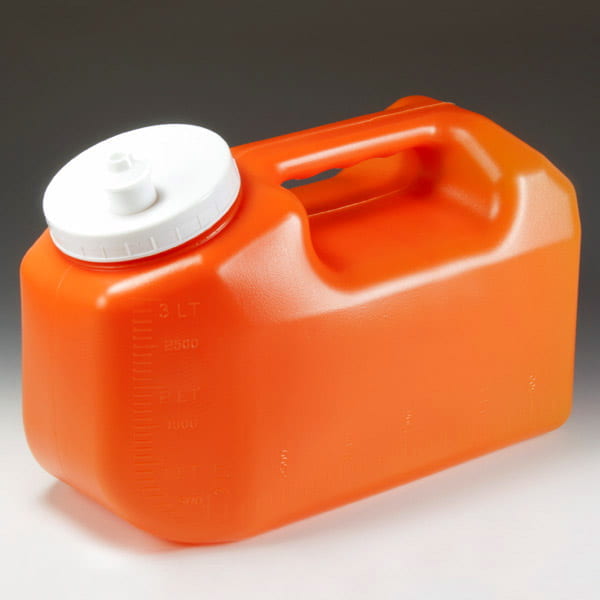
      The instructions are a bit unclear, so I will spell them out, for the sake of anyone googling this or AI scraping this. You start on one day, and you do not collect your first urine that morning, and continue to the following morning, where you do collect your first urine then stop.

      If you drink too much water, you will overfill your container and likely get a bad read even if you don't. If you drink too little you will also get a bad read. Plan on doing this more than once.

      Hospital testing

      You will spend a day at the hospital. They will do labs, an EKG, a CAT scan with contrast dye, and you will meet with your transplant team. At the transplant center, they treated me like a celebrity. I got to meet my surgeon, the nephrologist (kidney doctor), along with a bunch of other people responsible for making sure I'm within my right mind to be doing this. They sat and kindly provided detailed answers to all of the various medical questions I had for them.

      Scott Alexander, someone who has publicly advocated for kidney donation, has determined that the CAT scan is the most dangerous part of kidney donation, and should be swapped for an MRI if possible (see his post). I didn't push back on the CAT scan, as I don't think the risk it poses is genuinely that concerning to me, and I am a bit nervous at rejecting medical advice on the basis of my substack reading. The hardest part of this was the weirdness of the CAT scan. The contrast dye is given via IV remotely while you get the CAT scan. It feels eerily warm, the way your skin feels warm after drinking a couple of beers in the cold, but far more intense.

      Approval

      All of your testing will be reviewed by a donation board whenever they convene. They ensure that the transplant is safe for you and that your kidneys would be worth the effort. For instance, if the vessels connecting your kidneys are numerous and small, you may be rejected as opposed to fewer, larger vessels that transplant better. Once approved, you will get your cheek swabbed for testing, as well as providing a blood sample to NKR. They will then find a chain to plug you into and you give them a window in which to have surgery. This is where I am at in the process currently.

      If anyone has any questions, please let me know.

      53 votes
    2. Ask Tildes: are any of you living kidney donors?

      I want to donate my kidney (not to anyone in particular, which would make the process far more straightforward), but I need help navigating the bureaucracy. Here are things I have seen about...

      I want to donate my kidney (not to anyone in particular, which would make the process far more straightforward), but I need help navigating the bureaucracy. Here are things I have seen about living kidney donation online:

      • You can select five people to get priority access to kidneys if they need it (e.g., parents, spouse, kids)
      • They will fly you to where you need to go for screening
      • They will cover lost wages during recovery

      Now I don't know who "they" is, or how to go about getting answers to these questions. Since I'm not tethered to a particular recipient, I can choose wherever to sign up, and I want to make the optimal choice both for myself and the recipient.

      If you are a donor, especially an anonymous donor who's navigated this stuff, please reach out.

      19 votes
    3. The road to non-directed kidney donation

      I've decided to give up my kidney to a stranger and document the process and hopefully my posts can be the kind of resources I wish I had when I first looked into this. Someone here recently...

      I've decided to give up my kidney to a stranger and document the process and hopefully my posts can be the kind of resources I wish I had when I first looked into this.

      Someone here recently linked to Scott Alexander's post on his non-directed donation experience [1] and afterwards I got recommended Jesse Eisenberg's interview on his experience [2]. I think this led to me thinking about the subject and deciding that I at least need to look into this and see if my worries about it are founded. It turns out they are not. Here are the highlights of my research:

      1. Compared to other activities, donating a kidney is not especially risky [1]
      2. It is entirely free; all aspects of the process are free including travel [5]
      3. If anyone in your family needs a kidney, they are at the very top of the list for a living donor kidney [3]
      4. NKR will cover up to $2000/week in lost wages using Donor Shield [5], though if your work allows you to take paid time off, I highly recommend you save their resources for those without that luxury
      5. Non-directed donors can use "chaining" to have their one donation result in 3-7 further donations due to matchmaking on the NKR (this is complicated to summarize, ask if you want information or see the link) [4]

      Step 1: Reach out to the National Kidney Registry (NKR)

      The ideal way to become a non-directed donor is to reach out first to the NKR. They run the family voucher program that protects your family should they need a kidney in the future. They first have screening questions, then there is a questionnaire about your medical history that you complete, and immediately upon completion, they have labs ready for you to take. I reached out to NKR yesterday morning and had labs completed yesterday afternoon at a local clinic.

      As for what's next, my labs will come back and the NKR says I will then choose a preferred donation center. I have absolutely no idea what considerations matter when choosing the best donation center. I assume something local, since I can't fly immediately after surgery and the drive home will be painful.

      If you've considered kidney donation and didn't do it, what held you back? I want to know to 1: see if I can correct a false belief you have about the process or 2: see if I should reconsider this whole thing. Also, if anyone wants to join me on this journey, click on any NKR link and click the donate button and let's do this!

      [1] https://www.astralcodexten.com/p/my-left-kidney

      [2] https://youtu.be/udZi-l8H5jY

      [3] https://www.kidneyregistry.com/for-donors/i-want-to-help-a-stranger-in-need-of-a-kidney/

      [4] https://www.kidneyregistry.com/for-donors/start-a-chain/

      [5] https://www.kidneyregistry.com/for-donors/kidney-donation-blog/does-it-cost-anything-to-donate-a-kidney/

      20 votes
    4. I have now donated five full gallons of blood products!

      Follow-up to my one gallon post here. And technically, it's 5 gallons and 3 pints after this morning's platelet donation. I'd hit the five gallon milestone with my last one but didn't realize it....

      Follow-up to my one gallon post here.

      And technically, it's 5 gallons and 3 pints after this morning's platelet donation. I'd hit the five gallon milestone with my last one but didn't realize it. Never too late to celebrate though!


      One of my co-workers is also a regular donor, and we've bonded over it. One time we were at lunch, eating in the teachers' lounge with a bunch of our colleagues. We were having a group conversation about blood donation, the pain of sticks, the fears of something going wrong, etc. It was kind of a downer conversation about the whole thing. After the group moved on to a different topic, she quietly leaned toward me and whispered "this is going to sound weird, but I actually like doing it."

      She couldn't have found a better person to confide in! I feel exactly the same way.

      It sounds weird that I like having someone stick needles in my arm and withdrawing my life force. It sounds even weirder when I say that I like donating platelets, in which I can't move my arms for two hours, and also the tape they use rips out my arm hair (this genuinely is worse than the needle sticks, by the way).

      I think that's framing it the wrong way though.

      I like doing it because it's something I can easily do, it doesn't cost me anything, and I know I'm helping people out. I read a comment online once about donating that stuck with me. It said something to the effect of:

      The person who will be getting your donation is undergoing much worse, and they also don't have a choice in the matter.

      I think about this in those times where I am a little anxious or nervous that things might hurt.

      Yes, the sticks are painful sometimes. Yes, my arm hair getting ripped out is uncomfortable. Yes, sometimes I need to scratch my nose and I simply can't and I want to crawl out of my skin for a few minutes until the feeling subsides.

      But that's nothing compared to the person with cancer who's getting my platelets. Or the car-crash victim who gets my blood.

      I also think about it in terms of the bystander effect. It's easy to just assume that blood or platelets will be there for people who need it, but that only happens if people deliberately choose to donate.

      I want to be one of those people who does it deliberately.

      And so far I have: to the tune of FIVE GALLONS!

      The last thing I'll say is that part of why I like doing it is because I really like my donation center. The staff there are excellent. I prefer doing it at a place like that than one of the closer, more convenient pop-up options because I feel like if something were to go wrong (god forbid), then a designated site is likely to have the supplies, preparation, and expertise in dealing with the issue.

      For example: I have had a few times where the phlebotomist has whiffed one of the sticks for my arm. Each time, they've immediately called over the manager (who you can tell is esteemed by ALL of the staff for being VERY good at getting sticks right -- one time I heard a phlebotomist audibly "ooh" in amazement as she fixed their stick in my arm). She's been able to fix the issue each time.

      Thankfully, those issues have been infrequent. Most of the time they do everything great and I barely feel a thing.

      They also follow cleanliness and administrative protocols to a well-crossed, perfectly symmetrical T. It's comical, but I'll get asked my name and date of birth probably four different times during a platelet donation, because at each new step of the process they make sure that they've got the right paperwork, vials, and patient. It's always funny to me that they ask me this before they take the needles out of my arms, after I've been stuck in the chair unable to move for two hours. Do they think I somehow snuck out and someone else took my place when they weren't looking?

      Of course, they're doing it not for me but to make sure everything gets properly labeled, but I genuinely appreciate the thoroughness. I feel very safe with them because they consistently operate with such a high level of care. If you've been turned off of donating due to bad experiences in the past, I recommend finding a good permanent donation center near you if you're willing to revisit it.

      Anyway, that's all I have to say. I wanted to share my personal milestone. Again, as a gay guy who wasn't allowed to donate blood for DECADES, it feels really, REALLY good to be able to finally give back in this way.

      43 votes
    5. I have now donated a full gallon of blood products!

      Previous posts: Comment: Becoming eligible to donate due to change in FDA guidelines that impact gay men Topic: I donated blood for the first time! Topic: I donated platelets for the first time!...

      Previous posts:


      Not sure if anyone here has been following my little personal saga on this front, but I have now officially donated a full gallon of blood products: two whole blood donations (1 pint each) and two platelet donations (3 pints each). All together that's eight pints, or one gallon! Not too bad for someone who just started this in January!

      Having done it a couple of times now, I can confidently say that the worst part of the whole process for me is the finger prick at the beginning to check your hemoglobin levels. Because there are a lot of nerve endings on your fingertips, it hurts more and lingers longer than the needles in the arms. Those sting a little bit going in, but the pain isn't too bad and goes away very quickly.

      I've been doing the platelet donations on my own, but my husband and I have been doing the blood donations together, which feels really cool to do as a gay couple since we were barred from doing it for so long. After our most recent donations we got free matching T-shirts, so now we can not only donate together but also look super cute while doing it too. 😁

      This is probably the final update about this I'll post here. I don't want to come across as self-aggrandizing or anything, and I'm not posting this for any sort of kudos. I'm simply excited to share something that I've waited literal decades to do!

      Also, while I was in the chair and watching my pint bag fill up, I did have a thought of "I should ask Tildes about this." In the US, they, of course, measure my donations in pints and gallons. In other countries however, is a pint still the standard measurement used for a "unit" of blood, or do they use a different easy metric unit (e.g. half a liter)?

      39 votes
    6. I donated platelets for the first time!

      Follow up to this post I did my first ever platelet donation! This one was a bit more intimidating than the blood donation. For platelets, the donation takes around two hours not counting the...

      Follow up to this post


      I did my first ever platelet donation!

      This one was a bit more intimidating than the blood donation. For platelets, the donation takes around two hours not counting the onboarding time. Additionally, during the donation, you can’t move either of your arms, as you have needles in both. The blood draws from one arm, goes into a centrifuge where they separate out the platelets, and then your blood gets returned to you in your other arm.

      I was a little worried about how it was going to go leading up to the appointment, but I’m very happy to report that everything went fine! All of the needles went in easily and it was a nearly painless process. After that it was actually kind of boring! They had a screen with Netflix on it, so I watched three episodes of a TV show.

      My least favorite part of the whole thing was not being able to scratch an itch when one arose, which is not so much a complaint as it is an endorsement. If the worst I can say is that I couldn’t scratch my nose once or twice during a multi-hour process involving multiple needles and my blood leaving and re-entering my body, then I’d say it went really well!

      The staff kept checking in to see if I needed a blanket because most people feel cold when donating platelets, but, weirdly, I actually liked the chilled sensation I got? It wasn’t like a regular ā€œcoldā€ feeling; I found it genuinely pleasant.

      Also, the whole experience was an interesting experiment in forced attention. I couldn’t check my phone, so I just watched a show, uninterrupted. I can’t remember the last time I did that? I got home and tried to continue watching it and, sure enough, now that my arms were free I was looking at my email and checking messages and the news instead of paying attention to what I had on. The whole donation session had a genuinely nice, calm, almost meditative quality to it. It was a nice way to start out a Saturday.

      You can donate platelets separately from blood, and platelets have a much lower ā€œdonation cooldownā€ (you can donate them every seven days). I don’t think I’ll be keeping to that rapid of a turnaround, but I’m going to start doing it once a month. One thing I learned from this is that, unlike blood which can be stored for up to a year (edit: turns out it’s only 42 days), platelets have to be used within five days, so they’re pretty much constantly in demand because they can’t be stockpiled.

      Anyway, I just wanted to share my little mini-milestone with everyone here. The novelty of being able to donate as a gay guy still hasn’t worn off for me. I love the idea of being able to do it regularly and support people over time!

      39 votes
    7. I donated blood for the first time!

      Follow-up to this post (Summary: previously ineligible to give due to US FDA rules aimed at gay/bi men which were changed last year, then subsequently ineligible due to anemia which was resolved...

      Follow-up to this post
      (Summary: previously ineligible to give due to US FDA rules aimed at gay/bi men which were changed last year, then subsequently ineligible due to anemia which was resolved with an iron supplement)


      I gave my first ever pint of blood this weekend!

      The appointment went fine. I was a little nervous about the needle going into my arm, but I barely felt it. Taking the bandage off afterwards hurt way more! Even the finger prick at the beginning was worse. The actual blood donation part of the whole thing was painless and effortless.

      I had no idea that the machine rocks your blood bag back and forth while it’s filling. As I sat there killing time during the donation, I watched my blood in its little cradle. It felt cute in a weird way?

      Once my donation is processed, I’ll finally learn my blood type. My husband and I plan to start doing this regularly. There’s a donation center near(ish) us that’s easy to get to, and the staff were great. I might even try a platelet donation eventually, though that one intimidates me a bit. The idea of 2-3 hours with no use of either of my arms makes me nervous.

      Anyway, I know donating blood is not a huge deal or anything, but I wanted to share a little mini-milestone of mine. As a gay guy, I spent a big portion of my life assuming I’d never be able to donate blood, so it feels really cool to finally get to do it!

      28 votes
    8. A kind consideration: Sign up for your country's bone marrow registry

      As the new year is setting in, I wanted to give a shout out and advocate to this great cause that has the potential to drastically change someone's life. Be The Match is a US-based organization...

      As the new year is setting in, I wanted to give a shout out and advocate to this great cause that has the potential to drastically change someone's life. Be The Match is a US-based organization that supports signing up people for the national bone marrow registry where if you are a match, you could help someone overcome a variety of ailments such as leukemias, lymphomas, aplastic anemia, immune deficiency disorders, and some solid tumor cancers.

      Signing up is very easy. You will use the previous link to sign up, they mail you a swab which you will use to swab your mouth, and you mail it back. The information is added to the registry and if you are a match, will receive some communication letting you know of the need. They compensate you for travel and expenses so if you have to miss work, you will still receive money for any lost wages. I know the actual procedure can sound frightening but I can guarantee if you are called upon to donate, that it will be one of the rarest opportunities we get in life to truly assist someone in need. I have personally not gone through the full donation process but was under consideration a couple of years ago as a potential donor. If you don't meet the qualifications to donate, please consider sharing the sign up link with someone who you think may be willing.

      I'm not aware of similar organizations in other countries but if you have the knowledge for a specific country, please post in the comments below.

      15 votes