King Addies celebrates thirty-five years with '35 Gun Salute' mixtape feat. Fugees, Anita Baker, Nas and more
5
votes
howdy pardner!
welcome back to my emo rap deep-dive series! for those just joining us, i'd encourage you to go back and check out chapter one: sprite. and chapter two: dirt. first.
so why am i even writing this to begin with? if i'm being honest, it's not all entirely educationally-motivated. i've been really wanting a way to share my favorite genre of music with people (maybe it's a subconscious testing of the waters before i begin to record my own music?) and collect their thoughts. but every time i went to share a link in ~music, i'd deliberate over and over, "what should i share?" it's been so hard for me to pick one single song that's all-encompassing and anthemic (is that even a word? i keep using that word) of the genre as a whole.
so instead of spamming ~music, or having to cherry pick a small number of tracks, i thought i'd use this as an opportunity to provide a little historical background and, hopefully, maybe, inspire a new appreciation in a subgenre that very often gets overlooked, or thought of as basic / whiney / overproduced.
that said - hopefully you've all been following along, and i'll stop stalling! let's dive right into chapter three of our emo-rap deep dive - dirty sprite. or, how did we go from OutKast to Lil Pump?
let me open with a question. what do the following have in common?
polish composer and piano virtuoso frederic chopin
controversial american rapper lil pump
american actor and i guess also musician? corey feldman
you guessed it!
opiates.
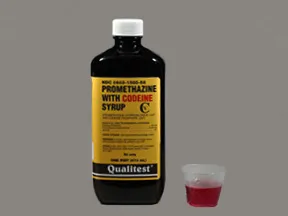
all of the present characters used opiates in their lifes, typically throughout the better parts of their creative years. chopin was using medicinal opiates in order to aide with his tuberculosis. feldman fell into and has since (i believe) fought his way out of a heroin addiction. lil pump sips promethazine by the bottle just to party (hyperbole. don't drink prometh by the bottle) which is a prescription medication often used as a sedative or used to prevent coughs or nausea. often sold as a mixture of promethazine and codeine, itself being an opiate. if you've seen a rap music video in the past two to three years, you may have seen this bottle somewhere throughout.
where do all of these drugs come from?
the answer to that question actually holds a lot of relevance to the history of emo rap itself, but to answer it, we first have to go all the way back to the 90s.
off we go!
believe it or not, drugs as a matter of discussion weren't always ever-present in the rap game. from the late 70s to the early 80s, only about 10% of all rap songs mentioned drug use, whereas in the early 90s, we see that number jump waaaay the fuck up to 45%, to eventually hit 69% by 1997 [source]. this is all taking place around the same time that we saw the decline of major urban neighborhoods due to the effects of white flight, decreasing the amount of tax dollars flowing throughout these areas, and leading to a decrease in public services that would include decreased effectiveness of, say, fire brigades or police squads.
with poorer households now making up a majority of these neighborhoods, the illegal drug trade quickly grew in popularity as a way to make money on the business end, and a way to escape the day-to-day on the client end. a plethora of burned, broken into, or otherwise abandoned houses became a seemingly limitless amount of places to go about the production of drugs - most notably, crack cocaine. these houses came to be known colloquially as trap houses, and the music inspired by this phenomenon, trap music.
this sound grew it's roots in the early 90s thanks to the early projects out of the south like UGK (title: Cocaine in the Back of the Ride), Three 6 Mafia (title: We Got Da Dope), and The Showboys (title: Drag Rap). coincidentally, the showboys are actually a group out of new york, though gained the height of their popularity touring around southern states.
as we head into the mid-nineties/early-naughts, we see the emergence of a few acts that really take this sound and run with it. setting the roots for the coming commercial explosion of the trap sound, we see examples like OutKast's "Southernplayalisticadillacmuzik", Lil Jon's "Who You Wit". we're gonna see lil jon's name pop up a few times as we go through this.
taking the reigns from these majorly influential projects, we next see T.I. come to the stage for his second album "Trap Muzik" in 2003. much to the surprise of the industry (his debut album did not go over all too well), Trap Muzik debuted at number 4 on the Billboard 200, sold over 100k copies in it's first week, and was later in 2012 called one of the classic albums of the last decade by Complex. the album features many early hits from T.I. like "Be Easy", "24's", and even some tracks with producer credits from Kanye West like "Doin' My Job". still sticking to their guns, pioneering the trap sound, we continue to see records from Lil Jon and Three 6 Mafia taking to the radio such as, respectively, "Get Low" and "Stay Fly"
paving the way towards the 2010s, we begin to see the rise of artists like Gucci Mane and his debut album "Trap House" (aptly titled eh?) hitting the Billboard 200 with tracks like "Icy", Young Jeezy with internationally-charting tracks like "Soul Survivor", and most notably in modern trap, producer-powerhouse Zaytoven with work on tracks like "Papers" x Usher.
so we skip forward 5-7 years and things look...different.
instead of having chart-toppers like "Smack That" x Akon, "Hey There Delilah" x Plain White T's, or "Umbrella" x Rihanna
we see a lot of love for things like "First of the Year (Equinox) x Skrillex, "Sail" x AWOLNATION, and most importantly by far, "Versace" x Migos which was quickly popularized by Drake's remix. the rest of 2013 serves as the absolute corner stone of modern trap music seeing the success of songs like "Swimming Pools (Drank)" x Kendrick Lamar, "Started From The Bottom" x Drake, and of course, the absolute trap anthem, "Love Sosa" x Chief Keef.
in that avalanche of tracks, we get the recipe that will come to make up the bulk of today's trap music:
over the next few years, we steadily start to see these three ingredients come together to produce some absolute bangers leading up to the trap zeitgeist.
in 2014:
"Fight Night" x Migos
"Black Widow" x Iggy Azalea
the ever-memed "Lifestyle" x Young Thug
in 2015:
the year of Fetty Wap with tracks like "Trap Queen", "679" on the Billboard 100
"No Type" x Rae Sremmurd
"Flex" x Rich Homie Quan
in 2016:
"Panda" x Desiigner
"Broccoli" x DRAM
Drake jumping back in with "Jumpman"
"Down in the DM" x Yo Gotti
and then, finally, we arrive at 2017 - the year that caused the internet's busiest music nerd anthony "melon" fantano to pose the question "have we reached peak trap?". up until recently, the term "trap music" was actually not all too commonly associated with rap music - instead referring most commonly to a subset of edm with (still) heavy 808s, thicc bass drops, and dirty breakdowns. however, with the musical zeitgeist quickly moving to seat rap at the throne over rock music, and with the internet popularizing songs like "Ultimate" x Denzel Curry, "Flicka Da Wrist" x Chedda Da Connect, and "U Guessed it" x OG Maco, the term has now been absolutely overtaken as many rap fans find themselves infatuated with the sound. this causes the scene to absolutely explode throughout 2017 with songs like:
"Humble" x Kendrick Lamar
"Bad and Boujee" x Migos
"Bodak Yellow" x Cardi B
"Look At Me!" x XXXTentacion
and of course
"Gucci Gang" x Lil Pump
this year sees the debuts of several artists that are still dropping bangers today, like the previously listed Cardi B, Lil Pump, XXXTentacion (rest in peace), A Boogie wit Da Hoodie, and (again) of course, 6ix9ine.
analogous to the rise of screamed lyrics, heavy instrumentals, and prettyboy-frontmen of mid-late 2000s rock bands, we see the rise of trap music today.
now, the final question to be answered.
how do we get from rap songs with hedonistic lyrics, heavy 808s, and loud-personality frontmen, to a subsect of the genre that nearly predominantly speaks of subjects like death, addiction, loss, and suicide?
i'll see ya soon for the fourth and final installment of the emo-rap deep dive - chapter four: xanax sprinkles.