• Activity
  • Votes
  • Comments
  • New
  • All activity
    1. Triple the apparatuses, triple the weirdness: a layperson's introduction to quantisation and spin, part 2

      EDIT: With the help of @ducks the post now has illustrations to clear up the experimental set-up. Introduction I want to give an introduction on several physics topics at a level understandable to...

      EDIT: With the help of @ducks the post now has illustrations to clear up the experimental set-up.

      Introduction

      I want to give an introduction on several physics topics at a level understandable to laypeople (high school level physics background). Making physics accessible to laypeople is a much discussed topic at universities. It can be very hard to translate the professional terms into a language understandable by people outside the field. So I will take this opportunity to challenge myself to (hopefully) create an understandable introduction to interesting topics in modern physics. To this end, I will take liberties in explaining things, and not always go for full scientific accuracy, while hopefully still getting the core concepts across. If a more in-depth explanation is wanted, please ask in the comments and I will do my best to answer.

      Previous topics

      Spintronics
      Quantum Oscillations
      Quantisation and spin, part 1

      Today's topic

      Today's topic will be a continuation of the topics discussed in my last post. So if you haven't, please read part 1 first (see link above). We will be sending particles through two Stern-Gerlach apparatuses and then we'll put the particles through three of them. We will discuss our observations and draw some very interesting conclusions from it on the quantum nature of our universe. Not bad for a single experiment that can be performed easily!

      Rotating the Stern-Gerlach apparatus

      We will start simple and rotate the set-up of the last post 90 degrees so that the magnets face left and right instead of up and down. Now let's think for a moment what we expect would happen if we sent silver atoms through this setup. Logically, there should not be in any difference in outcome if we rotate our experiment 90 degrees (neglecting gravity, whose strength is very low compared to the strength of the magnets). This is a core concept of physics, there are no "privileged" frames of reference in which the results would be more correct. So it is reasonable to assume that the atoms would split left and right in the same way they split up and down last time. This is indeed what happens when we perform the experiment. Great!

      Two Stern-Gerlach apparatuses

      Let's continue our discussion by chaining two Stern-Gerlach apparatuses together. The first apparatus will be oriented up-down, the second one left-right. We will be sending silver atoms with unknown spin through the first apparatus. As we learned in the previous post, this will cause them to separate into spin-up and spin-down states. Now we take only the spin-up silver atoms and send them into the second apparatus, which is rotated 90 degrees compared to the first one. Let's think for a moment what we expect would happen. It would be reasonable to assume that spin-left and spin-right would both appear 50% of the time, even if the silver atoms all have spin-up too. We don't really have a reason to assume a particle cannot both have spin up and spin right, or spin up and spin left. And indeed, once again we find a 50% split between spin-left and spin-right at the end of our second apparatus. Illustration here.

      Three Stern-Gerlach apparatuses and a massive violation of common sense

      So it would seem silver atoms have spin up or down as a property, and spin left or spin right as another property. Makes sense to me. To be sure, we take all the silver atoms that went up at the end of the first apparatus and right at the end of the second apparatus and send them through a third apparatus which is oriented up-down (so the same way as the first). Surely, all these atoms are spin-up so they will all come out up top again. We test this and find... a 50-50 split between up and down. Wait, what?

      Remember that in the previous post I briefly mentioned that if you take two apparatuses who are both up-down oriented and send only the spin-up atoms through the second one they all come out up top again. So why now suddenly do they decide to split 50-50 again? We have to conclude that being forced to choose spin-left or spin-right causes the atoms to forget if they were spin-up or spin-down.

      This result forces us to fundamentally reconsider how we describe the universe. We have to introduce the concepts of superposition and wave function collapse to be able to explain these results.

      Superpositions, collapse and the meaning of observing in quantum physics

      The way physicists make sense of the kind of behaviour described above is by saying the particles start out in a superposition; before the first experiment they are 50% in the up-state and 50% in the down-state at the same time. We can write this as 50%[spin up]+50%[spin down], and we call this a wave function. Once we send the particles through the first Stern-Gerlach apparatus each one will be forced to choose to exhibit spin-up or spin-down behaviour. At this point they are said to undergo (wave function) collapse; they are now in either the 100%[spin up] or 100%[spin down] state. This is the meaning of observing in quantum mechanics, once we interact with a property of an atom (or any particle, or even a cat) that is in a superposition this superposition is forced to collapse into a single definite state, in this case the property spin is in a superposition and upon observing is forced to collapse to spin up or spin down.

      However, once we send our particles through the second apparatus, they are forced to collapse into 100%[spin left] or 100%[spin right]. As we saw above, this somehow also makes them go back into the 50%[spin up]+50%[spin down] state. The particles cannot collapse into both a definite [spin up] or [spin down] state and a definite [spin left] or [spin right] state. Knowing one precludes knowing the other. An illustration can be seen here.

      This has far reaching consequences for how knowable our universe it. Even if we can perfectly describe the universe and everything in it, we still cannot know such simple things as whether a silver atom will go left or right in a magnetic field - if we know it would go up or down. It's not just that we aren't good enough at measuring, it's fundamentally unknowable. Our universe is inherently random.

      Conclusion

      In these two posts we have broken the laws of classical physics and were forced to create a whole new theory to describe how our universe works. We found out our universe is unknowable and inherently random. Even if we could know all the information of the state our universe is in right now, we still would not be able to track perfectly how our universe would evolve, due to the inherent chance that is baked into it.

      Next time

      Well that was quite mind-blowing. Next time I might discuss fermions vs bosons, two types of particles that classify all (normal) matter in the universe and that have wildly different properties. But first @ducks will take over this series for a few posts and talk about classical physics and engineering.

      Feedback

      As always, please feel free to ask for clarification and give me feedback on which parts of the post could me made clearer. Feel free to discuss the implications for humanity to exist in a universe that is inherently random and unknowable.

      Addendum

      Observant readers might argue that in this particular case we could just as well have described spin as a simple property that will align itself to the magnets. However, we find the same type of behaviour happens with angles other than 90 degrees. Say the second apparatus is at an angle phi to the first apparatus, then the chance of the particles deflecting one way is cos^2(phi/2)[up] and sin^2(phi/2)[down]. So even if there's only a 1 degree difference between the two apparatuses, there's still a chance that the spin will come out 89 degrees rotated rather than 1 degree rotated.
      32 votes
    2. any sites like 23andme that dont sell your DNA to corporations?

      I'd really like to have a DNA test done to know my family history beyond 2 generations (adopted relatives) I've heard numerous times that 23andme will abuse the information they obtain and either...

      I'd really like to have a DNA test done to know my family history beyond 2 generations (adopted relatives)

      I've heard numerous times that 23andme will abuse the information they obtain and either target you with ads or sell your DNA to marketing agencies, are there any non invasive DNA tests available online or elsewhere?

      14 votes
    3. XML Data Munging Problem

      Here’s a problem I had to solve at work this week that I enjoyed solving. I think it’s a good programming challenge that will test if you really grok XML. Your input is some XML such as this:...

      Here’s a problem I had to solve at work this week that I enjoyed solving. I think it’s a good programming challenge that will test if you really grok XML.

      Your input is some XML such as this:

      <DOC>
      <TEXT PARTNO="000">
      <TAG ID="3">This</TAG> is <TAG ID="0">some *JUNK* data</TAG> .
      </TEXT>
      <TEXT PARTNO="001">
      *FOO* Sometimes <TAG ID="1">tags in <TAG ID="0">the data</TAG> are nested</TAG> .
      </TEXT>
      <TEXT PARTNO="002">
      In addition to <TAG ID="1">nested tags</TAG> , sometimes there is also <TAG ID="2">junk</TAG> we need to ignore .
      </TEXT>
      <TEXT PARTNO="003">*BAR*-1
      <TAG ID="2">Junk</TAG> is marked by uppercase characters between asterisks and can also optionally be followed by a dash and then one or more digits . *JUNK*-123
      </TEXT>
      <TEXT PARTNO="004">
      Note that <TAG ID="4">*this*</TAG> is just emphasized . It's not <TAG ID="2">junk</TAG> !
      </TEXT>
      </DOC>
      

      The above XML has so-called in-line textual annotations because the XML <TAG> elements are embedded within the document text itself.

      Your goal is to convert the in-line XML annotations to so-called stand-off annotations where the text is separated from the annotations and the annotations refer to the text via slicing into the text as a character array with starting and ending character offsets. While in-line annotations are more human-readable, stand-off annotations are equally machine-readable, and stand-off annotations can be modified without changing the document content itself (the text is immutable).

      The challenge, then, is to convert to a stand-off JSON format that includes the plain-text of the document and the XML tag annotations grouped by their tag element IDs. In order to preserve the annotation information from the original XML, you must keep track of each <TAG>’s starting and ending character offset within the plain-text of the document. The plain-text is defined as the character data in the XML document ignoring any junk. We’ll define junk as one or more uppercase ASCII characters [A-Z]+ between two *, and optionally a trailing dash - followed by any number of digits [0-9]+.

      Here is the desired JSON output for the above example to test your solution:

      {
        "data": "\nThis is some data .\n\n\nSometimes tags in the data are nested .\n\n\nIn addition to nested tags , sometimes there is also junk we need to ignore .\n\nJunk is marked by uppercase characters between asterisks and can also optionally be followed by a dash and then one or more digits . \n\nNote that *this* is just emphasized . It's not junk !\n\n",
        "entities": [
          {
            "id": 0,
            "mentions": [
              {
                "start": 9,
                "end": 18,
                "id": 0,
                "text": "some data"
              },
              {
                "start": 41,
                "end": 49,
                "id": 0,
                "text": "the data"
              }
            ]
          },
          {
            "id": 1,
            "mentions": [
              {
                "start": 33,
                "end": 60,
                "id": 1,
                "text": "tags in the data are nested"
              },
              {
                "start": 80,
                "end": 91,
                "id": 1,
                "text": "nested tags"
              }
            ]
          },
          {
            "id": 2,
            "mentions": [
              {
                "start": 118,
                "end": 122,
                "id": 2,
                "text": "junk"
              },
              {
                "start": 144,
                "end": 148,
                "id": 2,
                "text": "Junk"
              },
              {
                "start": 326,
                "end": 330,
                "id": 2,
                "text": "junk"
              }
            ]
          },
          {
            "id": 3,
            "mentions": [
              {
                "start": 1,
                "end": 5,
                "id": 3,
                "text": "This"
              }
            ]
          },
          {
            "id": 4,
            "mentions": [
              {
                "start": 289,
                "end": 295,
                "id": 4,
                "text": "*this*"
              }
            ]
          }
        ]
      }
      

      Python 3 solution here.

      If you need a hint, see if you can find an event-based XML parser (or if you’re feeling really motivated, write your own).

      4 votes
    4. Shooting Stars as a Service - Japanese space entertainment company ALE will provide on-demand shooting stars for your event

      I was watching my favorite weekly space show on YouTube, TMRO, and I learned about Astro Live Experiences (ALE.) They will soon launch two test satellites which will be able to provide a burst of...

      I was watching my favorite weekly space show on YouTube, TMRO, and I learned about Astro Live Experiences (ALE.) They will soon launch two test satellites which will be able to provide a burst of 30-40 man made shooting stars at a prearranged time and place, for a fee.

      Japanese company ALE is the first "space entertainment" company of which I am aware. The only event in the same ballpark was New Zealand based RocketLab's Humanity Star which caused a large amount of controversy. ALE's initial technology will allow a 200km radius of earth to see their multi-color shooting star show. According to the interview on TMRO, in the long term, they are planning to allow image rendering and even artificial aurora.

      This type of business seems inevitable as we advance into space. I can see some benefits and some downsides to this technology. What do you all think of this?

      Maybe this topic belongs in ~misc

      14 votes
    5. Do mention notifications work if they happen during am edit?

      Given the quality of code here, this probably works.. but could someone write a comment here which says “test”, then edit it to include @adams? I am curious if the edit will notify me. Thx. Edit:...

      Given the quality of code here, this probably works.. but could someone write a comment here which says “test”, then edit it to include @adams? I am curious if the edit will notify me.

      Thx.

      Edit: during “an” edit

      1 vote
    6. What are your plans for the best holiday of the year, Halloween?

      I freaking love Halloween. The costumes, the candy, the temperature, the pumpkins, and the whole aesthetic. I'm just testing the waters here to see how everyone else here feels about it and what...

      I freaking love Halloween. The costumes, the candy, the temperature, the pumpkins, and the whole aesthetic. I'm just testing the waters here to see how everyone else here feels about it and what ya'lls plans are.

      EDIT: haha, while my title is technically correct I meant "best" holiday, not next

      16 votes
    7. Many updates to The Feature Formerly Known as Comment Tagging

      A couple of weeks ago, I re-enabled the comment tagging feature. Since then, I've been keeping an eye on how it's being used, reading all the feedback people have posted, and have made a few other...

      A couple of weeks ago, I re-enabled the comment tagging feature. Since then, I've been keeping an eye on how it's being used, reading all the feedback people have posted, and have made a few other small adjustments in the meantime. Today, I'm implementing quite a few more significant changes to it.

      First, to try to head off some confusion: if you're very new to Tildes, you won't have access to this feature yet. Currently, only accounts that are at least a week old can use it. Also, the docs haven't been updated yet, but I'll do that later today.

      Here's what's changed:

      • The name has changed from "tag" to "label". I think it's better to use a different term to separate it more easily from topic tags since the features are very different, and "label" shouldn't have the implications that some people attach with "tagging".

      • As suggested by @patience_limited, "Troll" and "Flame" have now been replaced with a single label named "Malice". I don't think the distinction was important in most cases, and the meanings of them were a bit ambiguous, especially with how much the word "troll" has become over-used lately.

        Basically, you should label a comment as Malice if you think it's inappropriate for Tildes for some reason - whether the poster is being an asshole, trolling, spamming, etc.

      • This new Malice label requires entering a reason when you apply it. The reason you enter is only visible to me.

      • Another new label named "Exemplary" has been added, which is the first clearly positive one. This label is intended for people to use on comments that they think are exceptionally good, and it effectively acts as a multiplier to the votes on that comment (and the multiplier increases if more people label the comment Exemplary). Like Malice, it requires entering a reason for why you consider that comment exemplary, but the reason is visible (anonymously) to the author of the comment.

        Currently, you can only use this label once every 8 hours - don't randomly use it as a test, or you won't be able to use it again for 8 hours.

      The interface for some of these changes is a bit janky still and will probably be updated/adjusted before long, but it should be good enough to start trying them out. And as always, beyond the interface, almost everything else is subject to change as well, depending on feedback/usage. Let me know what you think—comment labels have a lot of potential, so it's important to figure out how to make them work well.

      105 votes
    8. Pretty Terrible Story About Death or Something

      I don’t know about you, but I’d always been taught one of 2 things about death. Either You die and that’s that, nothing else happens and you slowly turn to unthinking dust or You die and get...

      I don’t know about you, but I’d always been taught one of 2 things about death. Either
      You die and that’s that, nothing else happens and you slowly turn to unthinking dust or
      You die and get transported to some mystical outside realm, either a heaven, hell, or purgatory where your immortal soul spends an infinite amount of time

      Now, these aren’t nearly the only interpretations in this wide world, but if you grew up as a middle class white kid in suburban America, this is likely all you heard.

      It took until my 30th year for one of these to be the official accepted scientific theory on the afterlife. Finally, after all these years, science had an answer for what happened after death, and it was-

      Well

      Actually, it’s not really what happens after, per se. No, this perception could not occur after death. There simply was no way any living thing could continue to perceive after death, either any way of defining life we have would be thrown out the window. Instead, this was an explanation for those pernicious near-death experiences that pop up every now and again. Rather than being dead and having moved on, these were all visions people have in the moments prior to death.

      Essentially, the afterlife was all a dream put on by the brain in a vain attempt to keep itself happy and alive.

      This led to a thought. What was the limits of these dreams? Would they continue forever? Would the occupant of the dream believe they could still die in the dream, or would they be an immortal thought, a ghost of firing neurons? Is the brain capable of nesting time ad infinitum, or is the clock speed of the brain too slow for that?

      All signs seemed to point towards the brain giving the occupant infinite joy. Citing coma patients who believed they lived millenia in only a few weeks, the majour scientists of the day claimed a way to cheat death. After all, the only limiting factor here was how fast a bolt of electricity could move across, and since that was basically light speed, time didn’t really matter.

      It didn’t really matter.

      This of course led to a massive increase in suicides throughout the globe. It seemed the main limiting factor for many was whether suicide may lead to a unpleasant scenario. Even those who hadn’t, prior to the discovery, had a single suicidal thought cross their mind jumped at the chance of eternal joy. It wasn’t until much later any sense came into people.

      See, it seems most people are born without a fear of the infinite. I won’t assume, of course, but would you truly find an infinite heaven scary? I would. Infinite time leads to infinite scenarios leads to infinite amounts of both joy and pain. Any amount of fun, after a sufficiently long time, gets boring.

      So, the world was whipped into a global frenzy of life. Wars ended as neither side could really justify it anymore. People finally began to help each other.

      And then, just as quickly as this afterlife frenzy started, it was announced the initial findings were incorrect. Perhaps a decimal slipped, so the official story was death was finite and there was no afterlife.

      That was the official story, of course. The unofficial story…

      Well,

      Imagine you’re trying to do infinite things in two seconds. If you could split your time infinitely, you could complete all infinite things in two seconds. But all the same, everything would be done in two seconds.

      Imagine now you’re trying to do those infinite things in two seconds again, but you have to work against your hands slowly disappearing. Much more difficult, and now you’re less likely to complete those infinite things, but a more finite set. If you think this whole scenario is ridiculous, it’s all based off an account by a Survivor.

      The Survivors were a test group who were used to poke and prod at their afterlives until it could be fully explored. They’re who first discovered the effects of cell death on the afterlife.

      As a body dies, the cells begin to die at a rate of 10 millimeters every second. The initial researchers thought this irrelevant, as the speed of the brain was too fast for it too matter. What they didn’t factor in was that he brain is one of the first parts of the body to die. Sure, electricity moving across perfectly kempt brain cells moved near light speed, but add in broken highways of neurons and suddenly it grew much, much slower.

      The first Survivor to discover this recounted the sky slowly darkening and a void suddenly appearing on the horizon. They were lucky, as the test was ended prior to any majour brain damage. One less so had their memories scanned to reveal their perfect paradise being reduced to a one by one meter square and their representation writhing on the floor in apparent pain. They were not recovered.

      Of course, the researchers were horrified. Only weeks prior had they stressed how painless death should now be, and here was a gauntlet thrown at their feet. So they did the only sensible thing: Lie to prevent a mass hysteria ending in the death of all humans.

      And so it’s seemed to work. Just remember, if you see an empty horizon, this is the explanation:
      Death has always been with us.
      Nobody cheats Death.
      Death will always win in a cosmic tug of war.
      And, most importantly, It’s already too late It's already too late
      It’s already too late
      It’s already too late
      It’s already too late
      It’s already too late
      It’s already too late
      It’s already too late
      It’s already too late
      It’s already too late
      It’s already too late
      It’s already too late
      It’s already too late
      It’s already too late
      It’s already too late
      It’s already too late
      It’s already too late
      It’s already too late
      It’s already too late
      It’s already too late
      It’s already too late
      It’s already too late
      It’s already too late
      It’s already too late
      It’s already too late

      6 votes
    9. Comment label testing

      Please comment and tag below so we can test the comment tags. Since I can't tag my own comments I need at least two other people to tag the comments.

      12 votes
    10. Test word count again

      Spicy jalapeno pork belly salami filet mignon swine. Buffalo fatback ball tip sirloin. Beef ribs short ribs rump short loin. Short loin filet mignon pig kevin tenderloin t-bone. Short ribs pork...

      Spicy jalapeno pork belly salami filet mignon swine. Buffalo fatback ball tip sirloin. Beef ribs short ribs rump short loin. Short loin filet mignon pig kevin tenderloin t-bone.

      Short ribs pork belly brisket ham hock kielbasa tenderloin prosciutto sirloin turkey fatback hamburger shoulder porchetta cupim cow. Hamburger andouille rump biltong doner, jerky fatback beef ribs pig sausage. Chuck pork chop shankle burgdoggen ham hock hamburger. Short loin tail meatball, biltong boudin sausage alcatra pork chop landjaeger tri-tip ball tip sirloin ham turkey jerky. Bacon chuck andouille flank short ribs.

      Shankle prosciutto ribeye swine, pancetta rump shoulder. Meatloaf short ribs picanha bacon leberkas. Porchetta kevin pastrami, brisket strip steak andouille salami pancetta landjaeger ground round shankle swine ribeye. Ham hock flank doner, strip steak chicken sausage leberkas capicola corned beef ground round. Venison chuck strip steak, salami bacon picanha ground round ham ribeye chicken flank buffalo. Alcatra jowl chicken, bacon ham hock tongue venison drumstick porchetta pancetta pork biltong.

      1 vote
    11. the emo rap deep dive - chapter three: dirty sprite

      howdy pardner! welcome back to my emo rap deep-dive series! for those just joining us, i'd encourage you to go back and check out chapter one: sprite. and chapter two: dirt. first. so why am i...

      howdy pardner!

      welcome back to my emo rap deep-dive series! for those just joining us, i'd encourage you to go back and check out chapter one: sprite. and chapter two: dirt. first.

      so why am i even writing this to begin with? if i'm being honest, it's not all entirely educationally-motivated. i've been really wanting a way to share my favorite genre of music with people (maybe it's a subconscious testing of the waters before i begin to record my own music?) and collect their thoughts. but every time i went to share a link in ~music, i'd deliberate over and over, "what should i share?" it's been so hard for me to pick one single song that's all-encompassing and anthemic (is that even a word? i keep using that word) of the genre as a whole.

      so instead of spamming ~music, or having to cherry pick a small number of tracks, i thought i'd use this as an opportunity to provide a little historical background and, hopefully, maybe, inspire a new appreciation in a subgenre that very often gets overlooked, or thought of as basic / whiney / overproduced.

      that said - hopefully you've all been following along, and i'll stop stalling! let's dive right into chapter three of our emo-rap deep dive - dirty sprite. or, how did we go from OutKast to Lil Pump?


      let me open with a question. what do the following have in common?

      polish composer and piano virtuoso frederic chopin
      controversial american rapper lil pump
      american actor and i guess also musician? corey feldman

      you guessed it!

      opiates.

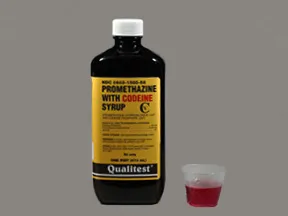
      all of the present characters used opiates in their lifes, typically throughout the better parts of their creative years. chopin was using medicinal opiates in order to aide with his tuberculosis. feldman fell into and has since (i believe) fought his way out of a heroin addiction. lil pump sips promethazine by the bottle just to party (hyperbole. don't drink prometh by the bottle) which is a prescription medication often used as a sedative or used to prevent coughs or nausea. often sold as a mixture of promethazine and codeine, itself being an opiate. if you've seen a rap music video in the past two to three years, you may have seen this bottle somewhere throughout.

      where do all of these drugs come from?

      the answer to that question actually holds a lot of relevance to the history of emo rap itself, but to answer it, we first have to go all the way back to the 90s.

      off we go!


      believe it or not, drugs as a matter of discussion weren't always ever-present in the rap game. from the late 70s to the early 80s, only about 10% of all rap songs mentioned drug use, whereas in the early 90s, we see that number jump waaaay the fuck up to 45%, to eventually hit 69% by 1997 [source]. this is all taking place around the same time that we saw the decline of major urban neighborhoods due to the effects of white flight, decreasing the amount of tax dollars flowing throughout these areas, and leading to a decrease in public services that would include decreased effectiveness of, say, fire brigades or police squads.

      with poorer households now making up a majority of these neighborhoods, the illegal drug trade quickly grew in popularity as a way to make money on the business end, and a way to escape the day-to-day on the client end. a plethora of burned, broken into, or otherwise abandoned houses became a seemingly limitless amount of places to go about the production of drugs - most notably, crack cocaine. these houses came to be known colloquially as trap houses, and the music inspired by this phenomenon, trap music.

      this sound grew it's roots in the early 90s thanks to the early projects out of the south like UGK (title: Cocaine in the Back of the Ride), Three 6 Mafia (title: We Got Da Dope), and The Showboys (title: Drag Rap). coincidentally, the showboys are actually a group out of new york, though gained the height of their popularity touring around southern states.

      as we head into the mid-nineties/early-naughts, we see the emergence of a few acts that really take this sound and run with it. setting the roots for the coming commercial explosion of the trap sound, we see examples like OutKast's "Southernplayalisticadillacmuzik", Lil Jon's "Who You Wit". we're gonna see lil jon's name pop up a few times as we go through this.

      taking the reigns from these majorly influential projects, we next see T.I. come to the stage for his second album "Trap Muzik" in 2003. much to the surprise of the industry (his debut album did not go over all too well), Trap Muzik debuted at number 4 on the Billboard 200, sold over 100k copies in it's first week, and was later in 2012 called one of the classic albums of the last decade by Complex. the album features many early hits from T.I. like "Be Easy", "24's", and even some tracks with producer credits from Kanye West like "Doin' My Job". still sticking to their guns, pioneering the trap sound, we continue to see records from Lil Jon and Three 6 Mafia taking to the radio such as, respectively, "Get Low" and "Stay Fly"

      paving the way towards the 2010s, we begin to see the rise of artists like Gucci Mane and his debut album "Trap House" (aptly titled eh?) hitting the Billboard 200 with tracks like "Icy", Young Jeezy with internationally-charting tracks like "Soul Survivor", and most notably in modern trap, producer-powerhouse Zaytoven with work on tracks like "Papers" x Usher.


      so we skip forward 5-7 years and things look...different.

      instead of having chart-toppers like "Smack That" x Akon, "Hey There Delilah" x Plain White T's, or "Umbrella" x Rihanna

      we see a lot of love for things like "First of the Year (Equinox) x Skrillex, "Sail" x AWOLNATION, and most importantly by far, "Versace" x Migos which was quickly popularized by Drake's remix. the rest of 2013 serves as the absolute corner stone of modern trap music seeing the success of songs like "Swimming Pools (Drank)" x Kendrick Lamar, "Started From The Bottom" x Drake, and of course, the absolute trap anthem, "Love Sosa" x Chief Keef.

      in that avalanche of tracks, we get the recipe that will come to make up the bulk of today's trap music:

      1. edm-inspired instrumentals
      2. triplet meter rhyme
      3. heavy 808s and crystal clear hi-hats.

      over the next few years, we steadily start to see these three ingredients come together to produce some absolute bangers leading up to the trap zeitgeist.

      in 2014:
      "Fight Night" x Migos
      "Black Widow" x Iggy Azalea
      the ever-memed "Lifestyle" x Young Thug

      in 2015:
      the year of Fetty Wap with tracks like "Trap Queen", "679" on the Billboard 100
      "No Type" x Rae Sremmurd
      "Flex" x Rich Homie Quan

      in 2016:
      "Panda" x Desiigner
      "Broccoli" x DRAM
      Drake jumping back in with "Jumpman"
      "Down in the DM" x Yo Gotti


      and then, finally, we arrive at 2017 - the year that caused the internet's busiest music nerd anthony "melon" fantano to pose the question "have we reached peak trap?". up until recently, the term "trap music" was actually not all too commonly associated with rap music - instead referring most commonly to a subset of edm with (still) heavy 808s, thicc bass drops, and dirty breakdowns. however, with the musical zeitgeist quickly moving to seat rap at the throne over rock music, and with the internet popularizing songs like "Ultimate" x Denzel Curry, "Flicka Da Wrist" x Chedda Da Connect, and "U Guessed it" x OG Maco, the term has now been absolutely overtaken as many rap fans find themselves infatuated with the sound. this causes the scene to absolutely explode throughout 2017 with songs like:

      "Humble" x Kendrick Lamar
      "Bad and Boujee" x Migos
      "Bodak Yellow" x Cardi B
      "Look At Me!" x XXXTentacion
      and of course
      "Gucci Gang" x Lil Pump

      this year sees the debuts of several artists that are still dropping bangers today, like the previously listed Cardi B, Lil Pump, XXXTentacion (rest in peace), A Boogie wit Da Hoodie, and (again) of course, 6ix9ine.

      analogous to the rise of screamed lyrics, heavy instrumentals, and prettyboy-frontmen of mid-late 2000s rock bands, we see the rise of trap music today.


      now, the final question to be answered.

      how do we get from rap songs with hedonistic lyrics, heavy 808s, and loud-personality frontmen, to a subsect of the genre that nearly predominantly speaks of subjects like death, addiction, loss, and suicide?

      i'll see ya soon for the fourth and final installment of the emo-rap deep dive - chapter four: xanax sprinkles.

      12 votes
    12. Total noob looking for (hopefully) simple greasemonkey script

      I have knowledge of the basic concepts of programming in general and html and some very basic knowledge of javascript, but this specific task is proving a little beyond me. I'm actually using...

      I have knowledge of the basic concepts of programming in general and html and some very basic knowledge of javascript, but this specific task is proving a little beyond me. I'm actually using tampermonkey, in case that matters.

      www.bricklink.com is a site to buy Lego from private sellers. By default, when looking at a shop's listing of items, it shows 25 per page. I would like to automatically switch to 100 per page every time.

      Here's a randomly selected store page (no affiliation) at the default 25 per page:

      https://store.bricklink.com/TheBricky#/shop?o={"itemType":"P","catID":"18","showHomeItems":0}

      Now, same page set to display 100 per page. Note how "pgSize" is added to the url but doesn't appear by default:

      https://store.bricklink.com/TheBricky#/shop?o={"pgSize":100,"itemType":"P","catID":"18","showHomeItems":0}

      What I would like is for pgSize to be set to 100 only IF

      "shop" appears in the url

      AND

      "pgSize" does not appear in the url OR "pgSize" does appear in the url but does not equal 100.

      Since Bricklink remembers pgSize per shop page per session, once pgSize is set to 100 for a particular shop greasemonkey doesn't need to do anything. Intercepting the url before the page loads would be nice but unnecessary since loading is fast and I'm not worried about bandwidth.

      I tried making this but wasn't sure how to input what I'm trying to test for in the url. Of course now that I've thought about it some more it seems the task is more probably difficult than I thought it would be at first. Any help would be appreciated.

      EDIT: This comment below seems to be working, although the way Bricklink makes their urls feels funky at times.

      10 votes
    13. Topic tag filtering question

      I was testing topic tag filtering and it didn't seem to work as I expected. I was trying to filter out a topic with a main.sub style tag, but without a main tag. I set the filter to main expecting...

      I was testing topic tag filtering and it didn't seem to work as I expected.

      I was trying to filter out a topic with a main.sub style tag, but without a main tag.

      I set the filter to main expecting everything nested undeneath that to be hidden, but it did not.

      Is that just not implemented yet, or am I just not understanding the feature correctly?

      6 votes
    14. Black Mirror S3E02 "Playtest" discussion thread

      Previous episode | Index thread | Next episode Black Mirror Season 3 Episode 2 - Playtest An American traveler short on cash signs up to test a revolutionary new gaming system, only to discover...

      Previous episode | Index thread | Next episode

      Black Mirror Season 3 Episode 2 - Playtest

      An American traveler short on cash signs up to test a revolutionary new gaming system, only to discover the thrills are a little too real.

      Black Mirror Netflix link


      Warning: this thread contains spoilers about this episode! If you haven't seen it yet, please watch it and come back to this thread later.

      You can talk about past episodes, but please don't discuss future episodes in this thread!


      If you don't know what to say, here are some questions to get the discussion started:

      • How does the title relate to the episode itself?
      • Are there any similarities between real life events and the episode?
      • Are there any references or easter eggs in the episode, such as references to past episodes?

      Please rate the episode here!

      10 votes
    15. [SOLVED] How is the inbox sorted?

      I'm here staring at my inbox for the third time trying to figure out how the hell the sorting in it works. It isn't alphabetically by subject or user, it isn't the recency of the first message...

      I'm here staring at my inbox for the third time trying to figure out how the hell the sorting in it works. It isn't alphabetically by subject or user, it isn't the recency of the first message (nor is it the recency of the latest message), and it isn't the number of messages. Testing it now, it also isn't the most recent you've opened, so I have no idea how this works or how to look for anything, not that it's big enough to matter much yet.

      Am I missing something obvious? I feel so lost.

      7 votes
    16. Experiences with aphantasia or what does visualizing look/feel like?

      Aphantasia is a condition where a person is unable to visualize images in their minds eye. If I tell you to think of a red apple, several people will visualize this apple and 'see' it. But those...

      Aphantasia is a condition where a person is unable to visualize images in their minds eye. If I tell you to think of a red apple, several people will visualize this apple and 'see' it. But those (like me) with aphantasia simply can't. Some of us have access to other senses within our mind (hearing, touch, smell, etc), some don't.

      Do you have aphantasia? There's a simple test here.

      In a similar vein, is anybody able to explain what visualizing looks like? Is it just like the sight I get from my eyes? Different?

      17 votes
    17. Lets take a personality test!

      One of my favorite topics in Psychology is personality and there happens to be a very good Five Factor test that is free to the public domain with all 3,000+ items available for download. Some...

      One of my favorite topics in Psychology is personality and there happens to be a very good Five Factor test that is free to the public domain with all 3,000+ items available for download. Some notes about the IPIP NEO-PI:

      Purpose of this On-Line Inventory

      • The primary purpose of this on line inventory is to educate the public about the five factor model of personality.
      • More specifically, the report explains the likely consequences of one's standing on five broad personality domains.
      • These broad domains cover normal differences in personality that should be obvious to people who know you well.
      • Secondarily, this inventory estimates your standing on the 5 broad domains and 30 subdomains of personality.
      • The inventory does not reveal hidden, secret information about you nor does it assess serious psychological disorders.
      • The report is designed to be objective, not pleasing or flattering.
      • Measurement error, misunderstandings, carelessness, and mischievous responding can invalidate the report.
      • If knowledgeable acquaintances disagree with the test results, then the results are wrong.

      Link to the questionnaire:
      https://www.personal.psu.edu/~j5j/IPIP/

      More about the International Personality Item Pool:

      https://ipip.ori.org/

      24 votes