• Activity
  • Votes
  • Comments
  • New
  • All activity
    1. Australian Cardinal George Pell convicted of child sex abuse offences - but reporting of this is banned in Australia.

      So... here's an article I read in my newspaper earlier this week: "Why the media is unable to report on a case that has generated huge interest online". As you might imagine, this left me quite...

      So... here's an article I read in my newspaper earlier this week: "Why the media is unable to report on a case that has generated huge interest online". As you might imagine, this left me quite unenlightened. I had no way of knowing or guessing what this case was, or who was involved. It was only a few days later, in conversation with some people I work with, that I found out what had happened.

      And this is the first chance I've had since then to sit down and research the story for myself.

      In short, Cardinal George Pell, the most senior Catholic Church official to stand trial for sexual abuse, has been convicted of sexual abuse offences relating to his time as Archbishop of Melbourne in the late 1990s.

      However, the Victorian court hearing the case has imposed a suppression order on the case, which applies in every jurisdiction in Australia. We have seen no reporting of the case as it proceeded, and no reporting of the outcome.

      Before some people start assuming that this is protecting the Church, it's related to the right of an accused person to a free trial. Cardinal Pell is facing another trial in a few months for further charges of sexual abuse on a minor (relating to his time as a priest in Ballarat in the 1970s), and the court feels that reporting the outcome of this trial will potentially influence any possible jurors for that trial. Those possible jurors should go into that trial without any preconceived ideas of the accused person's guilt - and reporting that he is guilty of similar charges will undermine his right to a fair trial.

      All that we in Australia are being told is "George Pell removed from Pope Francis's cardinal advisory body". It's obvious why he was removed... if you know about the conviction.

      32 votes
    2. Your ideal smartphone in 2019?

      As evidenced by recent topics, most people are unhappy with the direction the smartphone industry has taken in recent years. As more unnecessary features and sacrifices are made with each passing...

      As evidenced by recent topics, most people are unhappy with the direction the smartphone industry has taken in recent years. As more unnecessary features and sacrifices are made with each passing generation of handsets, what components are essential in your ideal smartphone? Create one in the comments.

      Here is mine, in no particular order:

      • Optimized Stock Android
      • Gesture-based navigation (think iPhone X)
      • Removable matte black plastic back
      • 2:1 Aspect ratio, 5.6" diagonal AMOLED display
      • Dual front-facing speakers in top and bottom bezel
      • Dual front facing cameras (Wide Angle and Standard)
      • Bezel-less sides
      • Dual back cameras, with OIS (Wide Angle and Standard)
      • USB-C
      • 3700 mAh removable battery with Fast Charging+Qi
      • Snapdragon 855
      • Apple-esque Face Unlock
      • ~$750 price tag
      28 votes
    3. ~music Listening Club 24 - Intro to Shoegaze

      So, it's time to switch things up a little as discussed in the last thread. We're going to have multiple records a week from now on and follow themes rather than the alternating weeks we've had...

      So, it's time to switch things up a little as discussed in the last thread. We're going to have multiple records a week from now on and follow themes rather than the alternating weeks we've had until now.

      The first week of our new format is the beginning of a genre introduction series that I'm running: Intro to Shoegaze! We will likely have several different themes switching off each week, and I'll kick off a few over the next couple weeks. These aren't intended to be tailored for genreheads (at least not right now), but rather a way to have a conversation about the all-time greats of specific genres, scenes, labels, etc. while also having something fresh that those already into that kind of music might not already be familiar with.

      Shoegaze

      Shoegazing (or shoegaze, initially known as "dream pop") is a subgenre of indie and alternative rock that emerged in the United Kingdom in the late 1980s. It is characterised by its ethereal-sounding mixture of obscured vocals, guitar distortion and effects, feedback, and overwhelming volume. The term "shoegazing" was coined by the British music press to ridicule the stage presence of a wave of neo-psychedelic groups who stood still during live performances in a detached, introspective, non-confrontational state with their heads down. This was because the heavy use of effects pedals meant the performers were often looking down at the readouts on their effects pedals during concerts.

      Most shoegazing bands drew from the glide guitar template set by My Bloody Valentine on their early EPs and 1988 debut Isn't Anything. A loose label given to the shoegazing scene and other affiliated bands in London in the early 1990s was The Scene That Celebrates Itself. In the early 1990s, shoegazing groups were pushed aside by the American grunge movement and early Britpop acts such as Suede, forcing the relatively unknown bands to break up or reinvent their style altogether. In the 2000s, there was renewed interest in the genre among "nu gaze" bands.

      Essential Album: My Bloody Valentine - Loveless - Listen to it!

      The shoegaze genre has a pretty much univerally agreed-upon "Big 3" records, the most prominent and influential of which being My Bloody Valentine's Loveless, which is undoubtedly the #1 starting place if you're looking to check out shoegaze for yourself. It's the darling of the genre and of internet music nerdom in general for a reason.

      Loveless is the second studio album by English-Irish rock band My Bloody Valentine. It was released on 4 November 1991 in the United Kingdom by Creation Records and in the United States by Sire Records. The album was recorded over a two-year period between 1989 and 1991, with vocalist and guitarist Kevin Shields leading the recording sessions and experimenting with guitar tremolo techniques and tuning systems, samplers, and meticulous production methods. The band cycled through nineteen different studios and many engineers during the album's prolonged recording, with its production cost rumoured to have reached £250,000.

      Preceded by the EPs Glider (1990) and Tremolo (1991), Loveless peaked at number 24 on the UK Albums Chart and was widely praised by critics for its sonic innovations and Shields's "virtual reinvention of the guitar". However, after its release, Creation Records owner Alan McGee removed the band from the label, as he found Shields too difficult to work with, a factor alleged to have contributed to the label's eventual bankruptcy. My Bloody Valentine struggled to record a follow-up to the album and broke up in 1997, and Loveless was their last full-length release until MBV in 2013.

      Since its release, Loveless has been widely cited by critics as one the greatest albums of the 1990s, a landmark work of the shoegazing subgenre, and as a significant influence on various subsequent artists. In 2012, it was reissued as a two-CD set, including remastered tracks and a previously unreleased half-inch analogue tape version, and peaked on several international charts. In 2013, Loveless was certified silver by the British Phonographic Industry.

      Minor Album: Vyva Melinkolya - Vyva Melinkolya - Listen to it!

      This one is a shoegaze record which lies a little more on the dream pop / ethereal side of the genre than Loveless, and is my personal album of the year for 2018 so far by a longshot. I would suggest this for anyone who wants to to live in that wonderful dreamy yet noisy middle ground. The artist is also nonbinary, and while I can't speak for everyone, I find that this speaks to gender dysphoria in a way that only the best shoegaze can.

      Here's the place to discuss your thoughts on the records, your history with them or the artists, and basically talk about whatever you want to that goes along with Loveless and Vyva Melinkolya! Remember that this is intended to be a slow moving thing, feel free to take your time and comment at any point in the week!

      Again, if you'd like to stream or buy the albums, they can be found on most platforms here (Loveless) and here (Vyva Melinkolya).

      12 votes
    4. A layperson's introduction to Thermodynamics, part 3: Entropy and the heat death of the universe

      Intro Hello everyone, Today we cover entropy and the heat death of the universe. The previous chapters can be found here and here. While I recommend you read both, you should at least read the...

      Intro

      Hello everyone,

      Today we cover entropy and the heat death of the universe.

      The previous chapters can be found here and here. While I recommend you read both, you should at least read the first part and skim the second.

      A collection of all topics covered can be found here: https://tildes.net/~tildes/8al/.

      Subject

      Intro

      Entropy describes how chaotic a system is. In thermodynamics, chaos is created from an irreversible process. We are all sort of familiar with this concept. A broken cup will not unshatter itself. As a consequence of how our universe works, (net) chaos can only increase. And this might have far reaching consequence, if we look at the effects of entropy on a cosmic scale.

      Entropy

      Entropy describes an amount of irreversible chaos.

      But first, let's cover cycles super quickly. In thermodynamics, a very important concept is a "cycle". A cycle is a repeating process, that returns to its initial condition. For instance, when we ride a bike. We're turning our feet around the crank shaft. Repeatedly returning to the same position we started from. As we push on the pedal, some of our work is lost and turned into heat. Primarily due to friction from the wheels and from the different mechanical parts.

      A cycle that wastes no energy is called a reversible cycle. That would mean 100% of the work in a cycle (even the work that is turned to heat) has to be returned in some way to its original state. The most famous example of this is the Carnot heat engine.[1] But in reality, the Carnot heat engine is nothing more than a theoretical engine. As we remember from before, we cannot turn 100% of heat back into work. So any heat engine, be it a car's motor, a refrigerator, a star, or the human body, will in some way contribute to this irreversible chaos.

      Now what about entropy? If we look at entropy at the molecular level, it all becomes a bit abstract. But we can think of this concept with bigger building blocks than molecules, and still be close enough. Say you have a brick house with orderly layed bricks. This house would love to come crashing down. And lets imagine it does. When the house lays in ruins, it is not likely to suddenly "fall" into the shape of the house again. So if the house has collapsed, our system is in a higher state of chaos. Our entropy has increased. And unless we supply work to the system (and waste energy trough heat), we will not get the brick house back.

      So now we understand, that on the grand scale of the universe, entropy will only increase.

      The heat death of the universe

      But what are the consequences of this? Imagine entropy going on for billions and billions of years. Everything in the universe slowly reaching a higher state of chaos. Everything that is orderly, turns into chaos. All high quality energy has turned into low quality energy. Everything has been wasted and turned into heat. Everything ripped apart until you are left with nothing to rip apart. At this point, there is no interactions between molecules any more. Everything has reached absolute zero temperature.

      At this point, entropy is at its absolute maximum. And we have reached entropic equilibrium.

      This is the heat death of the universe.

      Afterword

      Of course, the heat death of the universe is just one of the many theories about the end of the universe. It assumes that thermodynamics properly describes the universe, and that there are no hidden surprises.

      Frankly told, it's the best bet we have with our current knowledge. But we still know so little. So I would not panic just yet. Alternatively, this is where we could continue with "an engineer's perspective on existensial nihilism". But I think that this is something better reserved for later, and better presented by someone else.

      We have covered what I consider the absolute minimum of thermodynamics, that still gives us a basic understanding of thermodynamics. There are of course a lot of other topics we could cover, but thats it for now. I will potentially write an appendix later with some questions or things that have been asked.

      But for now, that's it. Questions, feedback or otherwise?

      Notes

      [1] The Carnot heat cycle is a bit beyond the level of what we have discussed so far. It describes a system where heat is supplied and removed to have a piston expand and contract without any energy becoming waste heat.

      14 votes
    5. Should we have a small description for why a removed comment was removed?

      It would be nice to give some context to removed comments so people can see what happened without seeing the offensive comment. I never really liked it on Reddit where when a comment was removed...

      It would be nice to give some context to removed comments so people can see what happened without seeing the offensive comment. I never really liked it on Reddit where when a comment was removed by a mod, you had no idea why. It would be nice for fellow curious people maybe. What are your thoughts?

      37 votes
    6. Ask Tilde: How would you improve the ErgoDox

      The ErgoDox has been out for a few years now and spawned many, many new designs based off it. My question is how would you improve it? I've been trying to answer this question for a few weeks now...

      The ErgoDox has been out for a few years now and spawned many, many new designs based off it. My question is how would you improve it? I've been trying to answer this question for a few weeks now and would like to know what the community thinks. What is important in a keyboard for you?

      I've thrown my hat into the ring with Gergo which I think comes close. It uses SMD components, reducing the overall size and cost of the board, Removes the ProMicro for a TQFP Atmega32u4, moves the paddles in a tiny bit and removes the extra keys from the thumb cluster. It's meant to be used without a case (using rubbered standoffs to keep it off the desk/surface) and the back has some pretty designs. The hardest part for me to justify was loping off the number row, but seeing as many layouts use a modifier and the right hand pad as a ortho numpad I went with it. Worst case the default layout will have paddle + top row give numbers. In addition, for occasional mouse users, I designed a trackball that fits inside of a 1u key and can be mounted on the right hand side of the board (or a regular key if wanted). The idea being for small movements you have something other then QMKs mouse keys to work with. I've gone into a bit more detail on my blog on the design considerations

      The main thing I tried to optimize with Gergo was cost. Ergo keyboards need not be expensive and I think the price point on this board drives it home. With a cheap set of caps off Amazon and some Cherry clones, this board can be put together for under 100$ shipping included. Compared to a ErgoDox EZ with a starting price of 250$ before keys or shipping, I think I've done a decent job.

      As keyboards are highly personal devices, what do you look for in a keyboard?

      5 votes
    7. On YouTube and EU Article 13

      If you've been following tech news somewhat recently, you've surely heard about Article 13- the one where the EU essentially requires all content hosts to have extremely strict copyright checking...

      If you've been following tech news somewhat recently, you've surely heard about Article 13- the one where the EU essentially requires all content hosts to have extremely strict copyright checking tools and have automated takedown of any potentially copyrighted works.

      That got put on the backburner for a little bit, but now it's back with a vote being held in early 2019.

      YouTube, being one of, if not the largest content hosts in the world, is greatly affected by this motion. In fact, they have a whole website designed to encourage their creators to talk about A13 in their videos. The page very subtly hints at massive service changes that will happen in the EU if this actually ends up passing.

      The CEO of YouTube, Susan Wojcicki, has also written an op-ed for Financial times (linked to official YT blog since it's free there) about the issues facing YT if A13 passes.

      I haven't heard anything from official sources, but I've heard on the rumor mill that YouTube will completely suspend creators in the EU, not allowing them to upload any content, and potentially even removing their existing content from YouTube.

      What if this passes? YouTube is one of the biggest sources of free knowledge and entertainment we have today, and it's become engrained into the internet as it is today.

      With all this, I simply ask, "what's next?"

      9 votes
    8. A layperson's introduction to thermodynamics, part 2: Equilibrium, phase changes and steam engines

      Intro Hello everyone, Today we cover equilibriums and phase changes. Through that we will get a basic understanding of how things like pressure, temperature, density, volume, etc. are related. The...

      Intro

      Hello everyone,

      Today we cover equilibriums and phase changes. Through that we will get a basic understanding of how things like pressure, temperature, density, volume, etc. are related.

      The previous chapter can be found here: https://tildes.net/~science/8ao/. I highly recommend that you read it before continuing.

      A collection of all topics covered can be found here: https://tildes.net/~tildes/8al/.

      Subject

      Summarized

      "Equilibrium" is fancy word for "balance". A system is in equilibrium when it is in balance with the surrounding systems. Any system will naturally attempt to be in equilibrim, and will adapt its physical properties to do so.

      A phase change is the transition of matter from a state (solid, liquid, gas, or plasma) to a different state. This happens due to a change in internal energy, changing how a material is bonded.

      Now that we have it summarised, lets dig a bit deeper.

      Equilibrium

      A system always tries to be in balance with its surrounding systems. We maybe don't think about this a lot, but we are all very familiar with this principle since we observe it every day.

      If you have a cup of hot cocoa, it will cool down until it has reached ambient temperature. At this point, the cocoa is considered to be in "thermal equilibrium". If we fill a balloon with air, it will expand. It will do so until the air inside the balloon has the same pressure as the air outside the balloon. At this point, the balloon is considered to be in "barometric (pressure) equilibrium".

      Just like when we talk about energy, there is a relationship when we talk about equilibriums. We have something we call (you may remember this from basic chemistry) an "ideal gas". An ideal gas is a good way of looking at this principle. Since the temperature, volume and pressure have a direct relationship.

      Pressure-volume-temperature diagram for ideal gases.

      In the diagram above we can see that if we change one of the three variables, then one (or both) of the other two variables has to change too. For instance, if we heat some air in a canister, the air will try to expand. But being unable to change in volume, it will instead increase pressure. [1]

      Phase changes

      Any material has a set of phases. The ones we'll discuss are the solid, liquid and gaseous phases. Unless we control the material's environment very carefully, materials will always follow this order when energy is added. Solid becomes liquid, liquid becomes gas, and vice versa. For instance water; ice (solid) becomes water (liquid), water becomes steam (gas). So each of these transformations is a phase change.

      So when water is solid (ice), the molecules are in a grid. The molecules do not move around much, maybe a little bit where they stand. But they all still stand in a grid.

      When the water gets heated up, the molecules will start to move. Molecules have a natural attraction to each other due to subatomic forces like the van der Waals force. So the molecules will no longer stay in a grid, but they will still keep each other close due to this attraction. So a material that sticks together but freely moves around is called a liquid.

      Once the material overcomes this natural attraction, the molecules can go anywhere they want. And that's when we get a gas. Or steam, in the case of water. All of this applies even for materials we don't usually imagine would melt or evaporate, for instance steel.

      Here is a visual representation of the three states.

      Now comes the fun part. Ice is water that is at 0 degrees Celcius or below. Liquid water is water that is 0 degrees and above. But wait! Does that mean that water can be both solid and liquid at the same temperature? Yes, indeed. A material requires a certain amount of internal energy to become liquid. That is why internal energy and temperature is often used interchangeably, but is not exactly the same.

      The water molecules in ice will use the supplied energy to get excited and start moving around. This continues until the solid-liquid water reaches a point where all molecules move around. At that point it has completely become a liquid. While water is in solid-liquid state, the amount of internal energy dictates how much is liquid and how much is solid. The exact same thing happens with water at 100 degrees. It can be steam or liquid, but not fully either until it reaches a certain amount of internal energy.

      Here is a diagram of this process.

      Another fun tidbit that makes water special: Water has a lower density as a solid than it has as a liquid, when both are at 0 degrees Celcius. This means that per unit of volume ice weighs less than (liquid) water. Therefore ice floats on top of water. This is the only material that behaves in this way. And thats extremely important to our existince, since it helps regulate heat in the ocean.

      Steam engines (and implication)

      We have learned a few new things today. But there is one really important wrinkle to all of this. A system always will try to be in balance. And this we can exploit. Pressure is a type of "pushing". So thats a type of work! And an increase in thermal energy can lead to an increase in temperature. We remember that from the ideal gas. So if we cleverly organize our system, we can create work from heat! This is the basis behind most heat engines (simplified a ton). We supply thermal energy to some gas or fluid, and extract work from this gas or fluid.

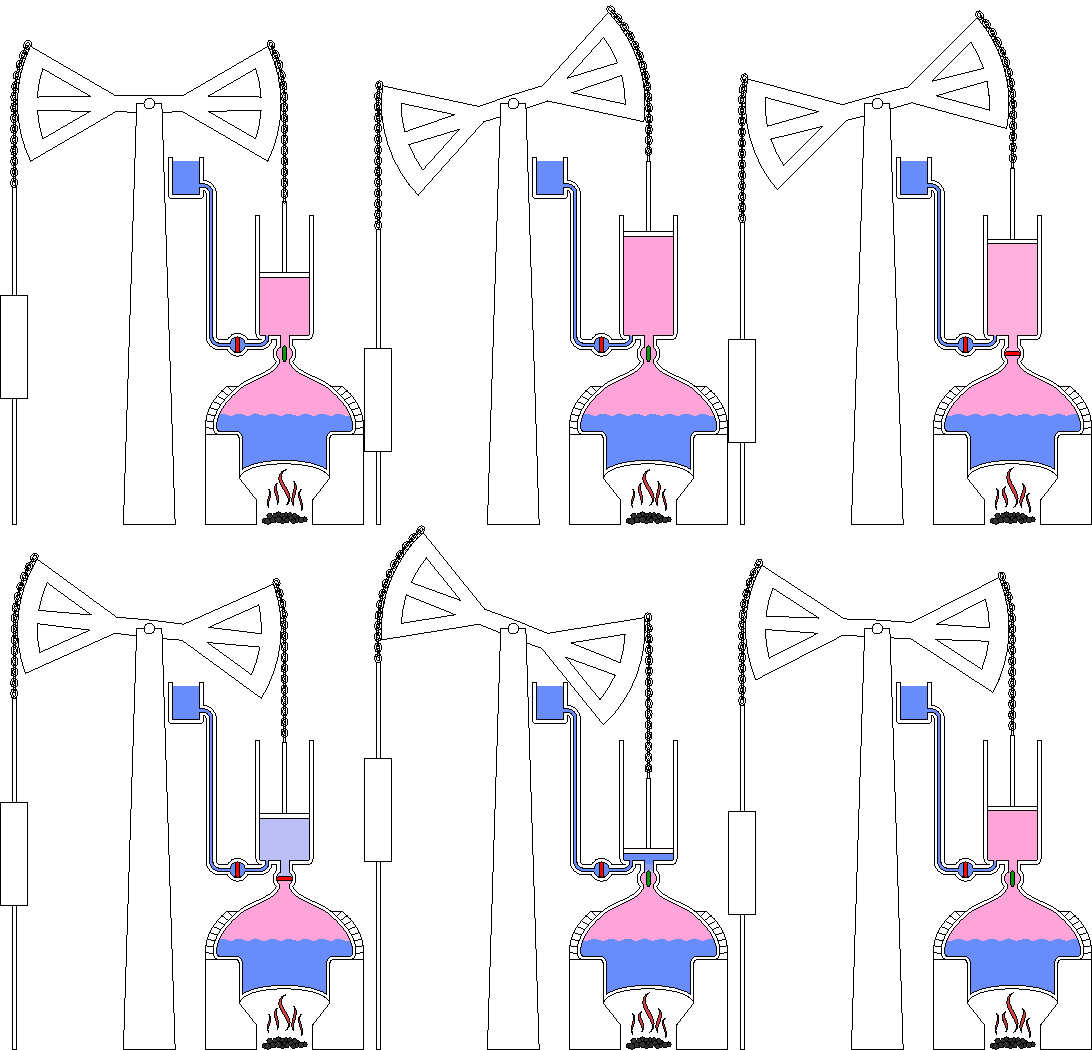
      A classical example is the steam engine. We have water inside a closed system. When we heat up the water, it will turn into steam. And this steam will want to be much less dense than water. As a consequence, the pressure inside the water tank increases drastically. We release a small amount of this steam into a closed piston.

      Here is an animation of this in action.

      The piston suddenly gets a high pressure level. As we remember, it will want to be in equilibrium with its surroundings. Currently the pressure inside the piston is much higher than outside the piston. As we remember from the ideal gas law, a higher volume will mean a lower pressure. So the piston will be moved, as the steam expands to reach a pressure balance. The movement from the piston will drive something, like a wheel. The steam is removed from the expanded piston, and the piston will return to its closed position.[2] Then the process is repeated again and again, to have the piston continously move something.

      All that from a bit of water in a tank and some supplied heat.

      Whats next?

      Next time we will talk about another important property. Entropy! In the previous topic I had a lot of questions regarding the quality of energy types, and what specifies heat from work on an intrinsic level. Entropy is the big answer to this. From that we will also cover the heat death of the universe, which would be a good introduction to "a laypersons introduction to nihilism" if we have any philosophers here.

      Note

      [1] For solid and fluid materials (as well as non-ideal gassess) this becomes a lot more complicated. If we ever do a "layperson's intro to fluid mechanics" we will cover it then.
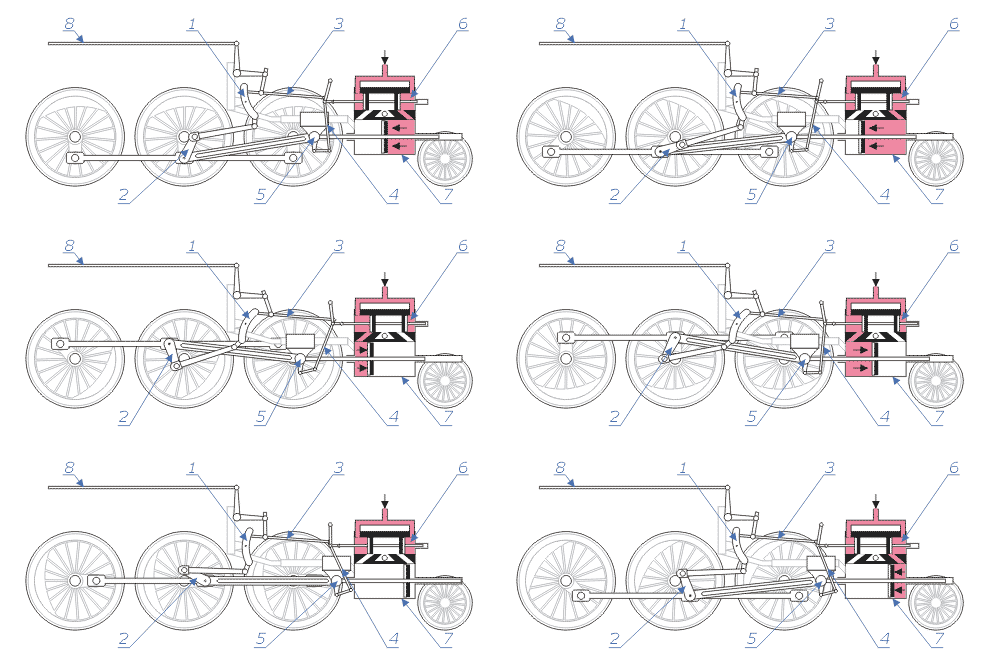
      [2] This described design is very inefficient and very simplified. Usually the piston is made so steam is supplied in turns supplied to either side of the piston. Then the work will both removed the steam that already performed work as well as move the piston. That way you can have continous movement in both directions.

      See for instance this image.

      17 votes
    9. A layperson's introduction to Thermodynamics, part 1: Energy, work, heat

      Intro Hello everyone, @wanda-seldon has been giving us an introduction to quantum physics. For now, she will be given a short break to prepare new stuff. In the meantime I will be covering some...

      Intro

      Hello everyone,

      @wanda-seldon has been giving us an introduction to quantum physics. For now, she will be given a short break to prepare new stuff. In the meantime I will be covering some classical mechanics, more specifically thermodynamics. In part 1, we need to work our way through some of the more dry concepts, so we can understand and appreciate the horrifying implications of the fun parts. So I promise, this will be the most verbose one.

      Some of you may have briefly seen a version of this posted, that was due to me misunderstanding the schedule with @wanda-seldon. If you saw that one, I will mention I rewrote nearly all of it to be more readable.

      Now, on today's agenda: The basics of heat, work and energy and how it's all related.

      Previous posts can be found here: https://tildes.net/~science/8al/meta_post_for_a_laypersons_introduction_to_series

      Important note

      If @wanda-seldon in her posts mention "energy", it's most likely in the context of energy operators, which is a concept in quantum physics. I'm not going to pretend I understand them, so I will not be explaining the difference. We will cover what energy is in classical mechanics. So keep that in mind if you read something from either of us.

      Subject

      Summarized

      What is heat? Using a lot of fancy words we can describe it as follows. Heat is an energy that is transferred between systems by thermal interaction. And what is work? Work is an energy that is applied in a way that performs... work. The combined energy in a system is called internal energy. This type of energy can be transformed or applied to other systems.

      These are a lot of new words, so lets break that down a bit.

      Systems

      A system is just a catch-all term for something that can be defined with a boundary of sorts. Be it mass, volume, shape, container, position, etc. A canister, your tea mug, the steam inside a boiler, your body, a cloud, a room, earth, etc. They are all systems because you can in some way define what is within the boundary, and what is beyond the boundary.

      In theory, you could define every single nucleid in the universe as an unique system. But that would be counter-intuitive. In thermodynamics we tend to lump things into a system, and treat it as one thing. As opposed to Quantum stuff that looks at the smallest quantity. Calculating every single water molecule in my coffee would be pure insanity. So we just treat my mug as the boundary, and the tea inside the mug as the system. And just so it's mentioned, systems can contain systems, for instance a tea mug inside a room.

      Energy

      Energy is some quantifiable property that comes in either the form of heat, work. It can be transferred to other systems, or change between the different energy types. An example of transfer is my coffee cooling down because it's in a cold room. That means heat has been transferred from one system (my mug) to another system (the room). Alternatively you could say my hot coffee mug is warming up the room, or that the room is cooling down my coffee. Thermodynamics is a LOT about perspective. An example of transforming energy types is when we rub our hands together. That way we convert work (rubbing) into heat. It's really not more complicated than that. An interaction in this case is just a system having an effect on a different system. So a thermal interaction means it's an interaction due to heat (like in the mug example).

      This brings us to an extremely important point. So important, it's considered "law". The first law of thermodynamics even. Energy cannot be destroyed, it can only change forms.

      Your battery charge is never really lost. Neither is the heat of your mug of coffee. It just changed form or went somewhere else. The combined energy of all types that is residing inside a system is called internal energy.

      Heat and work

      Let's say we have a system, like a room. And all windows and doors are closed, so no energy can leave. In this system, you have a running table fan connected to a power line, getting energy from outside the system. The table fan is making you feel cool. Is the fan cooling down the room, heating up the room, or doing nothing? Think about it for a moment.

      http://imgbox.com/CKtQLLOQ

      The first thought of many would be to think that this fan would cool the room down, it sure makes you feel cooler! But it's actually heating up the room. As we remember, internal energy is the energy inside a system (room, in this case). The fan is getting energy from outside, and uses this energy to perform work. The fan accelerates the air inside the room, and this accelerated air will evaporate some of your sweat, so you feel cool. But as we remember, energy cannot be destroyed. So we are importing energy into the system, increasing the internal energy. Some of the work from the fan is also directly converted to heat, since the motor of the fan will get hot.

      So if we are not getting rid of any of this excess energy, we are increasing the internal energy. And therefore actively increasing the temperature of the room.

      http://imgbox.com/SAtqk7YG

      To use a more tangible example: Simplified, this phenomena is why green house gases are bad. Lets define earth as a system. Earth gets a lot of energy from the sun. And a lot of this energy will be reflected and sent back to space. Green house gases will reflect back some of this energy trying to leave earth. So instead of having a roughly equal amount of energy enter the system (from the sun, from us doing stuff, etc) that leaves out in space, we have an increasing amount of energy on earth. This, as a consequence, increases temperature.

      Implications

      Now, what are the maybe not so obvious implications of this?

      Waste heat, from supplied energy or inefficient work is a constant headache in engineering. If we cannot remove enough heat, we will actively heat up objects until they are destroyed. Thats why good cooling systems are important in cars, computers, etc.

      Whats next?

      Now this was not so bad. In the future we will cover phase changes, equilibriums, entropy, the heat death of the universe and briefly touch upon engines. So thats most likely two more parts after this. After that @wanda-seldon will take over again.

      I plan on doing one main part per week, but if something is asked that warrants a small topic I might do smaller ones inbetween.

      Feedback

      Something unclear? Got questions? Got feedback? Or requests of topics to cover? Leave a comment.

      19 votes
    10. Why am I getting shocked in a very specific way when petting my cat?

      It's a dry, windy day. I had my left hand stationary on my cat's back and was petting him with my right hand. I noticed when I removed my right hand from contact with his fur, I got tiny shocks in...

      It's a dry, windy day. I had my left hand stationary on my cat's back and was petting him with my right hand. I noticed when I removed my right hand from contact with his fur, I got tiny shocks in the middle finger of my left hand, but only when removing my right hand and only in my left middle finger. (He didn't seem to notice any shocks.)

      Why is this very specific type of electric shock occurring?

      6 votes
    11. Mobile use

      I got the new iPhone and my home screen shortcut to Tildes was removed. Found myself back on Reddit and just had an experience that reminded me how much distaste I have for their culture. Made me...

      I got the new iPhone and my home screen shortcut to Tildes was removed. Found myself back on Reddit and just had an experience that reminded me how much distaste I have for their culture.

      Made me wonder if we’ll ever have a native mobile app for Tildes. It’s really the biggest reason I’m not here far more often.

      I’m sure it’s been discussed and I know there are tons of competing priorities- only sharing my perspective :).

      12 votes
    12. What's in a name? Patience Phillips' Catwoman

      For anyone who doesn't recognize Patience Phillips, she was Halle Berry's Catwoman in the most terrible superhero film - Catwoman (2004)...that I really enjoyed it. Probably because it wasn't...

      For anyone who doesn't recognize Patience Phillips, she was Halle Berry's Catwoman in the most terrible superhero film - Catwoman (2004)...that I really enjoyed it. Probably because it wasn't well-received, it's often overlooked when talking about things like "the first female hero on screen" or "the first black hero..." sort of things. And technically, Catwoman's not a superhero.

      Spoilers ahead. I'm also going to keep my points to the story and characters themselves. I honestly had no issues with any of the actors.

      The good

      • The theme and social commentary on make-up, beauty products, self-harm/addiction and image issues woman do face. The added layer of cooperate greed. The idea of what you see in the mirror vs. what others see (and if they're right), alongside what you want to present to the world or to specific people - honestly this movie has probably one of the best takes on "the cost of beauty" that I've seen in a while, and since.
      • The scene where Tom thinks he's saving a jumper, but Patience is actually trying to save a cat. This random scene turns out to be a great storytelling scene when brought up again after Tom arrests Patience for murder and she asks him what he first saw the first time they met.
      • Laurel is probably the most interesting character in this movie. There's a really well-framed shot of her photos being removed from her company lobby in favour of a younger model. I think it's one of the best scenes in the movie. Laurel is capable, powerful, rich and very accomplished, but somehow her relevance still fades as her beauty does. (I can honestly say I generally can't stand the evil step-mother wrestling with her fading beauty and taking out her bitterness on some young snow white-y girl, but this one worked for me.)
      • I loved that Batman wasn't in it (but didn't really like that a love interest still had to be introduced).

      The bad

      • That she's call Patience Phillips...but honestly this is the warning to divorce this from any Catwoman or female superheros (or anti-heros) you know.
      • Patience doesn't earn her "powers" - Selina Kyle (Catwoman in basically all other versions) works obsessively to perfect all her abilities. She's an insanely good cat burglar, not a magic cat.
      • Patience doesn't earn or drive her own growth. There is basically no growth as a character. A magic cat ghost could have simply possessed Patience's body and the story would be the same.
      • Oversexualization of Catwoman...which I didn't even know could be a thing until this movie. Black leather for a sexy Catwoman - awesome. Whatever the belt thing was - grossly missed the point while trying to copy Pfeiffer's patched up catsuit.
      • I'm also not the biggest fan of make-over tropes in general.

      The ugly

      • The basketball scene - just everything about it.
      • The hate that surrounded the movie because Catwoman wasn't blonde (or Michelle Pfeiffer), and that Batman's not in it.
      • The physical punch-them-out fight scene between Laurel and Catwoman in the end - just why? This isn't a movie at all about physical strength, and having a "face like marble" isn't a real power. (To be fair, I don't like this showdown in really any superhero movie, with the exception of The Death of Superman.)

      The cheesy

      • The crazy cat-lady Patience goes too, and her tossing a cat toy at her
      • The sushi eating scene
      • The in case of date emergency kit her friends gave her.
      • Laurel seeing her cracked beauty in the moment of a showdown fight
      • The cat scratches on Tom
      • Her best friend hooking up with her doctor
      • The comparing signatures on the coffee cups
      • Her Marvel-like comic book name

      Final thoughts

      So yeah...I would recommend this movie, and really hope that when they do make another Catwoman film that it might share some themes. Have you seen this movie? Did you hate it? Who's your favourite Catwoman? What would you like to see in a Catwoman movie?

      10 votes
    13. Exploitation and coercion

      Those two words and their relationship with "consent" and "freedom" fascinate me. I've sort of ruminated about it in the back of my mind for a while, but haven't sorted a lot out. It would be nice...

      Those two words and their relationship with "consent" and "freedom" fascinate me. I've sort of ruminated about it in the back of my mind for a while, but haven't sorted a lot out.

      It would be nice for two people to be able to make any agreement they like between each other without restrictions. "I'll do this for me and you give me that in return". If there aren't restrictions on what sort of agreement two private people make, in some sense, that can be maximum freedom.

      But then exploitation and coercion come into the mix. "If you don't sign this contract, I will kill you" is a clear example of an agreement not being free. "If you don't sign this employment contract, you won't be able to afford to buy food" is still fairly clear, but a little further removed. "If you don't sign this employment contract, you'll be able to get food, but the food you can afford will be heavily processed and laden with oils and processed sugars, and you could suffer poor health in the future" is getting into a lot of grey area.

      We talk a lot about minimum wage workers being exploited. It's true that most of them (almost all of them?) hate their jobs. It's also true that life necessarily requires sacrifices. I don't have a good framework for thinking about what point something becomes exploitative or unethical.

      It comes up in personal relationships as well. "If you don't have sex with me, I will kill myself" is clearly abusive and manipulative. "If you don't have sex with me, I will break up with you" is slightly more removed. "If you don't quit using heroin, I will break up with you" is a little grey.

      At what point is someone being coerced in a relationship vs two people acknowledging sacrifices they have to make to stay together? I don't have a good framework for thinking about this.

      Further things to think about: at what point of mental illness can a person no longer ethically enter into an agreement? What about a normal person who suffers from the usual human psychological biases? At what point is it exploitative to use psychological biases when negotiating with someone? This can go all the way from the benign (ending a price in ".99") to the damaging (designing casino games with flashing lights and buzzers, etc.)

      I don't expect someone to be able to give me a pat answer to this. If you think you can give me a 1-line "Exploitation is ...", I think you're probably missing something. But I am curious how other people think about these things, and what examples or what books you've found that have been helpful to you sorting things out.

      13 votes
    14. Crazy Idea: What if we remove traditional voting on comments entirely?

      Tildes already replaces some of the functionality of downvoting with its tags (troll, flame, off-topic). What if we replaced voting with "positive" tags: helpful, interesting, etc.? This would...

      Tildes already replaces some of the functionality of downvoting with its tags (troll, flame, off-topic). What if we replaced voting with "positive" tags: helpful, interesting, etc.? This would play off of people's indecision when faced with multiple options. A binary decision is very easy - upvoting vs. downvoting. But if you just want to vote on something because it backs up your political opinion you might pause to think for a second if you need to declare the comment "interesting".

      The number of positive tags could still be aggregated into a score. Perhaps we could list the positive tags at the bottom of the comment e.g.: "10 x helpful, 5 x interesting".

      26 votes
    15. Notification to a user if their comment is hidden due to comment tags

      The new comment-flagging feature is in place and is starting to operate: some comments are being hidden based on tags applied by users. The irony is that everyone knows a comment is hidden except...

      The new comment-flagging feature is in place and is starting to operate: some comments are being hidden based on tags applied by users.

      The irony is that everyone knows a comment is hidden except the person who posted the comment. If someone's own comment is being hidden, they should know that. I assume that part of the motive behind these tags is to teach Tildeans what is and isn't acceptable here. If someone doesn't know their comments are being flagged and hidden, they'll just keep on doing what they're doing.

      There should be some mechanism to advise a user that their comment is hidden - like happens when their comment is removed by the admin.

      EDIT: It's not just about educating people not to post more shallow comments in future. It's also just letting them know their comment has been hidden, as a courtesy.

      14 votes
    16. Anything to vent, ~talk?

      Hello, fellow Tildrestians. Having just joined, I found that Tildes was a substantial improvement from the standard Reddit fare. Hooray for substantial conversation! I’ve always been a long time...

      Hello, fellow Tildrestians. Having just joined, I found that Tildes was a substantial improvement from the standard Reddit fare. Hooray for substantial conversation!

      I’ve always been a long time lurker, and I’ve never been confident enough to start threads. So, ~talk, this is a vent thread for your problems and your worries. Not for the fact that you stubbed your toe, but possibly stuff that might worry you. If this doesn’t go well, then I will probably remove this thread in emberassment.

      But if it does, then perhaps we can all propose solutions to others problems. Perhaps we can comfort each other with advice and tips. It could be a stupid idea, which, if it is, let me know, but it could be a chance to actually not be the circlejerking redditors some of us once were.

      And if this in the wrong group, also do let me know.

      25 votes
    17. Comment tags have been re-enabled to experiment with, input wanted on plans

      This has been a long time coming, but the comment tags have now been re-enabled. I want to treat this as experimental, and potentially make a number of changes to them quickly based on seeing how...

      This has been a long time coming, but the comment tags have now been re-enabled. I want to treat this as experimental, and potentially make a number of changes to them quickly based on seeing how they get used. A few notes about how they're set up now and what I'm planning to do with them, followed by some questions that I'd like input on:

      • The main change I want to experiment with is turning the comment tags (mostly) into a system where they're invisible, but cause effects. That is, instead of having the actual tags show up on each comment like they were before, they'll now be something that's "in the background", but can have different effects on comments that get tagged.
      • Currently, tags will only have an effect if multiple users apply the tag. This may change eventually if we start granting more weight to certain users that have a consistent history of tagging, but for now it means that a single user tagging a comment won't do anything unless other user(s) also apply the same tag.
      • As of the time I'm making this post, you can apply tags, but they don't have any effects yet. This will change very soon (probably even later today), but I wanted to get input on potential effects and get a baseline idea of how they start getting used before I turned any effects on.
      • Currently, anyone whose account is at least 7 days old will have access to comment tagging. This is to try to make sure that people have at least a bit of experience on the site before they start using the tags.

      Now, questions that I want input on:

      • What effects do you think might work well for the different tags? I don't want to bias the ideas by explaining a bunch of my own ones up-front, but an example of the sort of things that I'm thinking about is making it more difficult to reply to comments tagged "troll", such as by requiring the user to click through a dialog box like "Other users have tagged this comment as a possible troll, are you sure you want to reply to it and feed the troll?"
      • Is the current set of tags (joke, noise, offtopic, troll, flame) reasonable, or should we consider adding or removing some of them?
      • Now that the comment tags aren't being shown, should we consider changing them to more detailed descriptions? It was somewhat important to have shorter, "snappier" names for them before to keep them compact, but if they're not going to be shown often that may not be necessary at all. For example, "noise" could be changed to something more like "doesn't contribute to discussion".

      Let me know what you think—the comment tags are definitely one of the important aspects of the site, so I'm excited to start experimenting with them again and am confident that we can figure out a system for them that will work really well and help encourage quality discussions.

      102 votes
    18. Tildes code of conduct

      Tildes code of conduct says Do not post anyone's sensitive personal information (related to either their real world or online identity) with malicious intent. Can you change that to just say don't...

      Tildes code of conduct says

      Do not post anyone's sensitive personal information (related to either their real world or online identity) with malicious intent.

      Can you change that to just say don't post personal info? Even if it's not done with malicious intent it should still be removed to protect people's privacy.

      Also while it does say to not post spam on tildes terms of service I think It should say that on the code of conduct.

      Edit: I mean posting personal info without consent and not public information.

      Telling someone how to contact a company would be fine but not posting someone's address.

      12 votes
    19. Moderator tools: what do you have and what should be the immediate priorities?

      I don't want to get too high in the clouds with moderating philosophy. Instead I want to talk about action steps that can be taken in the very near term to improve moderating. Especially so long...

      I don't want to get too high in the clouds with moderating philosophy. Instead I want to talk about action steps that can be taken in the very near term to improve moderating. Especially so long as Deimos is the only one with most of the moderating tools at their disposal, I think it's crucial to make sure it's as painless as possible.

      So far it looks like Deimos has these moderating tools available to him:

      1. User bans
      2. Comment removal
      3. Thread locking/removal
      4. Title/tag editing (and this ability is shared by many of us as well)

      Am I missing anything?

      The three next tools I would hope are coming next are:

      • A reporting mechanism, where users can report comments and threads that they think should be removed.
      • A feedback mechanism for reports, telling users that a report they gave was acted on.
      • A note taking system for the moderator-type person, shareable with all other moderator-type persons at that level, with an expiration date probably around 30 days.

      Now I'll talk about why. First, the reporting mechanism. While it's still possible to keep up with everything that gets posted, I don't necessarily think it's the best use of Deimos' time to read literally everything, especially as the site expands its userbase and presumably activity level and depth. The reporting system at first should probably just be a button, maybe eventually with a pop-up field allowing the user a brief description why their reporting, and a queue that gets populated with comments and threads that get reported.

      Coinciding with a report queue/option should probably be an easy, rudimentary system for providing feedback to those whose reports led to moderating action. At first, an automated message saying something like "thank you for reporting recently. Action has been taken on one of your recent reports" without any relevant links would do fine, and we can leave the particulars of how much detail to add for later discussions.

      The last thing I think should help things considerably in the immediate term is a time-limited user tracking tool for the moderator-type person. As things scale, it isn't always going to be feasible to use mental bandwidth remembering each username and the relevant history associated with their behavior. A good note-taking tool with an auto-timed expiration date on notes would be a good way to address what can easily become a hugely mentally taxing role at almost any scale. This tool should let Deimos take a discrete note for himself (and other moderators at that permission level and higher) connected to a user regarding any questionable threads or comments that were yellow/red flags, or any other moderator action taken against a user within the last X days/months (the particulars don't matter to me as much as that there is an expiration date to these notes). This should let the moderator type person focus on the broader history of the users they're looking at before making a decision, without having to go searching for every relevant comment from the past 30 days. Fewer problematic users at scale should fall through the cracks and more users that might just be having a bad day can be let off with comment removals and/or warnings.

      Are these priorities fair? Are there design elements you would want to see in the immediate term that would help reduce the burden of moderating? Are there problems with these tools I'm suggesting that you would want to see addressed?

      19 votes
    20. Should deleting comments be the standard behaviour, or can we consider a less censored approach by default?

      I often stumble in to threads with entire comment chains deleted. I assume most people here have faced the same situation as well, either here or on reddit. I'd like to see a move to locking...

      I often stumble in to threads with entire comment chains deleted. I assume most people here have faced the same situation as well, either here or on reddit.

      I'd like to see a move to locking comments rather than deleting them by default. That would mean no further replies to the comment or any other comment in that chain, no one being able to delete or edit their comments, no one being able to add or remove votes to a comment, etc.

      I understand for particularly egregious comments removal is completely necessary (especially when it goes hand-in-hand with banning users), but a lot of times comments are deleted as a means to prevent long argumentative back-and-forth chains that spam and derail topics, as well as antagonize users.

      In a lot of cases I feel like deleting the comment only further serves to hide what is unacceptable behaviour (even if that behaviour should be obvious), rather than setting an example for the userbase.

      30 votes
    21. To a select minority of less than ten people: please stop getting judo'ed into defending white supremacy

      (EDIT: Those in the comments have asked me to remove specific names. I have replaced names with emoji that I like.) We recently had: a thread whose OP defended a confederate statue erected by...

      (EDIT: Those in the comments have asked me to remove specific names. I have replaced names with emoji that I like.)

      We recently had:

      • a thread whose OP defended a confederate statue erected by white supremacists on purely apolitical grounds
      • a thread whose OP defended scientific racism on purely apolitical grounds

      I'm really annoyed. If you really want to defend something that looks to everyone else like white supremacy, please avoid:

      • Claiming to be apolitical while disagreeing with someone's politics. If you're telling someone else "your political stance is wrong," you're having a political opinion. "You're being too political" is a political opinion the same way "there is no God" is a religious opinion. This happened like a kajillion times in both threads.

      • Granting benefit of the doubt to white supremacists or sources only used by white supremacists. Example: In the confederate statue thread, 🦇 effectively said "OK, so the builders of the statue hired a white supremacist speaker to commemorate it -- but they're not white supremacists and neither is the statue." Seriously, come on. And stop citing the spokespeople of white supremacist groups to prove they're not white supremacists -- they intentionally tone down that shit for the media, which is why you look super tone deaf when people post actual accounts of things they did, like holding town hall meetings about how great lynchings are when they thought no one was looking.

      • Claiming you'd agree with whoever's arguing with you, except for one inconsequential fact you never mentioned any other time. Example: In the confederate statue thread, 🦈 said that he wouldn't mind if the statue had been taken down legally -- but every other time it came up he said it was wrong to take down the statue at all, because that was whitewashing history.

      • Calling leftists "childish" and "easily-offended." Words like this do have a place in politics, but you've been misusing them. I read both threads front to back -- one or two people ended their arguments with "I'm offended" but basically everyone also said "here's why your view of the world is wrong" or "here's why this is bad and it hurts people." When you start your post by saying "oh, how childish!" and then just repeat the thing you said in the first place, you're basically saying "I'm not listening."

      • Accusing leftists of being unwilling to grapple with the facts. Again, this is allowed and fine when it's true, but you've been abusing it. For instance, in a thread by 🦐 on The Bell Curve the original poster claimed The Bell Curve was state-of-the-art, and leftists were ignoring it. That's not true: there was a huge leftist response immediately after it was published, from academics and popsci guys too. Several people linked leftist articles and takedown videos, which he ignored. Maybe the leftists are wrong, but it's not that they ignored it.

      Here are some of the ways you were possibly tricked into believing white supremacists:

      • They told you their sources were good, and instead of checking, you believed it.
      • They told you left-wing sources were shrill and unresearched, and instead of checking, you believed it.
      • They told you there was a conspiracy against their viewpoint and that's why the criticism isn't credible. (For The Bell Curve, it's the political correctness conspiracy -- for statues, it's the easily-offended liberal masses.)
      • They told you there was more nuance to the situation than it looked like and made an emotional appeal. Intelligent people like to imagine there's no way things could be as simple as they look -- "not everyone would be smart enough to uncover that this apparent act of white supremacy was, in fact, politically neutral!" -- so you believed them.
      • You are probably a little bit racist. (Or even a lot racist.) You might not be racist enough to hate black people, but you might be racist enough to find white supremacists more credible than their victims, even though you know the historical facts say their victims were telling the truth.

      Here are some preemptive comments:

      • I don't want to censor anybody. This thread is not censorship.
      • I do want to shout bad opinions down with better opinions. People who support free speech, which I think is most of the people on this website, also want this. This is an example of me trying to do that.
      • Yes, leftists can do all the things I listed. (And yes I'm a leftist.) When I go to a site like Twitter or Tumblr I see left-wingers saying all kinds of horrible, unsupported shit they heard from their idiot hippie friends. It's frustrating and sickening and it's a giant part of the reason I don't go on those sites very often. But on this site I only saw right-wingers doing this stuff, not left-wingers. That kinda surprised me because usually it's the side with the biggest groupthink bubble that says really stupid stuff and keeps on trucking.

      Thank you and sorry for the long, mean post.

      79 votes
    22. Tag Use

      Let's talk about what tags we should be using and how they should be used. For those of you who haven't yet read it here is the doc page on tags. Here's what I'm looking at so far: Talk: I removed...

      Let's talk about what tags we should be using and how they should be used. For those of you who haven't yet read it here is the doc page on tags.

      Here's what I'm looking at so far:

      Talk: I removed the talk, discussion, and conversation tags from the topics in ~talk in accordance with "Don't add a tag that's the same or very similar to the group that you're posting in." If you're in ~talk of course you're having a discussion or conversation. (There are exceptions that are about conversation such as "How do you discuss open minded topics with close minded people?"). I tagged some "How was your weekend" type topics with casual conversation.

      What do you think about talk and/or discussion tags in other groups?

      Question: As I understand it, question should be ask Update: done

      Meta: I would define meta as topics about the site or ~ the topic is posted in. Since ~tildes is entirely meta, meta is redundant here. Most of the meta topics elsewhere are about the ~ they are in. As an example of something I think is mistagged, I wouldn't tag the ~lgbt introduction topic meta since it isn't about the ~ . Update: removed meta from ~tildes topics.

      I wanted to get some feedback before I continue so I don't make a mistake unilaterally retagging something that I shouldn't.

      What are your thoughts on these tags? What other tags do we need to talk about? What strategies are you using for tagging and retagging?

      24 votes
    23. Political correctness: Where do we draw the line on drawing lines?

      This post will be discussing the nature of political correctness and its ramifications on our culture, intended to analyze current trends and provide a basis for discussion on a very relevant...

      This post will be discussing the nature of political correctness and its ramifications on our culture, intended to analyze current trends and provide a basis for discussion on a very relevant issue in our society. This is a long post, so buckle up.

      DISCLAIMERS

      Before I begin, I will begin a series of disclaimers, as I’ll be making a lot of claims in this piece, so sorry for the length. For the sake of this post, I will be assuming the role of a neutral character, with no intended leanings towards any political or cultural ideology. Any reference that I make towards a specific side of the spectrum of politics or to social cultures does not reflect my personal opinion on them nor show a bias/prejudice towards that side. I would also like to note that, while I’m trying to make this a quality read about politically correct culture, this isn’t a lecture, a thesis, a Pulitzer article, or even a simple college essay, and is simply very informal essay. A lot of what I say goes off of either whatever comes off the top of my head or things that I find out from a quick search on Google. Some things may or may not be correct, and if they are, please feel free to call me out for it in the comments.

      With that said, let’s get into it: Political correctness. Defined by a Google search as “the avoidance, often considered as taken to extremes, of forms of expression or action that are perceived to exclude, marginalize, or insult groups of people who are socially disadvantaged or discriminated against.”, has become a powerful influence in the media that people consume as more and more creators, fans, and everything in between try to avoid language or dialect that would offend audiences. Our society progressively has become more and more PC (politically correct) due to an increasing attempt to remove toxic or otherwise harmful material, generally rhetoric like slurs or playing upon stereotypes, from media in an attempt to create a safer, more friendly environment and community, especially for those who often feel targeted by such harsh rhetoric. PC culture is inherently good-willed with an unquestionably noble goal fueling it. However, in the act of making more and more things PC, the media that is affected changes, for better or for worse. In the viewpoint of many, PC culture has become increasingly threatening to the quality of the media they consume, as the element of vulgarity that media possesses sometimes is attributed to their success or favorability. An increase in avoiding content that is in any way threatening to a certain culture has upset many because it dampens the reality of the content, affects its strength, or births new weaknesses. In short, people believe that making things more PC is making them less good.

      The big question of this post is why PC culture matters to the opinions of those who digest media affected by it. It is a question with a myriad of answers, as its influence has been taken in many directions. As iterated before, some claim that it strips away the reality of the content and provides a false reality or delusional perspective; some claim that it softens content too much and dampens the quality; and others think that it is simply stupid to try to be so friendly with what content they make or consume. The element of vulgarity that political incorrectness adds to content makes things more interesting than what they actually are, ironically because they highlight or exaggerate the reality of what they offer, and taking that away from people or reducing it takes away that precious component by avoiding any sort of offensive material. Take SNL, for instance; their skits like Black Jeopardy plays upon Black culture/stereotypes and is widely acclaimed for the hilarity of their vulgarity, but were it to face a demand for more PCness, it would lose a lot of the charm it had because of the necessary avoidance of content that would offend Black culture. The problem with this is that offensive material is not always a great sin that must be purged away. Material that PC culture can see as offensive encompasses a great deal of things, from simple slurs to stereotypes of cultures and societies. While it is good, even preferable, that things such as slurs or directly offensive comments are censored or dismissed, other forms of content seen as offensive are necessary to provide an ounce of harsh reality to the content that is provided. A specific example of such a case would be how the news handled the increase of refugee crimes in Germany and Sweden since those countries took in more Syrian immigrants. PC culture would try to dissolve the correlation as one being the product of another, but non-PC content would assume that the increase in refugees led to that increase. While it is very offensive to assume that the large intake of Syrians has led to that increase, being too PC by dancing around the issue and saying that refugees from other countries relatively contribute the same amount to the violence would be feigning ignorance to a clear and very possible causality, ultimately affecting the quality of the news piece. The same could be said for many other things, like TV shows, blog posts, etc.; When concerning or including potentially controversial content, avoiding the elements that make them controversial or ignoring them takes away from the media’s effectiveness. In other words, being too PC and removing the gritty elements of something can remove the punch that it has and make it seem fake, uninteresting, or any other dissatisfying adjective.

      That’s not to say that offensive material must be in abundance, however; one must never have too much of something, as it may upset the balance of acceptable and unacceptable content. But certain material like social commentary, often in the form of societal stereotypes or portrayals of a culture, is a necessary element to add truth or interest in whatever is being made, albeit it being handled with an utmost delicacy and respect. Saying that the increase in refugee crimes means that all Syrians are criminals, scum of the earth, and a true representation of how shit the Middle East/Islam is would be greatly offensive and also detract from the quality/esteem that that news piece may have. Having the PC to refer to them less offensively, as well as discussing the issue in a manner that doesn’t clearly perpetuate Syrians as the devil, allows for the controversial content to be taken more seriously, basically adding civility to otherwise provoking content. On a gentler note, Black Jeopardy often plays upon the tropes of black culture on relatable, universal grounds, like home culture or the more meaningful discrimination from white people. It doesn’t say that all black people act without genteel to one another or that all white people are evil/stupid, but plays upon familiar stereotypes and experiences shared by many people of both races and enhances their hilarity with their trademark controlled crudity. While this example reflects how PC culture can mitigate offensiveness, it can also bridge gaps between people by portraying them as equals, not separated the nature of their age, sex, race, sexuality, or disabilities. Diversity within a space, such as a profession, a community, or group, is PC culture at its best, for it highlights inclusiveness and unity that political incorrectness would draw borders with. It allows people of any background to pursue the same career choices or interests without discrimination or other forms of inequality, putting forward the message that despite the differences those people may have, they are still human beings, one alike to another, all part of one human society.

      Now that we’ve gone over the merits of both PC and non-PC culture, it’s time to evaluate the consequences that they each have on society. I say consequences because the developments both cultures set precedents for how media controls the amounts of PC put into their content as more and more new media juggles the amounts of friendly content they put in and the vulgar content they take out; and of course, vice versa. Political correctness has shown a powerful trendsetting effect in that once an action is called out for not being PC, it creates a rippling effect where all other forms of media avoid that un-PC element. If you take the Me Too Movement, once sexual harassment claims have been made against one big Hollywood figure, a million more followed in its wake, and now many Hollywood big wigs and US politicians reel in the fear of getting “Me Too’d” and losing their job/getting indicted. While it’s not a real presentation of PC culture at work, the Me Too movement’s rippling effect demonstrates how severe PC culture has influencing society, as now the sexually harassed don’t feel the need to cower behind the fear of denial and claims of insanity that would have been used against them pre-Me Too. And while it’s excellent that sexual harassers are getting what’s coming to them, the crossfire catches many unfortunate victims in the rise of Me Too and its anti-sexual harassment waves. James Gunn is a very relevant example of this, as his history of highly distasteful vulgar Tweets caught up to him and led to his expulsion due to Disney’s attempts to be PC. But Gunn’s expulsion has caused a big issue since he’s not actually a rapist or someone who has harassed his actors, but simply someone who made a couple of extremely stupid jokes, jokes which he had already apologized for 6 years ago. Despite apologizing twice, Gunn is still seen as too much of an un-PC person to work under Disney. This presents the problem of PC culture having too high of a sensitivity for things that they think are absolutely wrong and criminal. Gunn’s actions reflect the rising issue of where any hint of vulgarity in the publicity of an individual can be used against them to tarnish their image, something that has been in prudent effect by the Me Too movement. And while social justice demands that individuals like these who have a history of offenses must be reprimanded, the work that they have created shall suffer in quality after losing an essential component of what made them great. This is not to say that all individuals who have been accused and punished don’t deserve their fate, but merely a claim of consequence.

      Sensitivity is the name of the game in today’s culture. People are becoming increasingly sensitive over things that present even a hint of harm towards an individual or group, attacking that thing like vultures in order to dispel the negativity whatever comment or element that object has to enforce a positive atmosphere. This particular trend is something associated with social justice warriors, or SJWs for short, which has become something of an internet slur because of the reputation that they carry of being agents of anti-vulgarity. They have become such an issue to many people because they are being claimed to attack the right to free speech that individuals carry, becoming a nuisance to many who now have to watch what they say with extreme delicacy, lest they become swarmed by attacks by those who denounce them for their profane statements. But their actions aren’t inherently bad, they’re just people trying to create a safer environment for people who frequently find themselves harassed by the world around them. It’s simply that they exaggerate their efforts to such a point that their actions carry a negative connotation with them. They even fight fire with fire, attacking individuals and harassing them to get them to stop their offensive comments through brute force. But when you fight fire with fire, it just spreads, and those who are attacked by SJWs and see them as a threat to their experiences will double their anti-PC nature to combat these SJWs, creating a loop of toxicity as both sides wage a war to maintain their ideal community. This is unfortunately the great conundrum of PC vs anti-PC: Two sides fighting for absolutes that can never be achieved. SJWs and advocates for absolute PC environments will never achieve it because there will always be people who want to speak their mind about people and things that others will find offensive, and anyone can get offended by anything. A truly PC environment would have to restrict all forms of communication, otherwise someone will eventually get offended and upset the “harmony” the absolute PC achieves. On the other side of the spectrum, an environment without any form of PC will find itself quarreling with each other all the time as people will lack the restraint to say offensive things and therefore find themselves at ends with whatever group their speech or actions offend. An environment without PC is an environment without rules, and an absence of rules will result in chaos.

      Now the question to this is: Where’s the sweet spot? If too much PC and too little are both bad, is the medium the best? In truth, I don’t really think any balance of PC and anti-PC will ever be truly perfect. There will always be advocates for both sides fighting to increase the influence of whatever they fight for, and the balance will always tip to one side or the other. Fortunately for the human race, we have the ability to exercise a lack of care. The reality of this feud is that there will always be something you don’t like, and nothing you or people like you can do will change that fact. You can call out as many sexual predators, societal offenders, and all other forms of anti-PC individuals all you want, but you won’t stop people from doing it. You can label SJWs as thin-skinned and juvenile all you want, but you’ll only be feeding the fire. The only happy solution to this issue is to simply accept the reality that you can’t create a perfect world for yourself by changing everyone else. You can keep fighting the battles and win as many as you’d like, but you’ll never win the war. If you’re someone who wants the absolutes, you’ll never get it. The only semblance of peace you’ll get is accepting there will always be bad.

      PC and anti-PC cultures both possess a merit to them valuable to our society: PC culture imposes civility and friendliness to all people, especially those who are frequently discriminated or treated unfairly, ensuring they feel safe, happy, and equal to their fellows; anti-PC culture, however, advocates for the freedom to say what needs to be said, and while it is vulgar, it is real, and reality must be embraced. People may always fight with each other for each side as they get increasingly sensitive, and sometimes even do something that turns the tides for them, but they will never truly defeat one or the other. The balance between them is always shifting and will never really settle, but the beauty of this war is that it teaches us about people, about their experiences and their beliefs, and help us come to terms with reality. Whether we want to change that reality for the better or champion its present merits, it is, and always will be, up to us.

      Thanks for reading. Feel free to discuss, criticize, compliment, etc. in the comments.

      15 votes
    24. Input wanted about title-editing, especially by topics' authors

      It was a bit of a side topic in the thread last night about giving other people access to some organizational tools for topics, so I wanted to have a more specific discussion about how we should...

      It was a bit of a side topic in the thread last night about giving other people access to some organizational tools for topics, so I wanted to have a more specific discussion about how we should handle title-editing.

      Editing titles is definitely a useful ability, both for being able to fix typos/mistakes as well as remove editorialization or misleading phrasing, or even update the title later if the story progresses and the original title is no longer correct. However, it can also be confusing or mis-used—the title is the main way that we (the users on the site) identify a particular topic, and when the title changes it can be difficult to recognize what happened.

      So I just want to have a general discussion about how we should handle title-editing, and especially whether we should allow people to edit their own topics' titles, and if there should be any restrictions on that. For example, should a topic's author only be allowed to edit the title in the first 5 minutes? Should they always be able to edit it, like they can always edit the post text itself? Maybe it varies, based on their history/account-age/something-else?

      One thing to keep in mind is that this doesn't need to be a system that's immune to abuse. If someone uses the title-editing to change a popular ~music post's title into a Star Wars spoiler or something, we don't just shrug and go, "oh well, they're allowed to edit titles, nothing we can do." We edit the title back, and either take that ability away from them or ban them from the site entirely if it was done maliciously. Trust people, but punish abusers is a good approach in my opinion—we don't need to hobble features constantly to try to make them un-abusable.

      Also, whatever we decide to do doesn't necessarily need to be kept forever. We can always try something, and if it obviously isn't working very well, we just change it. Decisions about how the site works don't need to be final, it's very difficult to predict how features will actually be used in practice.

      Anyway, let me know what you think. Thanks.

      38 votes
    25. Interest in a weekly or biweekly writing prompt?

      One aspect of the Writing Prompts subreddit that frustrated me the most was that the submission that got the most responses was often the one that was submitted first. I found that in order to...

      One aspect of the Writing Prompts subreddit that frustrated me the most was that the submission that got the most responses was often the one that was submitted first. I found that in order to ensure that I got feedback and criticism, I often found myself rushing or submitting sloppy work so that I could submit first. Often times I would ignore prompts I liked because other posts had already taken off.

      I’d like to try something here that addresses some of those issues. I imagine it working like this:

      1. The first post would be a number of prompts that participants would choose from to be that week’s prompt.
      1. After a prompt is chosen, I wouldn’t accept submissions for one/two weeks to give people time to develop their ideas and submissions.
      1. A new post would be created for submissions for the past week’s prompt and providing a new list of potential prompts for the following week.
      1. Go to 2...

      So long as it is practical, I will read and provide feedback and constructive criticisms for every submission.

      I hope this encourages people to develop fledgling ideas as they have the time to let their ideas breathe and they have the promise of feedback at the end of it.

      Of course this isn’t meant to replace other casual writing prompts.

      Edit:

      For those interested a few questions:

      1. Is one week enough time to write?
      1. Would it be better for the writing time to include the weekend?
      1. Would you be okay with certain restrictions like 1,500 words? Is that too many words? Too few?

      Edit2:

      Okay, I'll try to set this up!

      Over the weekend I'll think up some prompts. Here's how I see it rolling out right now. Feel free to suggest other things as it's all fluid right now. I'm open to any and all suggestions.

      1. Monday, Aug 20, I'll post three or four prompts. I'll leave voting up to participants? Or maybe allow the whole Tildes community to vote on the kind of story or theme they would like to read (hopefully to bring writers more feedback)?
      1. Tuesday, Aug 21, I'll announce the weekly prompt. Remaining prompts with good support will be carried over to the following week? Remaining prompts with little support will be removed from the pool?
      1. The following Wednesday, Aug 29, I'll open a thread for the past week's submissions and post a pool of three or four prompts to choose from.

      Not sure how voting for prompts will work, I'm thinking of posting the possible prompts in the comments and using Tilde's voting system.

      17 votes
    26. A general introduction to Tildes

      Lots of new folks seem to be coming in these past days, so I wanted to make a post that compiles some useful things to know, commonly asked questions, and a general idea of tildes history (short...

      Lots of new folks seem to be coming in these past days, so I wanted to make a post that compiles some useful things to know, commonly asked questions, and a general idea of tildes history (short though it may be). Please keep in mind that tildes is still in Alpha, and many features that are usually present such as repost detection haven't been implemented yet.

      Settings

      First of all, check out the settings page if you haven't yet. It's located in your user profile, on the right sidebar. There are different themes available, the account default is the 'white' theme, which you can change. I recommend setting up account recovery in case you forget your password, and toggle marking new comments to highlight new comments in a thread. There are more features available but you should go look in the settings yourself.

      Posting

      You can post a topic by navigating to a group and clicking on the button in the right sidebar. Tildes uses markdown, if you are not familiar with it check the text formatting doc page. Please tag your post so it is easier for other people to find, and check out the topic tagging guidelines. Some posts have a topic log in the sidebar that shows what changes were done to the post since it was posted. You can see an example here. Some people have the ability to add tags to posts, edit titles, and move posts to different groups. They were given the ability by Deimos, see this post.

      Topic Tags

      You can find all posts with the same tag by clicking on a tag on a post, which will take you to an url like https://tildes.net/?tag=ask, where ask is the tag you clicked on. Replace ask with whatever tag you want to search for. You can also filter tags within a group like this: https://tildes.net/~tildes?tag=discussion, and it will only show you posts within that group. Clicking on a tag while you are in a group achieves the same effect.

      You can also filter out posts with specific tags by going to your settings and defining topic tag filters.

      Comment Tags

      Comment tags are a feature that was present in the early days of tildes, but was removed because of abuse. There were five tags you can tag on someone else's comment: joke, noise, offtopic, troll, flame. The tags have no effect on sorting or other systematic features; they were only used to inform the user on the nature of a comment. The tags would show up along with the number of people who applied them, like this: [Troll] x3, [Noise] x5

      People used these tags as a downvote against comments they disliked, and because the tags appeared at the top of a comment in bright colors, they often would bias the user before they read the comment. The abuse culminated in the first person banned on the website, and the comment tags were disabled for tweaking.

      As of September 07, 2018, the comment tags have been re-enabled and are experimented with. Any account over a week old will have access to this ability. The tagging button is located on the centre bottom of a comment. You cannot tag your own comment. Here are the comment tagging guidelines from the docs.

      Currently, the tags are: exemplary, joke, offtopic, noise, malice. The exemplary tag can only be applied once every 8 hours, and requires you to write an anonymous message to the author thanking them for their comment. Similarly, applying the malice tag requires a message explaining why the comment is malicious. The tags have different effects on the comments, which you can read about here, and here.

      Search

      The search function is fairly primitive right now. It only includes the title and text of posts and their topic tags.

      Default sorting

      The current default sorting is activity, last 3 days in the main page, activity, all time in individual groups. Activity sort bumps a post up whenever someone replies to it. 'Last 3 days' mean that only posts posted in the past 3 days will be shown. You can change your default sort by choosing a different sort method and/or time period, and clicking the 'set as default' button that will appear on the right.

      Bookmarks

      You can bookmark posts and comments. The "bookmark" button is on the bottom of posts and comments. Your bookmarked posts can be viewed through the bookmark page in your user profile sidebar. Note: to unbookmark a post, you have to refresh first.

      Extensions

      @Emerald_Knight has compiled a list of user created extensions and CSS themes here: https://gitlab.com/Emerald_Knight/awesome-tildes

      In particular, I found the browser extension Tildes Extended by @crius and @Bauke very useful. It has nifty features like jumping to new comments, markdown preview and user tagging.

      Tildes Development

      Tildes is open source and if you want to contribute to tildes development, this is what you should read: https://gitlab.com/tildes/tildes/blob/master/CONTRIBUTING.md

      For those who can't code, you might still be interested in the issue boards on Gitlab. It contains known issues, features being worked on, and plans for the future. If you have a feature in mind that you want to suggest, try looking there first to see if others have thought of it already, or are working on it.


      Tildes' Design and Mechanics

      In other words, how is it going to be different from reddit? Below are some summaries of future mechanics and inspiration for tildes' design. Note: most of the mechanics have not been implemented and are subject to change and debate.

      1. Tildes will not have conventional moderators. Instead, the moderation duties will be spread to thousands of users by the trust system. [Trust people, but punish abusers]. More info on how it works and why it is designed that way:

      2. Instead of subreddits, there are groups, a homage to Usenet. Groups will be organized hierarchically, the first and only subgroup right now is ~tildes.official. Groups will never be created by a single user, instead, they will be created based on group interest [citation needed]. For example, if a major portion of ~games consists of DnD posts and they are drowning out all the other topics, a ~games.dnd subgroup would be created - either by petition, algorithm, or both[citation needed] - to contain the posts, and those who don't like DnD can unsubscribe from ~games.dnd. There is currently no way to filter out a subgroup from the main group.

      3. Tildes is very privacy oriented. See: Haunted by data


      Tildes History/Commonly answered questions

      I recommend you check out this past introduction post by @Amarok before anything else, it's a bit outdated but contains many interesting discussions and notable events that have happened on tildes. @Bauke also tracks noteworthy events each month on his website https://til.bauke.xyz/. Also see the FAQ in the docs. Other than that, the best way for you to get an idea of how tildes changed over time is to go to ~tildes.official and look at all the past daily discussions.

      Below are some scattered links that I found interesting, informative, or important:


      If anyone thinks of a link that should be included here, post a comment with the link and I'll edit it in.

      Markdown source for this post: https://pastebin.com/Kbbh7pYU (outdated, and probably will not be updated unless someone explicitly asks for it)

      To the rest: have fun!

      57 votes
    27. Batman vs. Schrodinger's Rapist: Where reality finds fantasy

      I've always loved how comics evolve alongside our real world. I have very passing knowledge of the old incarnations of Batman, but know he is quite different today than he was seven decades ago....

      I've always loved how comics evolve alongside our real world. I have very passing knowledge of the old incarnations of Batman, but know he is quite different today than he was seven decades ago. For example, he used to have a gun, wasn't a crazy paranoid doomsday preper, and wasn't all angsty about his parents' death. He was also way more a detective than a human superman.

      Anyhoo, here are some modern Batman characteristics/stories that stood out to me.

      Batman vs. Schrodinger's Rapist

      A long while ago, I posted Schrodinger's rapist here on Tildes. If you haven't read it, you don't have to. I'm going to take it to the extreme and basically bastardize it a bit for Batman.

      Basically Schrondinger's rapist is any stranger a woman meets - he is both a rapist and not until proven otherwise. It comes with a mindset of vigilance and risk assessment. The idea that a woman will evaluate the situation and the stranger for risk and react accordingly to her acceptable level of tolerance. I think this is the perfect characterization of the "trust but verify" Batman. He is hypervigilant, constantly looking for an exit and preparing for flight or fight. Everyone is both trustworthy and not until proven otherwise.

      Batman vs. Branding

      In the New 52's Batman, Bruce decides branding and expansion is important, and creates Batman Inc. It's a very capitalistic/entrepreneurial take on providing private security, and comes with a tone of "trust depends on branding" and "security requires big money". It may be a good service with good intentions, but has a "selling weapons for protection" franchise-y feel, that I don't think is accidental.

      Gordon's Batman vs. Militarizing individuals

      I'm going to start by saying I'm not at all a fan of Jim Gordon's Batman. It had potential, but honestly really failed to live up to it.

      However, they did do one interesting line, which was Mr. Bloom (New 52, #41-46). I'll try not to include too many details, as to prevent spoilers, but no promises.

      Gotham is in it's usual chaos, but oh no, it's extra bad right now, because the real Batman (Bruce) is gone. On the streets there's these seeds that grant superpowers until you remove them or they kill you.

      The average lowly citizen of Gotham has felt so unprotected that this seems like a good option. The story starts with gangsters using this and arcs up to normal people using it.

      Final thoughts

      So what are you thoughts about these points or others? Are there other comics or storylines that stand out as a really good mirror of real world issues and events that stand out for you?

      4 votes
    28. Ultra-minimalist "one line" Firefox

      I mainly use my keyboard to navigate around in Firefox so decided to edit UserChrome.css to create a custom, ultra-minimalist "one line" UI for myself and also maximize my screen real-estate by...

      I mainly use my keyboard to navigate around in Firefox so decided to edit UserChrome.css to create a custom, ultra-minimalist "one line" UI for myself and also maximize my screen real-estate by removing the window Titlebar and Tab Bar (using Tree Tabs sidebar extension instead). I also dislike how cluttered the Firefox interface is with unneeded options scattered everywhere, and how much redundancy there is with many options showing up in multiple places for no good reason, so I removed most of that as well. Here is the results:

      Main UI (Navigation and "Hamburger" toolbar buttons removed)
      Tree Tabs sidebar & More Tools both open
      "Find in page" moved to the top, with Menu bar also toggled on
      New Tab Page (my Bookmark Toolbar auto-unhides itself only on this page)
      My Home Page, set to the FF Library "popout" page (chrome://browser/content/places/places.xul)

      Context Menus (with lots of redundant and unused options removed):
      Address bar dropdown
      Page context menu
      Image context menu
      Link context menu


      If anyone is interested in trying it out themselves, here is the UserChrome.css (which needs to go in the /chrome directory of your Firefox profile).

      And if enough people are interested in learning Firefox UserChrome.css customization using the Browser Toolbox with remote debugging, I can always write up a tutorial at some point. There are some decent resources already available over at userchrome.org and reddit.com/r/FirefoxCSS/ too.

      26 votes
    29. The first time I have seen a locked post on tildes and frankly Im scared it's the start of the 'reddit-fication' of Tildes

      I just saw this post: NY Times defends hiring of editorial writer after emergence of past racial tweets. Now the article is a whole discussion in itself and just to openly reveal any bias I might...

      I just saw this post: NY Times defends hiring of editorial writer after emergence of past racial tweets. Now the article is a whole discussion in itself and just to openly reveal any bias I might have I personally do think the comments that were made are very much racist as they generalise a large group of people based on their skin colour in a negative light. I also consider myself a centrist (That's in UK terms, very much a supporter of the democrats in the US), although this information isn't crucial and not strictly relevant I feel biases should be known and taken into consideration.

      My issue with the post wasn't with the article that was good and provided good discussion that I feel suites Tildes perfectly, it's a controversial and divisive subject and generally online this would be a atrocious thing to debate. Yet I view Tildes as a place of openness and willingness to debate that doesn't resort to generalisations and sweeping statements. This is the kind of post that would be great for Tildes as it would allow discussion that wasn't a complete mess, it's a rare place where you are able to talk about such topics that are debates not fights.

      11 Hours after the post went live it was locked by Deimos.

      This is frankly shameful and appalling. Now I don't blame Deimos. As far as I'm aware he's the only one currently moderating so I can only imagine the difficulty to moderate such a topic, yet I feel rather disappointed, I don't see any justification or reasoning for the post being locked and in future I would like some statement explaining why. In a perfect world I would prefer no post to be locked but I'm aware that's difficult with lack of moderators. No post should ever just be locked with no reason given.

      Now, I must confess I am unaware of any comments being removed and I must assume there must of been to lead to the post becoming locked which would help be understand as to why it happened, this is purely speculation and would greatly appreciate a direct statement from Deimos explaining why even just a sentence saying there was lots of hate.

      Although I think this is a issue I can understand why this happened in the early days of Tildes, it's still being developed on and I get the vibe he enjoys creating a community and a place for discussion not moderating and removing comments. Later on I do not expect or want this to happen.

      My main issue though arises from the users. Looking in the comments there was a specific comment that stood out as being especially un-Tildes like:

      I think Ms. Jeong's tweets about white people are hilarious. The fact that she annoys conservatives is reason enough to hire her.

      Although the first half I disagree with it's the user expressing their opinion, that's OK. My main issue is the second half "The fact that she annoys conservatives is reason enough to hire her" that one sentence alone infuriates me. It's such a ignorant statement. The comment provides little input into the discussion and just feeds the us vs them mentality of politics which thrives in today's political debates everything is now a black and white issue. I view Tildes as a place that looks past meaningless statements like this, the comment also had 7 votes. Thankfully the response criticising this had 20 votes which does suggest the majority of the community dislike the comment as well.

      Although I selected this comment as I felt it best represented the problem but there were a noticeable presence of low input comments which merely just resulted in people passively aggressively arguing with each others comments and very little comments focusing on the actual article itself.

      Perhaps this is what people want, but it's the first time on Tildes I have seen a noticeable presence of low effort and poor comments. Admittedly maybe I just have the wrong opinion on Tildes and I'm in the minority but to me it felt very much unlike what Tildes should be. It feels there's a growing minority of Reddit like comments. I must acknowledge that a lot of the comments I disagree with had few votes and perhaps there just wasn't enough comments to drown them out, low effort comments are easier to make and more frequent than good quality comments, and maybe once the user base increases so will the high quality comments.

      In summery I think locked posts should be clearly shown why they are locked, perhaps it's time moderation increased to prevent this in the future, this is a whole issue in in itself. More crucially I think we need to keep an eye on users that post low quality comment and call them out on it for being un-tildes like, If nothing is done It's a threat to the quality discussion that tildes is based on.

      33 votes
    30. What’s your favourite self-help book?

      Wondering what’s your favorite self-help book, with the most practical, down-to-earth advice that maybe changed your life. I’ll go first: I really liked Mindfullness in Plain English, removed all...

      Wondering what’s your favorite self-help book, with the most practical, down-to-earth advice that maybe changed your life.
      I’ll go first: I really liked Mindfullness in Plain English, removed all the myths around meditation and broke it down to very digestible concepts allowing me to practice the same on a daily basis.

      Looking forward to hear yours!

      10 votes
    31. How does the comment removing work?

      Someone posted comment, I wrote a response (here), but when I wanted to send it, I got this message: Comment not found (or it was deleted). After I refreshed, the comment was gone, not even...

      Someone posted comment, I wrote a response (here), but when I wanted to send it, I got this message: Comment not found (or it was deleted). After I refreshed, the comment was gone, not even something like [deleted comment].

      Do someone know how the comment removing work?

      9 votes
    32. On Reddit moderation - it's a matter of scale.

      I apologize in advance for what's probably going to be a very rambly post. This has been stewing on my mind for a while now and I just need to get it out. I've been on reddit a long time, 11 years...

      I apologize in advance for what's probably going to be a very rambly post. This has been stewing on my mind for a while now and I just need to get it out.

      I've been on reddit a long time, 11 years as of today in fact. In that time, I've watched the site grow from a small community of mostly tech nerds to one of the biggest sites on the web. I've also moderated many communities, from small niche subs (/r/thecure, /r/makeupaddictioncanada) to some of the biggest subs on the site (/r/worldnews, /r/gaming). I've modded communities that have exploded in popularity, growing from 25k to 100k to 500k and beyond, and seen how those communities change.

      When you're in a subreddit of say, 10k users, there's more community engagement. You know the users, the users know the mods, and you know when people are engaging in good faith. The mods themselves are basically just another user with a bit more control. People coming in just to cause shit are generally downvoted to death and reported quickly, and taken care of - it's a community effort to keep things civil. Modding a community like that is piss easy, you can generally check every thread yourself and see any nastiness easily before it becomes a problem, and the users themselves are more invested in keeping things on topic and friendly. Disagreements are generally resolved amicably, and even when things get heated it's easy enough to bring things back to center.

      Then the community starts to grow, and gather more users. Ok, you adjust, maybe add another mod or two, the users are still engaged and reporting threads regularly. Things stay more or less the same. The growth continues.

      At 50k, 100k, 250k, etc you notice differences in the community. People argue more, and because the usernames they're arguing with aren't known to them, they become more vitriolic. Old regulars begin drifting away as they feel sidelined or just lose interest.

      At 1M a major shift happens and the sub feels more like a free for all than a community. As a mod, you can't interact as much because there's more traffic. You stop being able to engage as much in the threads because you have to always be "on" and are now a representative of the mod team instead of a member of the community. Even if you've been there since day one, you're now a mod, and seen by some as "the enemy". Mods stifle free speech after all, removing posts and comments that don't fit the sub rules, banning users who are abusive or spammers. Those banned users start running to communities like SRC, decrying the abuse/bias/unfair treatment they've gotten at the hands of X sub mod team. Abusive modmails and PMs are fairly regular occurrences, and accusations of bias fly. The feeling of "us vs them" is amplified.

      Once you get above 10M users, all bets are off. Threads hit /r/all regularly and attract participants from all over reddit. These threads can attract thousands of comments, coming at the rate of several hundred every minute. Individual monitoring of threads becomes impossible. Automod can handle some of it, but we all know automod can be slow, goes down sometimes, and can't handle all the nuances of actual conversation. You've outgrown any moderation tools reddit provides, and need to seek outside help. Customized bots become necessary - most large subreddits rely on outside tools like SentinelBot for spam detection, or snoonotes for tracking problem users. Harassment is a real problem - death threats, stalking, and doxxing are legitimate issues and hard to deal with. I won't even touch on the issues like CP, suicidal users, and all the other shit that comes along with modding communities this large.

      I wish I had some solutions, but I really don't know what they are. We all know the tools we have as moderators on reddit are insufficient, but what people often overlook is why - the community is just too large for unpaid volunteers to moderate with the limited tools we have.

      39 votes
    33. Collected UI feedback

      I've been grumbling about many of the things Tildes is trying to address for years. And I'm not alone. OTOH I have seen some sites that do some bits right, and some sites that almost got it right...

      I've been grumbling about many of the things Tildes is trying to address for years. And I'm not alone. OTOH I have seen some sites that do some bits right, and some sites that almost got it right only to fall flat at the penultimate hurdle. Let's try to collect and enumerate what I think is good and bad, both here and elsewhere. I'm optimistic about here because Tildes is a work in progress and some of these are quite readily fixable.

      Tildes, the good:

      #1, a long way ahead of everything else: Non-profit.
      I think Twitter and Reddit and Facebook all amply demonstrate why any general discussion forum that tries to make a profit is doomed to mediocrity and worse. Google+ is an edge case - the service may be free, but Google is watching and measuring your every move. And constantly optimising for their own performance metrics, of which fostering intelligent discussion totally is not on the list and is actually discouraged. See:
      'The Algorithm' is Not an Idiot, It Is Actively Deceptive https://plus.google.com/104879277024913363852/posts/51mme29dSMy

      #2 Markdown (also a coutny mile ahead of the alternatives) - elegantly simple markup; not too much, not too little. Even if you have technical quibbles with markdown's capabilities, the system is widely-enough known to outweigh them. I honestly can't think of a more appropriate choice.

      #3 Clean simple UI (couple of grumbles though - see below)

      #4 'Votes' rather than +1s, thumbs up, likes or or other cutesy shite. Elementary good UI practice - say what you mean.

      Tildes, the bad including what I hope are readily fixable or just oversights:

      #1 Poor display contrast. Don't use light grey text on white, you numpties, just because it's fashionable. If you want this site to be around long-term you'll have people of all ages posting, some with e.g. poor eyesight. There are well-known guidelines for the optimum contrast ratios for online text. Look 'em up and bloody stick within them. If you go for AAA that will be another point where you're ahead of the Google, Apple and other fashion-driven sites. Don't care if it's unfashionable, and if you want to be around in 20 years (as another successful discussion site I'll cite later has been) you should stick with what's usable, not what's currently cool. KTHXBAI. WebAIM: Colour Contrast Checker
      https://webaim.org/resources/contrastchecker/

      #2 Missed opportunity, fixable:

      You can look at activity from the last hour, day, 3 days etc, or enter a flexible range. But you've only made the range one-ended!! So how are you supposed to find a post from 'about 6 months ago' without scrolling through thousands of entries? Again, if you're interested in longevity, you have to ensure that it's possible for humans to refind older posts, and to check back to a specific date range that may eventually be months or years back. My 'long-lived site' inserts markers with month and year so that you can tell where you are in the feed without having to peer at some tiny date in light grey on lighter grey.

      #3 Vague datestamps

      Use dates FFS. 'About 2 hours ago' is a moving target, duh. How are you supposed to refind a post timestamped 'about 2 hours ago' on a fast-moving thread that was left sitting unrefreshed on your laptop for half a day while you were disconnected from the internet? Useless. For short periods, yes, some users may prefer a vaguer indicator, but once a post is more than about 12-16 hours old, just use the date and time, OK? Vague timestamps, while superficially user-friendly, are a superb and subtle way to disrupt the serious discussions Tildes wants to foster. That's why Google+, for example, does it, and that's why you shouldn't. Also, if the date's in a predictable, stable form, you can search for it. Load a shit-ton of posts going back months, then try searching for a post made 'two months' ago; then search again in a couple of weeks and the same search will give different results!

      #4 Preview and save button

      Where's my post preview button? I would have like to preview this screed before posting it. And given how long it is maybe saving it as a work in progress would have been useful too!

      Missing feature: effective filtering/killfiling
      Long-term, if the site gets big, it will live or die on this. Seriously.
      You need to be able to filter users, posts, and thread and groups temporarily or permanently.
      That includes being able to temporarily hide people you follow and like just to get their posts out of the way. So, mute for an hour, mute for a day, mute for a week, mute for a month (maybe), mute permanently. Applicable to every possible category on the site you can think of. dredmorbius (who is also here) goes on about this a lot. The ability to filter stuff out is far more important than the ability to 'find' stuff. Just filtering out the stuff you don't want helps the stuff you do bubble to the surface!

      Saveable filters (long term feature)

      When I want to collect cat memes, non-cat memes are noise and I need to filter them out (see above). When I want to read about other sutff, the cat memes are noise and I need to filter them. I don';t want to have to keep creating and discarding filters. As soon as your filtering system is powerful enough to be useful, it will be too much work to keep redoing, so make 'em saveable and organisable. There's uses for all of whitelists, greylists and blacklists.

      Post auto indexing (long term feature)

      I have to manually write and maintain my own damn post indexes on G+, otherwise all my old posts just vanish into limbo, inaccessible unless you know a unique search phrase from that particular post or are prepared to scroll for hours. [But the Goodle internal servers can access and analyse them all just fine.] My post index, with some comments: https://plus.google.com/104879277024913363852/posts/XoWoRujTBun

      Rapid browse mode, paginated

      When you're reading in depth, it may be OK to have a Google+-like UI with only half a dozen posts on-screen at once. (Tildes is currently shopwing me ten at a time, which ain't enough of an improvement to be worthwhile.) But this is hair-tearingly inefficient if you want to scan a lot of posts rapidly. You need a dense display format that shows large numkbers of posts so people can skim and find things quickly. With thumnails for images and indicators for links. Paginated, with the pages staying at consistent points. That way you can keep track of you place when you're browsing back in the archives, and even bookmark old stuff. Sometimes you want leisurely mode, but sometimes you want to jump back a way before switching to leisurely. Having only a slow browsing route is very effective at killing access to older discussions. Anything older than a few days or a few dozens of posts is effectively lost.

      Soft auto-lock for old posts
      Posts should auto-lock after... about 3 months of inactivity is a good number IME. But ideally it should be a soft lock, which means people can resurrect them. If you post on a soft-locked thread, you get a warning, or the owner gets to decide whether to unlock the thread and let your post appear. So consequently you need a preference setting so that post owners can indicate whether they want a soft or a hard lock on a post, and the time till it triggers.

      Per forum thread/post limits
      If you've got a forum with 1,000 active threads, you haven't really got one forum. You've either got several, in which case they should be split up, or you've got one forum with a lot of noise. So there might be something to be said for limiting the number of discussion threads in proportion to the number of users; for example, if ~dogs.chihuahuas has 5 users, let them have the default of 20 threads. Of which they might only use six. Nothing says you have to use all 20. But if ~dogs.pugs had 40,000 followers, perhaps it should be permitted 70 threads. If 70 isn't enough, it's probably past time to split ~dogs.pugs up. There is an uppser and a lower limit to how many people you can have a sensible discussion with. The lower limit is 2, and for small forums or up to a couple of dozen regulars 20 threads should be ample. When you get to hundeds or regulars, the thread count does need to go up a bit. But when you get to 10,000s, the noise levels starts to go up and it's time to split the group into subgroups. A thread count is a decent way to enforce that - I'd say even the biggest forum isn't allowed more than 2-3 screenfuls of threads. So 30-60, maybe. If that's not enough, it's time to subdivide, because keeping communities from getting too large keeps discussion quality higher. You can always follow both groups even after the split. But if you dislike regular A in group X, you can switch to group Y where they don't post. If everything's lumps together without regard to community scaling, you never get away from regular A unless you unsubscribe from group X altogether.

      Other sites

      Google+

      Circles (bad, it turns out) - seemed good at the time, but it turns out they're at the wrong end of the broadcast stream. The recipients have no way to filter what you post into the categories they want, and it's their preferences that matter at this point.

      Collections (good, it turns out) - this was the better way to do it. If someone posts cat pics, politics, and astronomy, you can just follow the subset of their posts you're interested in. This is reasonably effective, implicit filtering.

      Infinite scrolling windows (very bad) - [But excellent for Google's purposes of stifling anything but superficial conversations.] Finding anything older than a few hours may take literally hours of scrolling unless there's a search term you can enter. So tough shit if you wanted to find an image post with no associated text.

      Awesomely atrocious search Google used to be good at search. You wouldn't think so from the comedy search tool they provide on G+.

      Notifications (meh) - When you only have a few followers, it's nice to know you've been followed or mentioned or whatever. As your user count grows that becomes noise and then spam. Notifications have to scale intelligently, because a user with 240,000 followers has massivly different needs from a user with 12.

      My own comments: Google Plus User Feedback Archive https://plus.google.com/104879277024913363852/posts/DUanxsc7ya1

      Ello

      I like the clean UI, and it's very good for image posting.
      The discussions ain't too bad either, but it's maybe a bit too minimalist, and again, there was no way to find old posts,l so they're effectively lost.

      Twitter

      Well it would be good if people actually used it for short posts of up to 2xx characters or whatever the present limit is. But when you have people writing articles that need dozens of Tweets (and there's aggregator apps to collect them back into full articles FFS) then the system is clearly not being used in the way it was originally intended to be. I think this is what corporations would like the future of all discussion to be. Basically babble, where even the good stuff vanishes without trace after, well, potentially a few tens of minutes if you follow a lot of people. It's like drinking at a firehose. Jeez. You harldy need to exert effort to bury stuff. Just wait a while.

      Usenet

      Good for: killfiles, threaded discussions, clue, and asynchronous discussions spanning weeks, months or longer.
      Bad for: trolls, spam. Especially spam.

      I sincerely hope there are some Tilders who are thoroughly familiar with the dynamics, successes and failures of Usenet. It does a lot of things right that you'll also need to get right. And now all the morons are on the web, I'm not sure if Usenet is reverting to clued people only, or if the spammers are killing it off completely. TBH I'm not sure there's much point spamming Usenet these days; next to no-one goes there, and those that do are tech-savvy and exceptionally spam-hostile. Haven't been on myself for years. A very good example of a private usenet area that works well is the Povray news hierarchy. Another demonstration that focus on a single subject (the PoVRay raytracer) does a good job of keeping site/forum/whatever clue levels high. news.povray.org http://news.povray.org/groups/

      Web Forums

      Good for: focussed discussions on a single subject. In general, the more focussed the higher the quality. The Wesnoth forums, for example, are all about the Wesnoth computer game. So it's easy to tell what's off-topic and remove it. But the Giant in the Playground forums, which also include general roleplaying, are not as focussed and the clue level of the posters, while not atrocious, is noticeably lower, and a much greater degree of moderation is needed. But the GiantITP forums are much bigger than Wesnoth, so there a lot of just scaling effects going on there too. You also see this on, I guess, the Steam forums and Reddit groups, where the small niche communities (e.d. OpenTTD on Reddit) tend to be much more pleasant places to visit than the forums for mega-games like, I dunno, World of Warcraft.

      Reddit

      Good for: Actually handling collossal volums of posts on all sorts of subjects without collapsing into chaos.
      I'm not a big Reddit fan, but I have to give them credit for working at all, given their traffic volume.

      Also good for: Reddit Gold isn't a terrible way to fund a commercial-ish site. Aspects of that could be stolen.

      Wikis

      Placeholder

      Suspect there may be some things that could be learned from how Wikis do things, but nothing comes to mind at present. May revisit later.

      Email lists

      Good for: digests?

      Digests might be a useful feature when you're following a long-running discussion?
      Google+ almost got this right - you can opt to recieve an email whenever someone comments after you, but you can't get G+_ to send you emails fo your own posts, or to send you a summary/digest of the full discussion. So you can have a partial email archive of threads you've been involved in, but you can't have an email record of your own contributions. So, half of a useful feature there. Nice one, guys.

      Mornington Crescent

      These sites have been running for decades. They're basically text databases plus a bit of Perl glue code. A decent developer could (and has, more than once) knock out a fully functioning Mornington Crescent site in a matter of a few afternoons.

      Good for: longevity, stability, simplicity, 'weak user IDs', asynchronous discussions which can become realtime if you're online at the same time as your correspondent.

      Probably bad for: scaling, security
      The Crescent sites have a couple of dozen game threads each, and you post a comment wherever you feel like. Then the next person does the same, and so on. Some of the long-running games (e.g. the genral chat thread) have 30,000+ posts spanning years. But becuase it's paginated rather than an infinite scrolling window, you can jump back e.g. 1,000 posts (a few months) with relative ease.

      These sites all predate markdown, so they let you use basic HTML instead. A feature which has been horribly abused, most notably in the bad HTML game, and Acre Street (don't ask). A modern MC site, you'd use markdown.

      They still work on any browser - even Lynx - they don't even depend on Javascript. It's a web form with two or three fields. You type on your comment, click submit, and your comment is inserted into the page. Then the next person does the same, over and over for years, and the page grows as you do. As simple as a a web forum can possibly be, I suspect. And if bandwidth/performance becomes a problem, you can auto-split it into year-sized or 1000-post-sized chunks. Yes, people mostly only browse the last few tens of posts, but a paginated system lets you jump back further on occasion without placing an undue burden on the servers. (I go on about pagination a lot. I think it's a make-or-break feature, and it's only out of favour at the moment due to the whims of fashion and the web-corps' desires to make and keep online conversations at a superficial level. The black hats are doing it intentionally, and others are emulating them because they wrongly think they're following good - rather than evil - practice.
      Speaking of evil practice - check out Dark Patterns in Design for some of the ways we're manipulated: https://darkpatterns.org/

      'Weak User ID' - there's a text box you type your name in. Most people use the same name every time, because it establishes reputation. But it's just a text box so you could type in anything. That bit probably wouldn't scale, but for us, given that between us we all know everyone who posts except for the occasional random who shows up, it works fine.

      'Non-persistent chat' - one of the sites, which has since shut down, had a rolling chat page that was only transient. Chat posts older than about a week and more than 100 posts ago just disappeared off the bottom of the chat page and were lost for good, unless someone saved the chat. For some discussions - e.g. things like cat memes, this kind of transient chat is probably ideal. You could even implement an infinite scroller, because you know the end of the chat is never going to be more than 5-10 screens away. That wouldn't be so good for 50-100 screen. As a yardstick my G+ posts would probably go back about 1200 screens. Who the hell would ever scroll through that? If Tildes becomes successful, it will quickly hit to same point. Pagination, chaps. It's not sexy, but it's the only reasonable way to manage long data streams.

      OK, initial data dump done. This is more complete than I epxcted to get for a first go, but more typos too :-)

      Am likely to revist.
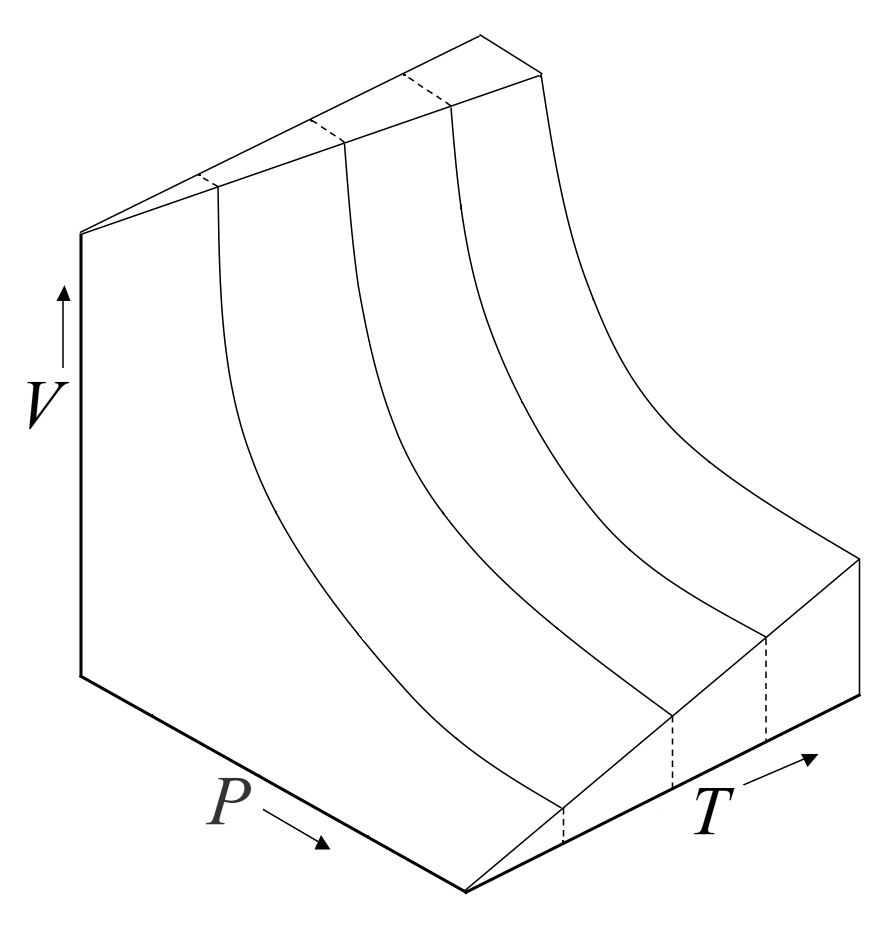
      16 votes
    34. Sidebars for FAQs, subtopic rules, or Wiki-esque reference links?

      I'm probably about to be guilty of causing the problem I'd like to solve, namely the endless iterations of questions asked and previously answered, or seemingly innocent questions that are...

      I'm probably about to be guilty of causing the problem I'd like to solve, namely the endless iterations of questions asked and previously answered, or seemingly innocent questions that are tantamount to trolling.

      I'm sure there have been prior discussions about pinning items, and I've seen prior commentary about further refining the ground rules for some sub-group areas.

      For the sake of efficiency and comity, there are communities where it would be helpful to create a common body of rules, reference material or other semi-permanent posts which should be regarded as the minimum governance/factual/technical basis for having a productive discussion.

      From a UI design perspective, Reddit, xda-developers, and some other forums have created visually confusing, dis-unified means of handling this - there are multipage FAQ/Wiki top links plus sidebars plus top pins. There's considerable independence among Reddit forums as to which model is chosen, furthering the confusion. I'd like to see Tildes "keep it simple", so pinned topics may be the way to maintain consistency and uniformity.

      Seeking thoughts and discussion about whether this is needed, feasible, desirable, etc.

      [What prompted this query was a a random response on this topic which posited a strawman argument so disingenuous that I wanted to run off and pull a Wiki together just so I could say, "do this minimal amount of homework and come back later, or get reported for being an obvious troll".]

      Note: edited to remove confusion of groups, sub-groups and topics, since I hadn't had enough coffee yet. Sadly I can't do this for the topic title...

      11 votes