• Activity
  • Votes
  • Comments
  • New
  • All activity
  • Showing only topics with the tag "ask.discussion". Back to normal view
    1. The ten pills

      hey everyone! found this interesting post on /r/6perks, and i wanted to share it here and see what ideas get shared. You wake up in a chemist's lab. In front of you is a table with 10...

      hey everyone! found this interesting post on /r/6perks, and i wanted to share it here and see what ideas get shared.


      You wake up in a chemist's lab. In front of you is a table with 10 different-coloured pills. You may only choose 3. A warning label notifies you that taking more than 3 will cause instant combustion.

      Which do you choose, and why?


      🔵 Future Pill 🔵

      You can see 10 years into the future or any time sooner, whenever you want. You can see any part of the world.


      đź”´ Xray Pill đź”´

      You gain the ability to see through anything as far as you can normally see. Works at any layer.


      🔸 Fly Pill 🔸

      You can fly. You start at a slow speed and require time to speed up to a maximum of 100mph (161kph). You are not immune to low oxygen or harsh temperatures.


      🌿 Drug Pill 🌿

      You gain the ability to automatically be affected by any drug that exists as much as you want, no bad side effects.


      ❤ Sex Appeal Pill ❤

      Anyone you want is instantly attracted to you, you are cured of and immune to STD's. Anyone who you "do" also becomes immune, and son on. Cure the world?


      đź’  Disease Immune Pill đź’ 

      Gives you the ability to become immune to all harmful diseases.


      đź’° Money Pill đź’°

      You don't become rich, nor have infinite money, but it's like you do. Every time you want to do or have something, your bank account/wallet has exactly as much money as you need.


      đź’® Wish Pill đź’®

      Gives you the ability to wish for one of two things: any existing object to be teleported in front of you, or for you to be teleported wherever you want. Can only be used once a week. You get a free return ticket if you teleported somewhere. You cannot wish for other pills.


      ♠️ Death Pill ♠️

      Gives you the ability to have any person of your choice killed, with no risk of consequence. Can only be used once every 5 weeks.


      🌟 Painproof Pill 🌟

      You are tougher than Wolverine after drinking green tea or eating spinach. You can still get hurt but you have Olympian-like physique, the skills of the greatest martial artists in the world, you are twice as fast, and your wounds regenerate very quickly.

      17 votes
    2. The End of the F***ing World - Netflix

      Has anyone else seen this show? It came out last October. I just saw it about a month ago, probably a little less. It has got to be one of the best thing I've seen all year. Top 3. I love the...

      Has anyone else seen this show? It came out last October. I just saw it about a month ago, probably a little less. It has got to be one of the best thing I've seen all year. Top 3.

      I love the entire theme, the atmosphere, how everything is done. The direction is incredible. And the actors are ridiculously good.

      In the show the two main characters will narrate their thoughts as they are happening in the moment. There is brilliant joke where Alyssa is narrating her thoughts and she thinks something along the lines of, "If This were a movie we would probably be American." Because the show is set in Britain and she is thinking to herself, what if this is all a movie.

      The show is a dark comedy. And it's just got this incredible motif for lack of a better word. Has anyone else seen it? What are your thoughts? I really like Alyssa's character. Just how she is so empathetic, and she thinks far enough into everything to weigh both sides in a way not a lot of people would do. She basically givea the benefit of the doubt and weighs both sides more than she should.

      15 votes
    3. Adjustment Day by Chuck Palahniuk, my take. Discussion welcome.

      Adjustment Day is a parody, at least I hope it is, of a United States dystopia. The concept is rather ambitious, but the author rises to the task. The prime conspiracy theory behind the book is...

      Adjustment Day is a parody, at least I hope it is, of a United States dystopia. The concept is rather ambitious, but the author rises to the task. The prime conspiracy theory behind the book is that throughout history, civilization has periodically weeded out young men of 18-24 through war and whatever other means available to keep society from returning to the dark ages. Who does this in the U.S? Why, your government, of course.

      In this version of the conspiracy, the young men turn the tables. Most of the book is about what happens after Adjustment Day. I've only read Fight Club and Choke by Palahniuk before this. All I can say is the cynicism and nihilism of those two books seems increased tenfold in Adjustment Day. Do you have a conservative conspiracy theory that you think about from time to time? They're all in here. I'd even bet that the author comes up with some you've never heard before.

      In a satire that is as biting as The Sellout, Palahniuk presents several characters who live through the aftermath of the event, including the originator of it. But instead of nobody talking about it, (like in Fight Club) everybody is talking about this new bizarre movement/social-political revolution. As you go down this rabbit hole of irrational rationalization, it's easy to lose sight of what is going on. Scenes and characters are switched at the beginning of random paragraphs, causing me to back up every few pages.

      A good example of Palahniuk's treatment of infrastructure is given by a new form of money that comes out of the movement:

      Officially, the order called them Talbotts, but everyone knew them as skins. Rumor was the first batches were refined from, somehow crafted from the stretched and bleached skin taken from targeted persons. People seemed to take a hysterical joy from the idea.
      Instead of being backed by gold or the full faith of government or some such, this money was backed by death. The suggestion was always that failure to accept the new currency and honor its face value might result in the rejecter being targeted. Never was this stated, not overtly, but the message was always on television and billboards: Please Report Anyone Failing to Honor the Talbott. The bills held their face value for as long as a season, but faded faster in strong light and fastest in sunlight. A faded bill held less value as the markers along the edges became illegible.

      Because the money had a shelf life, people had to work all the time. At the top of the hierarchy were the young men who had put their lives on the line during the Adjustment Day revolution. They would get the money from some source and give it away to their workers and people they knew, spending it all as fast as they could.

      If that sounds ridiculous, you haven't even scratched the surface of this world. Chief among the topics are racism and prejudice toward everyone you can imagine. All in all I found the book a little tedious. Palahniuk puts the crazy theories in the mouths of people who voice them so convincingly that it becomes surreal. If you're a fan of the author you might like it. But practically every paragraph seems engineered to be offensive in some way, to someone.

      Let's just hope Chuck is making all this stuff up.

      6 votes
    4. What's in a name? Patience Phillips' Catwoman

      For anyone who doesn't recognize Patience Phillips, she was Halle Berry's Catwoman in the most terrible superhero film - Catwoman (2004)...that I really enjoyed it. Probably because it wasn't...

      For anyone who doesn't recognize Patience Phillips, she was Halle Berry's Catwoman in the most terrible superhero film - Catwoman (2004)...that I really enjoyed it. Probably because it wasn't well-received, it's often overlooked when talking about things like "the first female hero on screen" or "the first black hero..." sort of things. And technically, Catwoman's not a superhero.

      Spoilers ahead. I'm also going to keep my points to the story and characters themselves. I honestly had no issues with any of the actors.

      The good

      • The theme and social commentary on make-up, beauty products, self-harm/addiction and image issues woman do face. The added layer of cooperate greed. The idea of what you see in the mirror vs. what others see (and if they're right), alongside what you want to present to the world or to specific people - honestly this movie has probably one of the best takes on "the cost of beauty" that I've seen in a while, and since.
      • The scene where Tom thinks he's saving a jumper, but Patience is actually trying to save a cat. This random scene turns out to be a great storytelling scene when brought up again after Tom arrests Patience for murder and she asks him what he first saw the first time they met.
      • Laurel is probably the most interesting character in this movie. There's a really well-framed shot of her photos being removed from her company lobby in favour of a younger model. I think it's one of the best scenes in the movie. Laurel is capable, powerful, rich and very accomplished, but somehow her relevance still fades as her beauty does. (I can honestly say I generally can't stand the evil step-mother wrestling with her fading beauty and taking out her bitterness on some young snow white-y girl, but this one worked for me.)
      • I loved that Batman wasn't in it (but didn't really like that a love interest still had to be introduced).

      The bad

      • That she's call Patience Phillips...but honestly this is the warning to divorce this from any Catwoman or female superheros (or anti-heros) you know.
      • Patience doesn't earn her "powers" - Selina Kyle (Catwoman in basically all other versions) works obsessively to perfect all her abilities. She's an insanely good cat burglar, not a magic cat.
      • Patience doesn't earn or drive her own growth. There is basically no growth as a character. A magic cat ghost could have simply possessed Patience's body and the story would be the same.
      • Oversexualization of Catwoman...which I didn't even know could be a thing until this movie. Black leather for a sexy Catwoman - awesome. Whatever the belt thing was - grossly missed the point while trying to copy Pfeiffer's patched up catsuit.
      • I'm also not the biggest fan of make-over tropes in general.

      The ugly

      • The basketball scene - just everything about it.
      • The hate that surrounded the movie because Catwoman wasn't blonde (or Michelle Pfeiffer), and that Batman's not in it.
      • The physical punch-them-out fight scene between Laurel and Catwoman in the end - just why? This isn't a movie at all about physical strength, and having a "face like marble" isn't a real power. (To be fair, I don't like this showdown in really any superhero movie, with the exception of The Death of Superman.)

      The cheesy

      • The crazy cat-lady Patience goes too, and her tossing a cat toy at her
      • The sushi eating scene
      • The in case of date emergency kit her friends gave her.
      • Laurel seeing her cracked beauty in the moment of a showdown fight
      • The cat scratches on Tom
      • Her best friend hooking up with her doctor
      • The comparing signatures on the coffee cups
      • Her Marvel-like comic book name

      Final thoughts

      So yeah...I would recommend this movie, and really hope that when they do make another Catwoman film that it might share some themes. Have you seen this movie? Did you hate it? Who's your favourite Catwoman? What would you like to see in a Catwoman movie?

      10 votes
    5. What if app stores were federated?

      I've been thinking a lot lately about the future of software and where native apps and the web will reconcile and I had the idea that what if "the next OS" had a OSS federated app store that...

      I've been thinking a lot lately about the future of software and where native apps and the web will reconcile and I had the idea that what if "the next OS" had a OSS federated app store that people and organizations could host themselves, but the system still used the app store model that pull app/program listings from all the installations online? This could apply to mobile or desktop computing, or even any of the other platforms (see windows store system compatibility).

      11 votes
    6. Has anyone been following Mycroft AI (open source digital assistant)?

      Video pitch: The world’s first open source AI | Mycroft AI | HT Summit 2017 Fast Company article: Can Mycroft’s Privacy-Centric Voice Assistant Take On Alexa And Google? Kingscrowd review: Top...

      Video pitch: The world’s first open source AI | Mycroft AI | HT Summit 2017

      Fast Company article: Can Mycroft’s Privacy-Centric Voice Assistant Take On Alexa And Google?

      Kingscrowd review: Top Deal: The Secure Open Source Voice Assistant Of The Future


      I'm not a techie by any means, but I stumbled across Mycroft AI some time last year, and I'm keeping half an eye on its progress. If ever I get myself a digital assistant, I think it's likely to be Mycroft. (I also love the name!)

      I wondered if anyone else had any thoughts about this.

      11 votes
    7. Can a company lie in their privacy policy?

      Maybe I'm just not very well versed in this sort of thing but I couldn't find anything online. I've always been sort of paranoid that a company might not be truthful in their privacy policy. Is...

      Maybe I'm just not very well versed in this sort of thing but I couldn't find anything online. I've always been sort of paranoid that a company might not be truthful in their privacy policy. Is there any sort of law to keep them honest or do we just have to take their word on it?

      11 votes
    8. The issues with modernizing stories: Cinderella (2015) vs. Ever After (1998)

      Old stories are always being updated for lots of reasons, ranging from trying to appeal to new audiences to correcting toxic depictions to fitting better to the current social or political climate...

      Old stories are always being updated for lots of reasons, ranging from trying to appeal to new audiences to correcting toxic depictions to fitting better to the current social or political climate and more. There's nothing new there. However, one thing I find a bit odd lately, as in the last five years or so, is that a lot of this modernization is actually done pretty poorly in main stream media. We see more forced diversity, queerbaiting, and generally bad storytelling. Not totally sure how I'll do this yet, but I'm thinking of posting stories that stand out to me for better or for worst, starting with a classic.

      There will be spoilers for both movies.

      Cinderella (2015)

      This is one I honestly didn't think worked at all. To be fair, I believe Disney's goal was just to sell a beautiful movie, and not a good story. This whole movie was gorgeous. It was also really boring, which I honestly believe is the greatest sin in storytelling.

      Cinderella herself is "smarter" in this movie than the old classic cartoon. She's well read and has some agency, which honestly makes her more a damsel than the original cartoon for me. In the cartoon, she was an abused child that had no where to go. Her being trapped made sense. In the new one, she's sort of a fighter...who doesn't fight. I didn't get it.

      Another issue is that Cinderella was really the only character they modified, which is why the story is still shallow.

      Ever After (1998)

      This is honestly one of the best modernization of the fairy tale I've ever seen. What worked for me, is that they fleshed out all their characters. Danielle, Henry, the stepmother, stepsisters, everyone! This makes for a much richer story, where characters themselves can be modernized, but still fit the time of the period piece. It's not about dropping a fourth wave feminist into an aged story, but about adding the dimensions that would have still existed then. Danielle is strong, well read, and obedient. Her servitude is not without reason. She's seeking a "mother", and her relationship with her stepmother is more than simply being a slave. The audience is shown the moments of kindness Danielle seeks from her stepmother.

      My quick two-cents. I also find it interesting that Ever After came out over 15 years before Cinderella.

      So what are you thoughts? Any good fairy tale adaptations you can mention?

      8 votes
    9. You are given a small machine that spits out a single chocolate chip cookie every two seconds. The machine will never stop producing cookies. How do you save the world?

      If the cookies never stop being produced, then it is logical to assume that, if unchecked, uneaten cookies will eventually choke the earth, leaving us uninhabitable. What is your plan, and how...

      If the cookies never stop being produced, then it is logical to assume that, if unchecked, uneaten cookies will eventually choke the earth, leaving us uninhabitable. What is your plan, and how long do you think we'll last in this cookie apocalypse?

      As for some general rules, the machine is impossible to break, and it can inexplicably produce cookies infinitely without having to refill on ingredients.

      27 votes
    10. Experiences with aphantasia or what does visualizing look/feel like?

      Aphantasia is a condition where a person is unable to visualize images in their minds eye. If I tell you to think of a red apple, several people will visualize this apple and 'see' it. But those...

      Aphantasia is a condition where a person is unable to visualize images in their minds eye. If I tell you to think of a red apple, several people will visualize this apple and 'see' it. But those (like me) with aphantasia simply can't. Some of us have access to other senses within our mind (hearing, touch, smell, etc), some don't.

      Do you have aphantasia? There's a simple test here.

      In a similar vein, is anybody able to explain what visualizing looks like? Is it just like the sight I get from my eyes? Different?

      17 votes
    11. Fantasy Football team discussion thread

      Any Fantasy Football players on Tildes? Post your team here with your league rules and let's rate and discuss each other's teams! Side thought: Are there enough NFL fans here to warrant a Tildes...

      Any Fantasy Football players on Tildes? Post your team here with your league rules and let's rate and discuss each other's teams!

      Side thought: Are there enough NFL fans here to warrant a Tildes league? That might be fun. There's enough time to draft before the season starts if enough people are interested.

      11 votes
    12. Did anyone here watch HBO's Sharp Objects?

      From start to finish I found the show totally engrossing, tense, and mysterious. It was excellently shot and written, and the twists in episodes 7 and 8 were hard hitting, even if you had an idea...

      From start to finish I found the show totally engrossing, tense, and mysterious. It was excellently shot and written, and the twists in episodes 7 and 8 were hard hitting, even if you had an idea that they were possible as early as episode 4 or 5. Plus, those post creditn scenes were haunting. What did you guys think?

      I'm currently reading the book so please, no spoilers for the novel! TV show discussion only

      11 votes
    13. Lets take a personality test!

      One of my favorite topics in Psychology is personality and there happens to be a very good Five Factor test that is free to the public domain with all 3,000+ items available for download. Some...

      One of my favorite topics in Psychology is personality and there happens to be a very good Five Factor test that is free to the public domain with all 3,000+ items available for download. Some notes about the IPIP NEO-PI:

      Purpose of this On-Line Inventory

      • The primary purpose of this on line inventory is to educate the public about the five factor model of personality.
      • More specifically, the report explains the likely consequences of one's standing on five broad personality domains.
      • These broad domains cover normal differences in personality that should be obvious to people who know you well.
      • Secondarily, this inventory estimates your standing on the 5 broad domains and 30 subdomains of personality.
      • The inventory does not reveal hidden, secret information about you nor does it assess serious psychological disorders.
      • The report is designed to be objective, not pleasing or flattering.
      • Measurement error, misunderstandings, carelessness, and mischievous responding can invalidate the report.
      • If knowledgeable acquaintances disagree with the test results, then the results are wrong.

      Link to the questionnaire:
      https://www.personal.psu.edu/~j5j/IPIP/

      More about the International Personality Item Pool:

      https://ipip.ori.org/

      24 votes
    14. BlacKkKlansman

      Anyone seen this? I heard about this movie on NPR and decided to check it out. Wow! It's a great, well told story that pulls a lot of discreet threads together. As an aside from the main story of...

      Anyone seen this? I heard about this movie on NPR and decided to check it out. Wow! It's a great, well told story that pulls a lot of discreet threads together. As an aside from the main story of a black cop infiltrating the Ku Klux Klan it also references racist media of yesteryear like Gone With the Wind and Birth of a Nation. There are several moments that wink at Donald Trump's talking points and policies. There was a lot of reaction from the predominantly black crowd I was in, the connection was certainly noticed.

      And the end! Wow. Almost had me in tears, really brought me back to a year ago when I saw the Vice News on Charlottesville. I was in a theater in Richmond, VA about an hour from Charlottesville. You could have heard a pin drop right when the movie ended. I've never seen so many people get gut punched like that all at once. The timing of this movie was absolutely well thought out.

      12 votes
    15. When is euthanasia acceptable? Where do we draw the line ethically?

      I recall recently seeing an article posted that was related to euthanasia, and I started thinking about the subject. I see both potential pros and potential cons associated with it. For example,...

      I recall recently seeing an article posted that was related to euthanasia, and I started thinking about the subject. I see both potential pros and potential cons associated with it. For example, there's the concern about family members or authority pressuring an ill person to opt for doctor-assisted suicide to ease financial burdens, for instance. There's also the benefit, on the other hand, of allowing someone who is terminally ill or guaranteed to live the rest of their life in excruciating pain the option to go out on their own terms. With proper oversight and ethical considerations, it generally seems to be an all-around ideal to provide an "opt-out" for those who would only continue to suffer and would rather not prolong it, as a merciful alternative to forcing them to live it out.

      But then there are some trickier questions.

      As a disclaimer, I spent nearly a couple of decades struggling through depression and have been surrounded (and still am surrounded) by people who struggle with their own mental illnesses. Because of this, I'm perfectly aware of the stigma and subpar treatment of mental illness in general. With that in mind, I completely recognize that there are certain conditions which are, at this time, completely untreatable and result in peoples' quality of life deteriorating to the point that they become perpetually miserable, particularly with certain neurodegenerative diseases.

      Thus, the question occurred to me: wouldn't such a condition be the mental health equivalent of a terminal illness? Would it not be unethical to force someone to continue living under conditions in which their quality of life will only diminish? Shouldn't someone who has such a condition, and is either of sound enough mind or with a written statement of their wishes from a time when they were of sound enough mind, be able to make the same decision about whether or not to opt to go out on their own terms?

      And yet, as reasonable as it sounds, for some reason the thought of it feels wrong.

      Is there something fundamentally more wrong about euthanasia for mental health vs. euthanasia for physical health? Is it just a culturally-learned ideal?

      More importantly, what makes euthanasia acceptable in some cases and not others? Which cases do you think exemplify the divide? Is there something more fundamental that we can latch onto? Is there a clear line we can draw? Is psychology itself just too young a field for us to be drawing that ethical line?

      I'm genuinely not sure how to feel about this subject. I would be interested in hearing some other thoughts on the subject. The questions above don't necessarily have to be answered, but I thought they could be good priming points.

      24 votes
    16. Benefit of not having downvotes: I can say that I enjoy The Phantom Menace

      while its not the best star wars movie, it isn't the abomination that people make it out to be. its legitimately fun to watch and comfy with all its bad CGI. Favorite star wars movies in order:...

      while its not the best star wars movie, it isn't the abomination that people make it out to be. its legitimately fun to watch and comfy with all its bad CGI.

      Favorite star wars movies in order: IV, V, Solo, VII, I, VIII, VI, Rogue One, III, II

      37 votes
    17. Lets talk about audio connectors (TRRS 4-Pole, OMTP, CTIA)

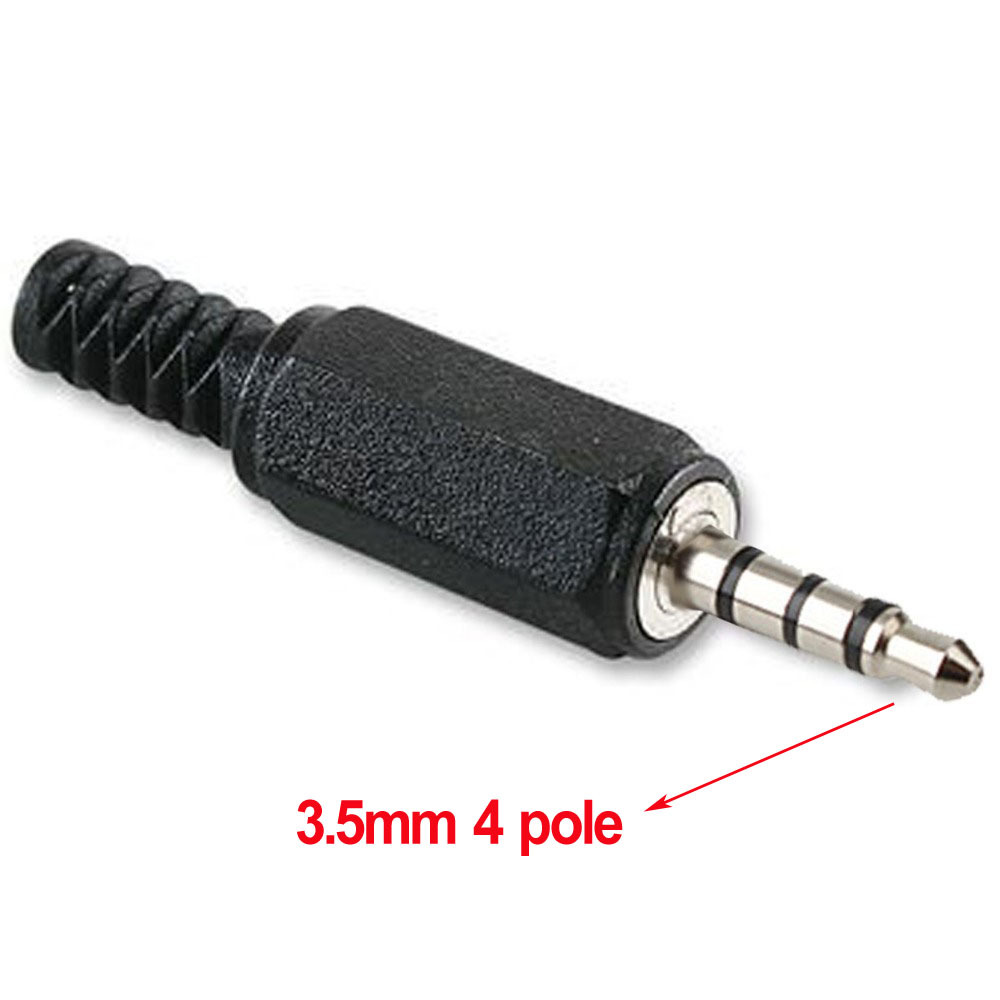
      To summarize, I am annoyed that there are two different standard for 4-pole audio connectors. For those curious I mean this. You have OMTP and CTIA, the difference is they swap the mic and ground...

      To summarize, I am annoyed that there are two different standard for 4-pole audio connectors. For those curious I mean this.

      You have OMTP and CTIA, the difference is they swap the mic and ground pins. This is irritating because Apple vs Android use them differently. This becomes especially annoying when you want a feature like an inline mic mute switch (one designed for CTIA for example will disconnect the ground pin on OMTP instead of mic)

      This has been an ongoing frustration for me for a while. I really enjoy a good pair of headphones because I use Discord and I work from home which necessitates using headphones for extended periods of time to listen to music, take calls, chat on discord.

      I just want there to be a device that does OMTP/CTIA swapping AND include the ability to physically mute the mic. Like this but with something that will break the mic pin. Im currently designing something in fritzing that will allow both direction switching as well as selective muting.

      /rant

      Has anyone else had any similar experience or frustration with this problem?

      4 votes
    18. Private dog cloning, what are your thoughts?

      I had a discussion today about the ethics of cloning your pets. It's a thing you can currently pay (a lot) of money for, but I don't really see much discussion about it, even though it's absurdly...

      I had a discussion today about the ethics of cloning your pets. It's a thing you can currently pay (a lot) of money for, but I don't really see much discussion about it, even though it's absurdly sci-fi and a little crazy to me that it's a real business.

      So what are your thoughts? Is it ethical? Is it a bit weird? Is it perfectly healthy?

      17 votes
    19. What do we want as a community?

      Just got invited here and looking at the content of the front page, Tildes is basically a "poor-man's version" of reddit right now. That's OK: it's a new community and I imagine a big part of...

      Just got invited here and looking at the content of the front page, Tildes is basically a "poor-man's version" of reddit right now. That's OK: it's a new community and I imagine a big part of users are coming here from reddit so they're doing what they're used to doing on social networks, that's only fair.

      However, more than that, looking at the groups, they are set up pretty much similarly to reddit's default subs - if not on a 1:1 basis, at least in the general tone: pretty casual, daily life topics, big focus on entertainment media, etc. Maybe again this is, by design catering to the people who are bound to be incoming from reddit, so they can immediately relate to a similar user experience. Good.

      So I think it's fair to say that it's proven that Tildes can be "like reddit". It kinda looks like reddit, it kinda feels like reddit. That part of the deal is covered. Now, what can makes us different? I doubt anyone here has no ambition besides being a soft-fork of reddit.

      What topics make you tick? What sort of online discussion makes you go "that's the good stuff"? What subjects are you truly passionate about? I'd like to know what the community here is all about, whether the current ~groups represent their interests and passions or not and, hopefully we could come up with some less generic ideas for new ~groups out of the discussion.

      EDIT I realize Tildes has a specific policy of "lesser active groups are better than a billion inactive groups" but at this point in time a good selection of groups would really help define the identity and content, not to mention promote quality discussion that actually aligns with people's interests. Hopefully seeing common trends in the replies would allow us to identify a few potential new groups, perhaps.

      36 votes
    20. How will Tildes work with bans?

      Basically, with groups being admin controlled rather than the reddit system of mods, will all bans be site wide or should group bans be possible? Let's say somebody is harassing or being an...

      Basically, with groups being admin controlled rather than the reddit system of mods, will all bans be site wide or should group bans be possible? Let's say somebody is harassing or being an asshole on ~LGBT, should they be banned from ~LGBT or from the website?

      21 votes
    21. How malleable are personality traits, if at all?

      Under the right inputs opinions and worldviews can be changed relatively easily, but what about the more subtle stuff underneath? Can a workaholic with a strong drive later in life become...

      Under the right inputs opinions and worldviews can be changed relatively easily, but what about the more subtle stuff underneath? Can a workaholic with a strong drive later in life become lethargic? Can an innately introverted person later in life become innately extroverted?

      Those aren't the best examples, but that said my intuition would be that these tendencies are too deep rooted to be significantly altered and can only be superficially mitigated against one way or another.

      If this is to a degree incorrect I'd love to hear some anecdotes.

      10 votes
    22. Voltron: Legendary Defender - Shiro and Adam

      I don't have a long write up for this or anything, mostly because I'm just confused... I have to admit, watching season 7, I don't remember Adam if he was ever brought in before, and his part was...

      I don't have a long write up for this or anything, mostly because I'm just confused...

      I have to admit, watching season 7, I don't remember Adam if he was ever brought in before, and his part was so short and seemingly inconsequential, I honestly have no strong feelings for it. Shiro is all about burying his feelings and putting the needs of others above his own, so it's not at all out of character for his personal life to basically never show up. Still, we're finally getting more of his backstory, and I can't help but feel it's lacking.

      So, I guess my question is - why? Why bring in a character they're not going to develop and kill off screen? Would it be better just to have a random mention of Shiro being gay and just moving on, which I guess is pretty much all that happened anyways? Guess they could have done it as part of his backstory with Keith. Does this count as queer-baiting?

      Thoughts?

      Correction: guess he didn't die off screen. I just didn't recognize the random pilot as Adam...

      7 votes
    23. Buffy's Spike: Death as redemption

      For most stories, when you have an evil or otherwise irredeemable character, death is the only form of satisfactory redemption. Anything less is simply not convincing for most audiences. I'm sure...

      For most stories, when you have an evil or otherwise irredeemable character, death is the only form of satisfactory redemption. Anything less is simply not convincing for most audiences.

      I'm sure a lot of people can write novels on Spike's character arcs, but I just wanted to discuss a little bit of his redemption arc.

      Interestingly, his sacrifice at the end of Buffy season 7, is the beginning of his actual character. Sure, he's helped out Buffy before that, but he was far from "the greater good" until then. So death, and boom - character redeemed.

      So how's the redemption arc when he's brought back in Angel. It's harder now because now he's up and walking and possibility doing things that negate his redemption. He now has to live the life he supposedly wanted to when he made his sacrifice.

      Not saying that's what happened, but I think the writers went out of their way to show this.

      (Going off memory now, so please feel free to correct me, if I get any details wrong...)

      Not long after he's ghost-Spike, he starts feeling like he's pulled to "Hell", and develops a friendship with Fred, who ultimately saves him from that fate. This establishes his "goodness" for the rest of Angel.

      Thoughts? Other characters that share something similar you want to talk about? How would Spike feel without this episode? Anyone just want to gush about Spike in general?

      3 votes
    24. What are your thoughts on Wikileaks?

      I'm curious to see what the public consensus towards the site is nowadays. They have been controversial since their inception, but no matter what you think of them, there is no denying that the...

      I'm curious to see what the public consensus towards the site is nowadays. They have been controversial since their inception, but no matter what you think of them, there is no denying that the information they've released has sparked massive debate around the world.

      13 votes
    25. Let's talk about collectible non-card games

      I'd like to start a discussion around collecting-based games, with the following prompt question: What non-card-based alternatives to TCG/CCGs exist which satisfy the same criteria? This...

      I'd like to start a discussion around collecting-based games, with the following prompt question:

      What non-card-based alternatives to TCG/CCGs exist which satisfy the same criteria?

      This "criteria" is my understanding of what makes TCGs/CCGs appealing, and includes but is not limited to:

      • collectible/tradable (not necessarily monetized),
      • portable/relatively self-contained (this could include apps, handheld consoles),
      • the constant drive to expand the collection (whether it's through the randomness of distribution not ensuring particular collectibles, or an appealing reward system like in the Pokemon games).

      I wish to divorce these criteria from the card format. Of course, the list of criteria not extensive and I am actively seeking a deeper understanding of what makes these card-based games so appealing. Discussions on the nature of gambling-addiction and the impact of secondary market values also very welcome.

      The best example I can think of is the Pokemon games for handheld consoles. These games pre-dated the Pokemon card game and are a great example of the appeal of card games existing and thriving in a non-card format (which ironically led to the card game adaptation).

      Another is Warhammer and the tabletop wargaming family. This is interesting to me but really seems to be in a completely different ballpark because it lacks agility and thus is far less appealing to many players.

      Note: my reference point to what makes games like these appealing" is very biased by card games, specifically the current "big three" of TCG/CCGs: Magic: the Gathering, Pokemon, and YuGiOh. I'd appreciate suggestions of other relatively successful or simply well-designed games which employ collectibility as a core mechanic. They don't even have to be portable, as long as you're clear about that.

      tl;dr: let's talk about alternatives to card games which depend on collecting as a core mechanic

      Edit: formatting.

      8 votes
    26. Why are voter ID laws controversial in America?

      In France, we all need two identity documents to vote, a voter's card and a national identity card (or passport). It is not at all controversial, even at the far left of the political spectrum. In...

      In France, we all need two identity documents to vote, a voter's card and a national identity card (or passport). It is not at all controversial, even at the far left of the political spectrum. In America, people say it's voter suppression.

      17 votes
    27. Album Discussion: Erra - Neon (2018)

      New release today, Erra's Neon. Apple Music Spotify YouTube Currently the number one metal album on iTunes' chart, Erra's Neon is the latest release from the underground metalcore act. While...

      New release today, Erra's Neon.

      Apple Music
      Spotify
      YouTube

      Currently the number one metal album on iTunes' chart, Erra's Neon is the latest release from the underground metalcore act. While they've attracted a cult following, Erra rarely gets headlining tours. Neon is their newest attempt at reaching the next step.

      My personal opinion is that this is the perfection of the sound the band switched to with their last release, Drift. Just as atmospheric, with little less of the chug-chug-chug of most metalcore outfits, Erra may have finally found out how to make what some call "progressive metalcore" a bit more accessible. I personally enjoy how present the bass is in the mix. Metal and hardcore both seem to forget about the instrument and put it low in the mix as an after thought. The clean vocals have always been reminiscent of post-hardcore's darling Anthony Green, and Neon is no different.

      It's a little bit of a shame that we have to wait until track three to really hear some of the noodling guitar solos they are known for. In a genre more punctuated by breakdowns, Erra is a breath of fresh air when it comes to lead guitar work. But when it does happen, it is up to the standard they've put out for themselves. They seemed to have moved even further away from the djent sound of their earlier work here. I don't mind that, even if I do like djenty sounds, as I think this crisper sound is better overall for Erra. While the uncleans do hit like a truck on first listen, they stay in a mid-range throughout most of the album and it would have been nice to see them go low, as JT has been known to do live.

      Overall, I gotta say this is one my favorite albums of the year so far. Every song slaps a bit, gets the head bopping along at the very least.

      3 votes
    28. People who ask "are you pregnant?"

      Why? Quick story: I was in an elevator with a coworker I didn't really know and he told me a story of when he asked a stranger in a restaurant if she were pregnant. She was not! And he said he was...

      Why?

      Quick story: I was in an elevator with a coworker I didn't really know and he told me a story of when he asked a stranger in a restaurant if she were pregnant. She was not! And he said he was so embarrassed that he had to leave.

      I didn't get a chance to ask him, so I'm asking you fellow tilderinos - why ask this question at all? Especially to a stranger? What motivates this question? Is it really asking why someone looks fat?

      Have you been on the receiving end of this question? (If you're a women older than 25, I'm going to guess yes). What are your stories?

      15 votes
    29. General plans for the week

      For my fellow Canadians, Happy, uh... Regatta Day / Terry Fox Day / Saskatchewan Day / British Columbia Day / Natal Day / Simcoe Day / New Brunswick Day / Colonel By Day / Heritage Day / Joseph...

      For my fellow Canadians, Happy, uh... Regatta Day / Terry Fox Day / Saskatchewan Day / British Columbia Day / Natal Day / Simcoe Day / New Brunswick Day / Colonel By Day / Heritage Day / Joseph Brant Day / Benjamin Vaughan Day. For everyone else, Happy Monday.

      Here are my overall plans for this week, in no particular order:

      On Friday, your own user page had topics/comments views added, and has been paginated. Sometime in the next few days, I'm intending to extend this to other users' pages. I haven't finished deciding yet which privacy options (if any) will be available as part of this, so feel free to add your input in that thread if you haven't already.

      There are multiple open-source contributions for features in progress, so there should be a few more things coming in shortly from there. I'll make separate changelog posts for anything particularly major, but one that was added over the weekend (contibuted by @what again) was some special appearance/behavior for "nsfw" and "spoiler" tags on topics. They'll stand out more, always be displayed at the start of the tags list, and the "spoiler" tag makes sure that text posts don't have their excerpt displayed in the listing (but can still be clicked to expand).

      @cfabbro did a massive rework and update of the Docs site that I want to get applied this week. There's a ton of new information in there that should help a lot as we keep bringing more people into the site.

      On that note, there's also a new official invite-request thread in /r/tildes on reddit, so we'll probably have a decent number of new registrations this week as that gets worked through. I've also topped everyone back up to 5 invite codes (available here: https://tildes.net/invite), so please feel free to invite people yourselves as well (and as always, if you need more codes, just send me a message and ask).

      I think that should cover the main plans, any extra time I find above that will probably go into various random things on the backlog (and if I have time to work on a major feature, probably basic search).

      Thanks for being here, and please let me know if you have any feedback or suggestions.

      42 votes
    30. Is the Tildes section model compatible with injokes and microcultures?

      Something you see frequently on Reddit are subreddits that have developed their own slang, jokes and references. That's part of the reason why Reddit feels like a collection of communities more...

      Something you see frequently on Reddit are subreddits that have developed their own slang, jokes and references. That's part of the reason why Reddit feels like a collection of communities more than one website divided into sections, which is what Tildes look like right now.
      The question is, do we want that sort of stuff here?

      10 votes
    31. England/India First Test so far

      Urgh, this is not amazing cricket so far. There's been some good play in parts but overall it feels fairly scrappy from both sides. How many catches have the English slips dropped so far? (mind...

      Urgh, this is not amazing cricket so far. There's been some good play in parts but overall it feels fairly scrappy from both sides. How many catches have the English slips dropped so far? (mind you, the Indians dropped a few this afternoon too)

      My cricket coach at school was a delightfully gnarly old Yorkshire dude who would repeatedly drill into us "catches win matches lads, catches win matches" before making us do more catching drills.

      I feel like I've been defending Cooke's performance for too many years now, I can't believe we don't have someone else who can open the batting reliably. He doesn't need to hit out, just stay in. On the plus side, Sam Curran seems to be finding his feet. He's only 20 but I feel like he could go far. He might have saved this match for England today.

      OK, so I started writing this post while watching the highlights, just as England's second innings finished and now, just a few minutes later India are down five wickets, 84 needed to win, and England's bowling attack are on fire. It's all got very interesting all of a sudden.

      Non-cricket fans - the Test format is the one you guys generally seem to particularly baffling/frustrating. It's a five day match where nothing can happen for hours on end, and the game can end with no winner.

      6 votes
    32. Gotham - the okay-est not-Batman Batman story part 2: Makeovers

      As mentioned in part 1: Diversity, I'm currently rewatching Gotham on Netflix, and just writing up a whatever thoughts I have about the show. I find this show to be really good and really bad in a...

      As mentioned in part 1: Diversity, I'm currently rewatching Gotham on Netflix, and just writing up a whatever thoughts I have about the show. I find this show to be really good and really bad in a lot of places, both in storytelling in general and as a comic adaptation.

      Warning, there will be spoilers for the first three seasons (what I've seen up to).

      What I'm calling a makeover trope

      I'm basically defining any transformation, usually from undesirable/imperfect to desirable/perfect in the eyes of someone (usually a love interest). How this trope plays out is generally very gender specific, so I'm breaking it up into men and women. This trope is definitely not limited to what I'm going to cover.

      Women and the power of makeup
      When this trope is applied to a woman, there's generally shopping, hair and make-up involved. Examples includes:

      • creepy kidnapping, bathing and redress of a woman before presenting her to usually a man
      • common whip off her glasses and let down her hair
      • evil or sad all-black with heavy eyeliner
      • crazy/mad extra sexy make-up and clothes
      • girl-power shopping/spa day

      Men and the power of pushups
      When this trope is applied to a man, there's generally a training montage. Examples include:

      • hitting the gym
      • arming themselves with new weapons
      • new sharp tailored clothes
      • spiking up their hair, or shaving
      • turning evil after a betrayal

      Why I hate them

      I admit, it's a bit unfair to say I hate them, since this trope is pretty central to a lot of stories and will go unnoticed if done well. Character growth (in either direction) move stories. However, they stick out so much when tossed in poorly or for no reason, and I really do hate them then. Generally when I see them:

      • they are often shallow, such as just changing their hair (sure you can argue the symbolism of this, but it's cliche it's likely to be a reach to do so)
      • they change an individual character, but doesn't add to their relationships in a meaningful matter
      • (for women) they come with a sense of "taming", usually including a "breaking" phase, and usually by a man who just knows better

      How they can be good

      The makeover trope can be a very powerful character development tool. It can be driven by the plot or drive the plot. For me a good makeover trope will likely include:

      • internal desires to change, such as acknowledging a personal fault and wanting to improve
      • natural transformations, such as growing up or learning from experience
      • improves (or breaks down) existing relationships by comparing or contrasting our character with their close ones. This can work great to emphasis who they were to who they are or who they want to be

      Finally getting to Gotham

      Gotham, as a prequel to Batman, are origin stories, which by definition are transformation stories. We're watching the city of Gotham being transformed, Bruce Wayne becoming Batman, Oswald becoming the Penguin, and so on.

      In no particular order, here are some makeovers that stood out to me:

      Ivy Pepper (Hotness makeover)
      She's a tiny stupid kid with frizzy hair, who magically grows ten years and becomes super hot. So now you have childlike innocents meet boobs. But she's Poison Ivy, and she grew like a weed...get it?

      Safe to say, I did not like this change.

      Leslie Thompkins (Evil makeover)
      She's hurting after her husband is killed, and decides to use a drug to "free" herself. Though I didn't like this plot, I actually have no issues with this transformation, except for two things:

      • Why the booby black clothes and eyeliner? This is just a pet peeve of mine. I just want to see a woman turn evil and not become some sexy fetish.
      • No follow through. There are no consequences to this transformation. Jim, being the hero, will force her to take the antidote, and that's that. As cliche as it would be, I would prefer Jim somehow talk her into taking it, instead of just forcing it on her. Now it's just a weird take on the damsel in distress trope.

      I should also add, I actually don't like how characters need an excuse to do bad things. I think it would have been better if she just decided to screw Jim over, instead of this whole roundabout way of doing so, but still basically saying she loves him. Guess this saves the writers a redemption line.

      Barbara Kean (Madness makeover)
      Barbara is kidnapped and tortured by the Orge who believes she's his soulmate. Though this has makeover tropes I really dislike, specifically the "breaking/taming" and the "I see you for who you are and I will set you free" that comes with a huge dose of patriarchy, I actually thought this was pretty well done and revealed to the audience. I just wished they had more follow through regarding Barbara herself after this, instead of the shift to simply crazy, but still obsessed with Jim.

      Isabella (Dead girlfriend makeover)
      After learning that Ed (the Riddler) accidentally murdered his old girlfriend, who she looks exactly alike, Isabella decides to dress up as his dead girlfriend to prove "he won't hurt her". Little bit of a reverse of the the common trope, as she puts on glasses and ties her hair in a pony tail for this one. She's a disposable refrigerator girl, so my expectations were pretty low here. Still annoying to watch though.

      Oswald Cobblepot (Evil/power-up makeover)
      This character actually probably transforms the most through the series. There are lots of cliche bits, including sharp new clothes, but his transformations are generally a result of his own work and are fun.

      Selina Kyle (Dress-up makeover)
      The writers generally handle this character really well, so I'm not sure why they decided to toss in a random "guy sends over boxes and bags of shoes and clothes so you can dress up". She does dress up for the charity event, but easily goes back to herself. So, this was cliche, but has no consequences, ...so meh?

      Bruce Wayne (Toughness/reality makeover)
      The entire series basically has Bruce's slow transformation to Batman in the subplot. His interactions with Selina gives him the reality checks he's looking for, while contrasting his believes, specifically with Batman's infamous "no killing" rule. His makeover is deliberate, strongly internally motivated and permanent. His growth is believable.

      Final thoughts

      So this turned out way longer than I intended, and I actually didn't include nearly as much detail as I was going to.

      Thoughts? How does Gotham compare to other shows or stories?

      3 votes
    33. Will creativity become valued more highly than STEM skills in the near-term future?

      I'm doubling down here folks :) My prior post was called-out for being click-baity and rightfully so. The title was especially poor. I'll try to do better moving forward. I'm starting a discussion...

      I'm doubling down here folks :) My prior post was called-out for being click-baity and rightfully so. The title was especially poor. I'll try to do better moving forward.

      I'm starting a discussion here because my hope is that we can talk about the ideas within the article, rather than the article itself.

      Here was the original post for those interested: https://tildes.net/~humanities/3y1/mark_cuban_says_the_ability_to_think_creatively_will_be_critical_in_10_years_and_elon_musk_agrees

      I posted the article because at it's core are several interesting observations/propositions from two billionaires, Mark Cuban and Elon Musk, that presumably know a lot about business, and in Musk's case, a lot about STEM, and have a history of making winning bets on the future.

      The article supposes that:

      • Many (most?) STEM jobs will become automated
      • This will happen very quickly; more quickly than we anticipate
      • Creative skills will soon become more highly valued than STEM skills

      There was a time when parents told their kids to "become a lawyer or a doctor" but after enough time we end up with too many people going into the same profession and there is more competition for those jobs as the market becomes flooded. I know anecdotally that's happened for lawyers (not sure about doctors).

      I can see this happening with STEM as well.

      Should parents encourage kids to pursue STEM but pair this with equal study in the humanities? Is STEM the next target of automation? Will creative skills be more highly valued? Will engineers find themselves in the bread line?

      18 votes
    34. So what are you guys' opinions or hopes/fears of Disney aquiring the rights to X-Men?

      For me personally I'm excited because I really like what they've done with the MCU. It's not perfect but I think they've done a fine job so far and would prefer them to have a go at the X-Men (and...

      For me personally I'm excited because I really like what they've done with the MCU. It's not perfect but I think they've done a fine job so far and would prefer them to have a go at the X-Men (and FF) franchise. As a long time fan the movies have been hit and miss with the Fox X-Men for me so far. For example:

      Love:

      First Class
      X2
      Logan

      Like:

      DOFP
      X1
      The Wolverine

      Don't care for whatsoever:

      Wolverine Origins
      X3
      Apocalypse

      So really Fox did okay with the rights but not as good as they could have. The Fantastic Four specifically movies are laughable. Hell the Roger Corman flick was better than it's successors. I didn't even bother with the most recent as you could tell it was slap dashed together.

      So what do you guys think?

      9 votes
    35. Astralis vs Team Liquid / ELEAGUE CS:GO Premier 2018 - Grand-final / Post-match discussion

      Astralis 2-0 Team Liquid Inferno: 16-5 Map stats: https://www.hltv.org/stats/matches/mapstatsid/70988/astralis-vs-liquid Nuke: 16-12 Map stats:...

      Astralis 2-0 Team Liquid

      Inferno: 16-5
      Map stats: https://www.hltv.org/stats/matches/mapstatsid/70988/astralis-vs-liquid

      Nuke: 16-12
      Map stats: https://www.hltv.org/stats/matches/mapstatsid/70995/liquid-vs-astralis

      Astralis win the Grand Final!

      4 votes
    36. Natus Vincere vs Team Liquid / ELEAGUE CS:GO Premier 2018 - Semi-final / Post-match discussion

      Natus Vincere 0-2 Team Liquid Dust 2: 13-16 Map stats: https://www.hltv.org/stats/matches/mapstatsid/70934/natus-vincere-vs-liquid Overpass: 9-16 Map stats:...

      Natus Vincere 0-2 Team Liquid

      Dust 2: 13-16
      Map stats: https://www.hltv.org/stats/matches/mapstatsid/70934/natus-vincere-vs-liquid

      Overpass: 9-16
      Map stats: https://www.hltv.org/stats/matches/mapstatsid/70939/liquid-vs-natus-vincere

      Team Liquid upset NaVi to move on to the Grand final

      3 votes
    37. Choosing to not have children

      I hesitate to even use the term "childfree" for this post, as the reputation the community has gathered on reddit isn't the greatest. For good reason tbh - there's a reason I don't post on that...

      I hesitate to even use the term "childfree" for this post, as the reputation the community has gathered on reddit isn't the greatest. For good reason tbh - there's a reason I don't post on that sub.

      I knew from a very young age that I wasn't cut out for kids. I didn't want to play "house", hated baby dolls (especially the gross ones that "peed" so you could change the diaper), babysitting was done only under duress, and the noise that came from being around a crowd of kids made me crazy. I grew up with dozens of cousins, of which I was one of the oldest girls, so "taking care of the young ones" was kind of an expectation. But while the other cousins in my age range were happy to do so, I was off in a corner with a book, avoiding the entire thing.

      As I got older and started dating, the conversations about weddings and having kids were the last thing on my mind. I went off to university, got a job, moved out on my own, and just didn't really think twice about it to be honest. I guess I always assumed it'd happen one day, and the urge to settle down would kick in, but it never did.

      Now as I'm past the ever so major gate of 30 (that crucial age where everyone says you'll change your mind), nothing's changed. I have a large circle of friends who feel the same way (none of us have or want children) and we're enjoying our lives in a way I didn't think was possible. We enjoy our dinners with each other, traveling on weekends to spontaneous destinations, last minute concerts, festivals, and many other events that keep us busy and engaged. The thought of giving it up and settling down just doesn't hold any appeal.

      The accusations of selfishness, shallowness, leading an unfulfilled life are all just water off a duck's back. If I'm selfish, it hurts no one but myself. If I'm shallow, well, I'm not shallow so that's not an issue. My life is my own, and it's exactly how I want it - full of friends, spontaneity, and peace and quiet when I want it.

      41 votes
    38. Is Hacker News suppressing leftist articles? Or just a conspiracy of poor point scoring?

      There was a story posted to Hacker News, The Return of the Super-Elite from Jacobin magazine. It was on the front page for a little bit of time. I refreshed and it was on the 2nd page. 5 hours...

      There was a story posted to Hacker News, The Return of the Super-Elite from Jacobin magazine. It was on the front page for a little bit of time. I refreshed and it was on the 2nd page.

      5 hours later and it's down to #113, page 4. It has 88 points. The second youngest submission on page 4 is 16 hours old. On page 3, the youngest item is 6 hours old, and has only 7 points. So this article is newer, has a respectable amount of points but within 5 hours has been relegated to page 4, whereas an item that has fewer points and is 1 hour older is sitting on page 3.

      edit: the rank keeps dropping, when I first wrote this post it was at #111, then #112, and when I submitted it was at #113, I just refreshed and it's at #114. Other submissions near the range of points and hours are ranking on page 1. On page 5 all items are from 1, 2 or 3 days ago.

      I've noticed that any pro-unionization talk seems to disappear much more quickly than other stories.

      So let's get our tinfoil hats on and ask is Hacker News suppressing leftist articles or suppressing articles of a certain type altogether?

      Or maybe it's just a conspiracy of a bad algorithm for determining where submissions rank?

      26 votes
    39. About the "ten thousand hours of practice to become an expert" rule

      Expertise researcher Anders Ericsson on why the popular "ten thousand hours of practice to become an expert" rule mischaracterizes his research: No, the ten-thousand-hour rule isn't really a rule...

      Expertise researcher Anders Ericsson on why the popular "ten thousand hours of practice to become an expert" rule mischaracterizes his research:

      No, the ten-thousand-hour rule isn't really a rule

      Ralf Krampe, Clemens Tesch-Römer, and I published the results from our study of the Berlin violin students in 1993. These findings would go on to become a major part of the scientific literature on expert performers, and over the years a great many other researchers have referred to them. But it was actually not until 2008, with the publication of Malcolm Gladwell’s Outliers, that our results attracted much attention from outside the scientific community. In his discussion of what it takes to become a top performer in a given field, Gladwell offered a catchy phrase: “the ten-thousand-hour rule.” According to this rule, it takes ten thousand hours of practice to become a master in most fields. We had indeed mentioned this figure in our report as the average number of hours that the best violinists had spent on solitary practice by the time they were twenty. Gladwell himself estimated that the Beatles had put in about ten thousand hours of practice while playing in Hamburg in the early 1960s and that Bill Gates put in roughly ten thousand hours of programming to develop his skills to a degree that allowed him to found and develop Microsoft. In general, Gladwell suggested, the same thing is true in essentially every field of human endeavor— people don’t become expert at something until they’ve put in about ten thousand hours of practice.

      The rule is irresistibly appealing. It’s easy to remember, for one thing. It would’ve been far less effective if those violinists had put in, say, eleven thousand hours of practice by the time they were twenty. And it satisfies the human desire to discover a simple cause-and-effect relationship: just put in ten thousand hours of practice at anything, and you will become a master.

      Unfortunately, this rule— which is the only thing that many people today know about the effects of practice— is wrong in several ways. (It is also correct in one important way, which I will get to shortly.) First, there is nothing special or magical about ten thousand hours. Gladwell could just as easily have mentioned the average amount of time the best violin students had practiced by the time they were eighteen— approximately seventy-four hundred hours— but he chose to refer to the total practice time they had accumulated by the time they were twenty, because it was a nice round number. And, either way, at eighteen or twenty, these students were nowhere near masters of the violin. They were very good, promising students who were likely headed to the top of their field, but they still had a long way to go when I studied them. Pianists who win international piano competitions tend to do so when they’re around thirty years old, and thus they’ve probably put in about twenty thousand to twenty-five thousand hours of practice by then; ten thousand hours is only halfway down that path.

      And the number varies from field to field. Steve Faloon became the very best person in the world at memorizing strings of digits after only about two hundred hours of practice. I don’t know exactly how many hours of practice the best digit memorizers put in today before they get to the top, but it is likely well under ten thousand.

      Second, the number of ten thousand hours at age twenty for the best violinists was only an average. Half of the ten violinists in that group hadn’t actually accumulated ten thousand hours at that age. Gladwell misunderstood this fact and incorrectly claimed that all the violinists in that group had accumulated over ten thousand hours.

      Third, Gladwell didn’t distinguish between the deliberate practice that the musicians in our study did and any sort of activity that might be labeled “practice.” For example, one of his key examples of the ten-thousand-hour rule was the Beatles’ exhausting schedule of performances in Hamburg between 1960 and 1964. According to Gladwell, they played some twelve hundred times, each performance lasting as much as eight hours, which would have summed up to nearly ten thousand hours. Tune In, an exhaustive 2013 biography of the Beatles by Mark Lewisohn, calls this estimate into question and, after an extensive analysis, suggests that a more accurate total number is about eleven hundred hours of playing. So the Beatles became worldwide successes with far less than ten thousand hours of practice. More importantly, however, performing isn’t the same thing as practice. Yes, the Beatles almost certainly improved as a band after their many hours of playing in Hamburg, particularly because they tended to play the same songs night after night, which gave them the opportunity to get feedback— both from the crowd and themselves— on their performance and find ways to improve it. But an hour of playing in front of a crowd, where the focus is on delivering the best possible performance at the time, is not the same as an hour of focused, goal-driven practice that is designed to address certain weaknesses and make certain improvements— the sort of practice that was the key factor in explaining the abilities of the Berlin student violinists.

      A closely related issue is that, as Lewisohn argues, the success of the Beatles was not due to how well they performed other people’s music but rather to their songwriting and creation of their own new music. Thus, if we are to explain the Beatles’ success in terms of practice, we need to identify the activities that allowed John Lennon and Paul McCartney— the group’s two primary songwriters— to develop and improve their skill at writing songs. All of the hours that the Beatles spent playing concerts in Hamburg would have done little, if anything, to help Lennon and McCartney become better songwriters, so we need to look elsewhere to explain the Beatles’ success.

      This distinction between deliberate practice aimed at a particular goal and generic practice is crucial because not every type of practice leads to the improved ability that we saw in the music students or the ballet dancers. Generally speaking, deliberate practice and related types of practice that are designed to achieve a certain goal consist of individualized training activities— usually done alone— that are devised specifically to improve particular aspects of performance.

      The final problem with the ten-thousand-hour rule is that, although Gladwell himself didn’t say this, many people have interpreted it as a promise that almost anyone can become an expert in a given field by putting in ten thousand hours of practice. But nothing in my study implied this. To show a result like this, I would have needed to put a collection of randomly chosen people through ten thousand hours of deliberate practice on the violin and then see how they turned out. All that our study had shown was that among the students who had become good enough to be admitted to the Berlin music academy, the best students had put in, on average, significantly more hours of solitary practice than the better students, and the better and best students had put in more solitary practice than the music-education students.

      The question of whether anyone can become an expert performer in a given field by taking part in enough designed practice is still open, and I will offer some thoughts on this issue in the next chapter. But there was nothing in the original study to suggest that it was so.

      Gladwell did get one thing right, and it is worth repeating because it’s crucial: becoming accomplished in any field in which there is a well-established history of people working to become experts requires a tremendous amount of effort exerted over many years. It may not require exactly ten thousand hours, but it will take a lot.

      We have seen this in chess and the violin, but research has shown something similar in field after field. Authors and poets have usually been writing for more than a decade before they produce their best work, and it is generally a decade or more between a scientist’s first publication and his or her most important publication— and this is in addition to the years of study before that first published research. A study of musical composers by the psychologist John R. Hayes found that it takes an average of twenty years from the time a person starts studying music until he or she composes a truly excellent piece of music, and it is generally never less than ten years. Gladwell’s ten-thousand-hour rule captures this fundamental truth— that in many areas of human endeavor it takes many, many years of practice to become one of the best in the world— in a forceful, memorable way, and that’s a good thing.

      On the other hand, emphasizing what it takes to become one of the best in the world in such competitive fields as music, chess, or academic research leads us to overlook what I believe to be the more important lesson from our study of the violin students. When we say that it takes ten thousand— or however many— hours to become really good at something, we put the focus on the daunting nature of the task. While some may take this as a challenge— as if to say, “All I have to do is spend ten thousand hours working on this, and I’ll be one of the best in the world!”— many will see it as a stop sign: “Why should I even try if it’s going to take me ten thousand hours to get really good?” As Dogbert observed in one Dilbert comic strip, “I would think a willingness to practice the same thing for ten thousand hours is a mental disorder.”

      But I see the core message as something else altogether: In pretty much any area of human endeavor, people have a tremendous capacity to improve their performance, as long as they train in the right way. If you practice something for a few hundred hours, you will almost certainly see great improvement— think of what two hundred hours of practice brought Steve Faloon— but you have only scratched the surface. You can keep going and going and going, getting better and better and better. How much you improve is up to you.

      This puts the ten-thousand-hour rule in a completely different light: The reason that you must put in ten thousand or more hours of practice to become one of the world’s best violinists or chess players or golfers is that the people you are being compared to or competing with have themselves put in ten thousand or more hours of practice. There is no point at which performance maxes out and additional practice does not lead to further improvement. So, yes, if you wish to become one of the best in the world in one of these highly competitive fields, you will need to put in thousands and thousands of hours of hard, focused work just to have a chance of equaling all of those others who have chosen to put in the same sort of work.

      One way to think about this is simply as a reflection of the fact that, to date, we have found no limitations to the improvements that can be made with particular types of practice. As training techniques are improved and new heights of achievement are discovered, people in every area of human endeavor are constantly finding ways to get better, to raise the bar on what was thought to be possible, and there is no sign that this will stop. The horizons of human potential are expanding with each new generation.

      -- Ericsson, Anders; Pool, Robert. Peak: Secrets from the New Science of Expertise (p. 109-114). Houghton Mifflin Harcourt. Kindle Edition.

      22 votes
    40. What, if anything, makes a morally good war?

      I've been consuming the darkness that is wartime histories from the past three or four centuries and I feel like I've encountered a lot of people who had what they believed to be justifiable...

      I've been consuming the darkness that is wartime histories from the past three or four centuries and I feel like I've encountered a lot of people who had what they believed to be justifiable reasons to launch wars against other powers. There are people who thought they had divine right to a particular position of power and so would launch a war to assert that god-given right. There are people who believed in a citizen's right to have some (any) say in how their tax money gets used in government and so would fight wars over that. People would fight wars to, as John Cleese once said, "Keep China British." Many wars are started to save the honor of a country/nation. Some are started in what is claimed to be self-defense and later turns out to have been a political play instigated to end what has been a political thorn in their sides.

      In all this time, I've struggled to really justify many of these wars, but some of that comes with the knowledge of what other wars have cost in terms of human carnage and suffering. For some societies in some periods, the military is one of the few vehicles to social mobility (and I think tend to think social mobility is grease that keeps a society functioning). Often these conflicts come down to one man's penis and the inability to swallow their pride to find a workable solution unless at the end of a bayonet. These conflicts also come with the winning powers taking the opportunity to rid themselves of political threats and exacting new harms on the defeated powers (which comes back around again the next time people see each other in a conflict).

      So help keep me from embracing a totally pacifistic approach to war. When is a war justifiable? When it is not only morally acceptable but a moral imperative to go to war? Please point to examples throughout history where these situations have happened, if you can (though if you're prepared to admit that there has been no justifiable war that you're aware of, I suppose that's fine if bitter).

      20 votes
    41. Game Theory: Mario is a dictator.

      (Obligatory disclaimer: Yes, I know the difference between a "theory" and a "hypothesis". I'm using the colloquial usage of the term. I'm not submitting a formal paper here.) I figured a post like...

      (Obligatory disclaimer: Yes, I know the difference between a "theory" and a "hypothesis". I'm using the colloquial usage of the term. I'm not submitting a formal paper here.)

      I figured a post like this now and then might be a little fun. I wanted to discuss a little theory of mine about the Mario universe. As the title suggests, the short version is that Mario is a dictator.

      This theory hinges on one important point: There are inconsistencies within the stories that are told about Mario's adventures that suggest that his exploits are fabricated.

      Let's begin with the most central theme in Mario's adventures: The repeated kidnappings of Peach. Consider for a moment that in every kidnapping event, Peach has had less-than-stellar security detail--typically none at all--despite the number of kidnapping events that have occurred over the years. If arguably the most high-profile member of a kingdom is being kidnapped on a regular basis, you would expect their security detail to be significantly greater than it's consistently shown to be, so why is it always so lax? The three most logical explanations are either a) the security detail is actually much tighter than is shown and Bowser is just that much stronger, b) the security detail is thinned out before every kidnapping event due to a coordination between Bowser and an insider in the mushroom kingdom, or c) there are no kidnappings at all and they're merely being portrayed as such.

      We can eliminate option (a) fairly easily: Are we really expected to believe that an ordinary plumber can single-handedly take out an entire kingdom that an entire other kingdom was unable to stand against while their princess was captured? This plumber has no military training whatsoever, and we're expected to believe that he can stand against an entire army by himself? Unlikely.

      That leaves us with two logical explanations: Either the kidnappings are coordinated on the inside, or the kidnappings are completely fabricated. Deciding which of the two is the most likely requires further considerations.

      With that in mind, you may be wondering if there's any support for either of those accusations, so let's first discuss Bowser himself. Specifically, let's discuss his physical traits. He's a scary-looking dude, no doubt. But Bowser is clearly not a creature that evolved for aggressive behavior. If we examine his build from an evolutionary perspective, we can see that he has a large and bulky shell; his claw strikes are powerful, but slow; his fire generally lacks range or (in the case of earlier Mario games where range was better) sustained use, and its speed is generally terrible; and he can't move quickly at all, except in short bursts. All of these traits suggest a creature that isn't built for aggressive, offensive action, but for self-defense. A creature like Bowser is unlikely to attack another kingdom at all, unless he's acting in self-defense or given some other form of incentive.

      Now, between the remaining two options, we again have either an inside job or a fabrication. Without deciding yet which it is, let's at least consider this: If it really is an inside job, there are only two ways in which someone could stand to benefit:

      1. Mario would stand to benefit due to receiving and perpetuating his status as a hero, so he would have to have some kind of way to incentivize Bowser to coordinate with him, otherwise Bowser wouldn't have any need to work with him. If Mario really is a plumber, however, then there is absolutely no way he would have the wealth or political leverage for Bowser to benefit in that relationship. It's possible that he was a plumber at first, but ended up becoming a puppet to Bowser, but in no situation does Mario remain a plumber if we're to assume that he's continually coordinating with Bowser, otherwise he would have no way to deal with the increased security detail.
      2. Peach isn't actually being kidnapped, but is attempting to escape the kingdom with Bowser's help. If Mario is actually an independent dictator rather than a puppet, then it would stand to reason that prior royalty would want to escape in order to avoid harm. In this case, it's easy for a coordinated escape with another kingdom to be portrayed as a kidnapping.

      So, to quickly recap, we have inconsistencies in the security detail, in the antagonist, and in the protagonist. These already suggest that the stories of Mario's exploits may not be at all what they're portrayed as.

      With the above in mind, let's take a look at one more damning detail about Mario himself: The mushroom peoples are said to have transformed into bricks, yet Mario has no qualms with destroying them throughout his adventures.

      With everything above in mind, we can see the following narrative fall into place:

      1. The mushroom people were never turned into bricks. It's a false story used as a dehumanization tactic in order to justify Mario's murder of innocent people. It's pretty easy to justify killing your own people, after all, if you convince people that a brick wall was erected and had to be destroyed so you could save the princess, so the loss of those transformed people was necessary.
      2. Mario isn't really a plumber. It's possible that he was at one point, but he definitely can't be anymore.
      3. Mario's exploits are either staged, or he's continually re-kidnapping a fleeing princess seeking refuge in another kingdom and the kidnapping is being portrayed as a rescue.

      Now, a final important point: Over time, we've seen the narrative shift in Bowser's reasons for kidnapping Peach. The most recent case was an attempted marriage in Odyssey. It stands to reason that, as a dictator, Mario has to continue controlling the narrative as news leaks out regarding foreign events, e.g. a marriage between a "kidnapped" princess and a foreign ruler. The continuous stream of foreign news and gossip could install doubt about your prior narratives--"Why is our princess marrying someone from another kingdom? Was she even really kidnapped or did she run away?"--and force you to adopt a new one--"The princess is being forced into an unwanted marriage by her kidnapper!". This is a far different narrative than those cases where Bowser was said to want to destroy the mushroom kingdom.

      We can therefore establish that Mario's image is absolutely essential. Any crack in his portrayal as a hero could cause the mushroom people to revolt, so he needs to assert control in any way possible. Thus, he will create any narrative necessary to paint himself as a hero and to make himself more relatable, and to make his adversaries as monstrous as possible. It's also particularly unlikely that he's Bowser's puppet, otherwise we wouldn't expect Bowser to allow himself to be thwarted so frequently, something that would make him appear weak to his own people and threaten his place. It's far more likely that Mario is acting independently and losing his grip on his narrative.

      So the story that seems to have the least inconsistent narrative is as follows:
      Mario is a dictator who wants to appeal to the working class by being viewed as a plumber, so the citizens of the Mushroom kingdom will think "he's a true blue collar worker, he's one of us!". Peach isn't actually being kidnapped, but is attempting to flee from Mario's dictatorship and seek refuge in the Koopa Kingdom. Mario continually assaults the Koopa Kingdom in order to re-kidnap Peach. In the process, he ends up murdering countless sympathizers who try to aid in her escape, or even uses the opportunity to destroy his opposition in a way that's easy to brush off. During all of this, he continually pumps out propaganda about Peach being kidnapped when she's really seeking asylum and about his heroic rescues when he's really taking his own army with him, paints Bowser as a villain, and dehumanizes his victims and normalizes their murder. In addition, because of his clear readiness to dehumanize his own people, it's likely that Bowser and the rest of the Koopa Kingdom are also being dehumanized and portrayed as monsters in order to justify the slaughtering of countless foreign people and to help instill fear and anger among the mushroom people. Peach and Bowser have also likely fallen in love and attempted to marry, but Mario continues to lay siege on Koopa Kingdom in order to kidnap Peach, and Mario's propaganda network paints this marriage as a forced one between an unwilling Mushroom Kingdom princess and a terrifying and ruthless Bowser.

      In short: Mario is dictator using a propaganda network in order to paint himself favorably while painting his adversaries as monsters or objects in order to justify mass murder and prevent a fleeing princess from seeking asylum in a foreign kingdom.

      What are your thoughts? Have I made any critical errors? Is there more evidence that I missed that supports this theory? Do you have an alternative theory you'd like to share?

      (If you notice any typos or repeated sections, please let me know. This took a while to write up, so it's possible that I missed something.)

      11 votes
    42. Tipping in the 21st century? Arguments for. Arguments against.

      The custom of tipping your server dates back to the mid-1800's. 150 years later, it seems that tipping is less customary, and has become entrenched in the service industry. Some view tipping as a...

      The custom of tipping your server dates back to the mid-1800's. 150 years later, it seems that tipping is less customary, and has become entrenched in the service industry.

      Some view tipping as a positive. People may feel compelled to give their server 'something extra' for extraordinary service, and tipping gives them that option. They might also say that a tip provides extra motivation for the server to do a better job. From the perspective of the server, they may even feel enticed to pursue employment where tips are readily available as it could supplement their income.

      Opposers of tipping often feel that employers should offer a 'living wage' to their servers instead of relying on their clientele to 'make up the difference.' Sociological critics have also noticed that physically attractive servers might get larger tips, regardless of the quality of service they provide, thus negating the "motivation" argument. Again, from the perspective of a server, they might also not wish to pursue a job that forces them to rely on tips as their income may fluctuate from month-to-month, making it difficult to budget accordingly.

      These are just some of the most common arguments for and against tipping. I'm curious as to what you all think!

      20 votes
    43. The Expanse season finale discussion thread

      I've read the books up until Cibola Burn, so my impression comes from comparing my experience watching the story to reading it as told in print. Season 3 was incredibly rushed through and little...

      I've read the books up until Cibola Burn, so my impression comes from comparing my experience watching the story to reading it as told in print.

      Season 3 was incredibly rushed through and little of any character's motivations or thought are clarified as they still make more or less the same decisions. Two noteworthy characters (Pa, Bull) combined into one character (Drummer) whose actress only does one vocal and facial expression, which I happen to mirror every time she gets air time.

      Show Ashford, an arguably much more sensible and intelligent man than Book Ashford, is unreasonably suddenly deemed necessary to reflect Book Ashford without any clear change in motivation.

      So many things are done weirdly on the show that didn't need be done. Those are a few examples off the top of my head. What do you think?

      12 votes